Loading...
Done
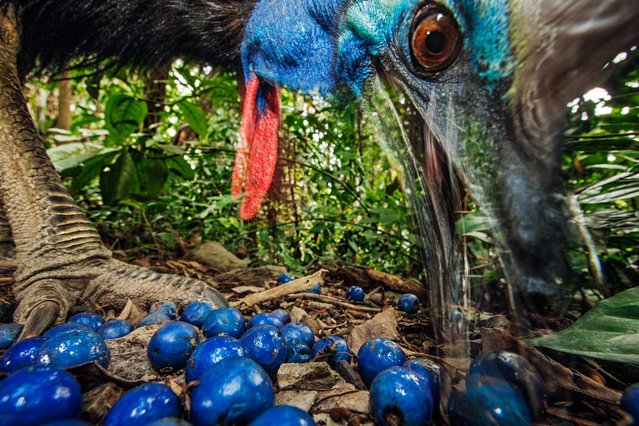
“Cassowaries are large, flightless birds related to emus and (more distantly) to ostriches, rheas, and kiwis”, writes Olivia Judson in the September issue of National Geographic magazine. (Photo by Christian Ziegler/National Geographic)

“Cassowaries are large, flightless birds related to emus and (more distantly) to ostriches, rheas, and kiwis”, writes Olivia Judson in the September issue of National Geographic magazine. How large? People-size: Adult males stand well over five foot five and top 110 pounds. Females are even taller, and can weigh more than 160 pounds. Dangerous when roused, they’re shy and peaceable when left alone. But even birds this big and tough are prey to habitat loss. The dense New Guinea and Australia rain forests where they live have dwindled. Today cassowaries might number 1,500 to 2,000. And because they help shape those same forests – by moving seeds from one place to another – “if they vanish”, Judson writes, “the structure of the forest would gradually change” too. (Photo by Christian Ziegler/National Geographic)
Details
06 Jan 2014 12:21:00
Deal or New Deal, Season 2. Pictured: Meghan Markle, 2006. (Photo by Paul Drinkwater/NBC/NBCU Photo Bank via Getty Images)

Deal or New Deal, Season 2. Pictured: Meghan Markle, 2006. (Photo by Paul Drinkwater/NBC/NBCU Photo Bank via Getty Images)
Details
26 Aug 2018 00:01:00
Women sits outside a go-go dance bar in Pattaya, Thailand March 25, 2017s. (Photo by Jorge Silva/Reuters)

Women sits outside a go-go dance bar in Pattaya, Thailand March 25, 2017s. (Photo by Jorge Silva/Reuters)
Details
28 May 2017 07:14:00
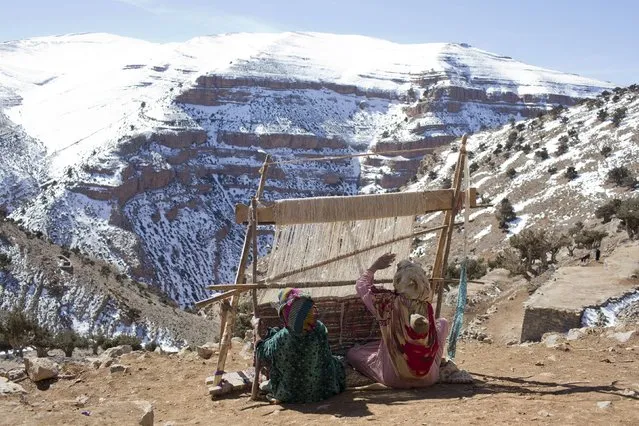
Berber women weave traditional carpets in the village of Ait Sghir in the High Atlas region of Morocco February 15, 2015. The snowy foothills of the High Atlas mountains in Morocco are home to several Berber villages where the inhabitants make their living by farming, baking bread in traditional ovens, herding cattle, and the making and selling of honey, olive oil and pottery. Extreme weather fluctuations and erosion that causes flooding and landslides have led to a drop in agricultural productivity, the United Nations said. (Photo by Youssef Boudlal/Reuters)

Berber women weave traditional carpets in the village of Ait Sghir in the High Atlas region of Morocco February 15, 2015. The snowy foothills of the High Atlas mountains in Morocco are home to several Berber villages where the inhabitants make their living by farming, baking bread in traditional ovens, herding cattle, and the making and selling of honey, olive oil and pottery. Extreme weather fluctuations and erosion that causes flooding and landslides have led to a drop in agricultural productivity, the United Nations said. (Photo by Youssef Boudlal/Reuters)
Details
26 Feb 2015 06:07:00
Ammunition airlift into besieged Khe Sanh, Operation Pegasus, April 1968. (Photo by Larry Burrows/AP Photo)

Ammunition airlift into besieged Khe Sanh, Operation Pegasus, April 1968. (Photo by Larry Burrows/AP Photo)
Details
22 May 2018 00:01:00
The World’s Smallest Horse by  named Einstein

The World’s Smallest Horse according to Guinness World Records is Thumbelina from Missouri, but another tiny horse named Einstein.

Please Subscribe To: Our Youtube Channel
Details
21 Nov 2016 13:05:00
A dancer performs as visitors take pictures at an auto show in Tianjin, China April 28, 2016. (Photo by Reuters/Stringer)

A dancer performs as visitors take pictures at an auto show in Tianjin, China April 28, 2016. (Photo by Reuters/Stringer)
Details
15 May 2016 11:47:00
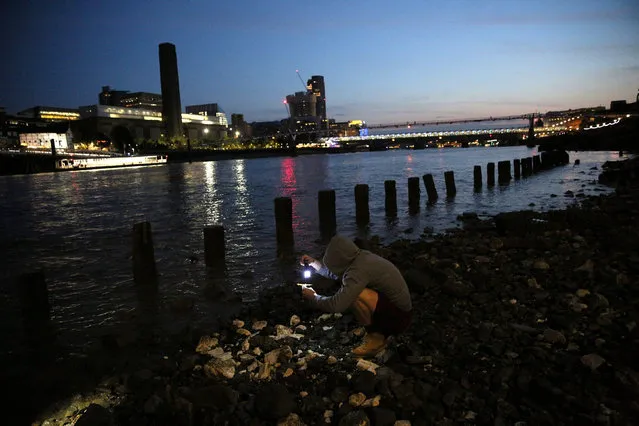
A mudlark uses a torch to look for items on the bank of the River Thames in London, Britain June 06, 2016. Mudlarking is believed to trace its origins to the 18th and 19th century, when scavengers searched the Thames' shores for items to sell. These days, history and archaeology fans are the ones hoping to find old relics such as coins, ceramics, artifacts or everyday items from across centuries. They wait for the low tide and then scour specific areas of exposed shores. "If you're in a field you could be out all day long, with the river you're restricted to about two or three hours," mudlark Nick Stevens said. While many just use the naked eye for their searches, others rely on metal detectors for which a permit from the Port of London Authority is needed. Digging also requires consent. (Photo by Neil Hall/Reuters)

A mudlark uses a torch to look for items on the bank of the River Thames in London, Britain June 06, 2016. Mudlarking is believed to trace its origins to the 18th and 19th century, when scavengers searched the Thames' shores for items to sell. These days, history and archaeology fans are the ones hoping to find old relics such as coins, ceramics, artifacts or everyday items from across centuries. their finds with the Portable Antiquities Scheme. Any item over 300 years old must be recorded. (Photo by Neil Hall/Reuters)
Details
27 Aug 2016 10:43:00