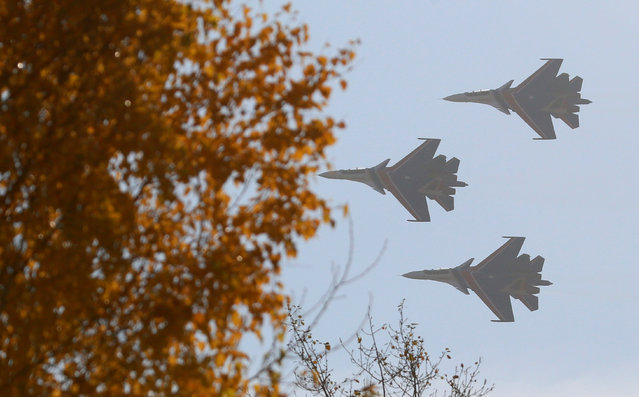
Sukhoi Su-30SM jet fighters of the Russkiye Vityazi (Russian Knights) aerobatic team perform during a demonstration flight in Krasnoyarsk, Russia October 6, 2018. (Photo by Ilya Naymushin/Reuters)
A woman sells chips in Abidjan, Ivory Coast on August 09, 2019. World's number one cacao producer Ivory Coast's capital Abidjan set peace after the 201011 Ivorian crisis. Women in Abidjan work in various jobs to help their families' budget. (Photo by Mahmut Serdar Alakus/Anadolu Agency via Getty Images)
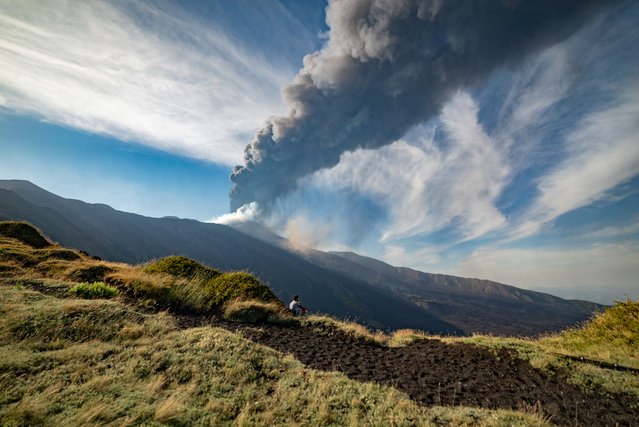
A hiker admires the view as Mt. Etna, Europe's largest active volcano, erupts in the background, in the Bove Valley of Etna Park, on the eastern slope of Mt. Etna, in Sicily, southern Italy, Sunday, July 4, 2021. Since Feb. 16, 2021, Mt. Etna has begun a series of eruptive episodes. (Photo by Salvatore Allegra/AP Photo)
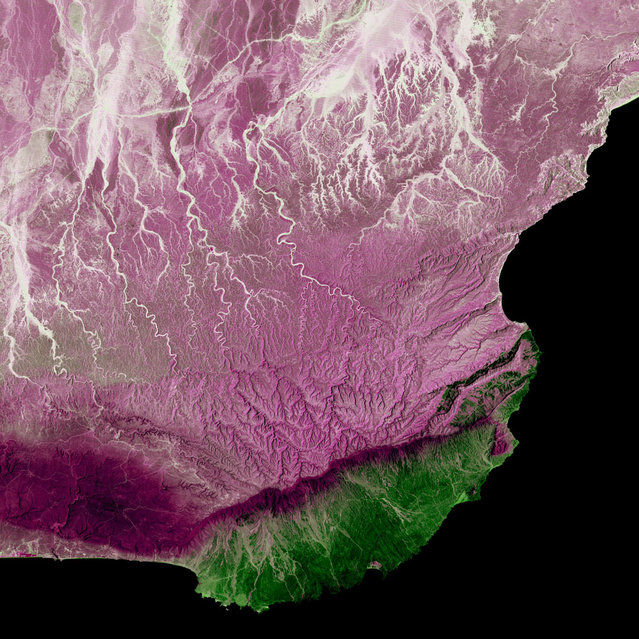
Dhofar Region, Oman. Much of Oman is desert, but the Arabian Sea coast in the Dhofar region represents a startling difference in climate. This coastal region catches the monsoon rains, or khareef, during the summer months. Drenching rains fall primarily on the mountainous ridge that separates the lush, fertile areas along the coast from the arid interior, recharging streams, waterfalls and springs that provide plentiful water supplies in the fertile lowlands for the remainder of the year. Image taken by Landsat 5 on April 2, 2005. (Photo by USGS/NASA)
Relatives of community leader Josemano “Badou” Victorieux, one of the victims of clashes with the Police, cry during his funeral in Port-au-Prince, Haiti, 16 October 2019. The protest movement in Haiti completes a month with no sign of remitting and without the President, Jovenel Moise, yielding to the voices that require him to resign. (Photo by Orlando Barria/EPA/EFE)
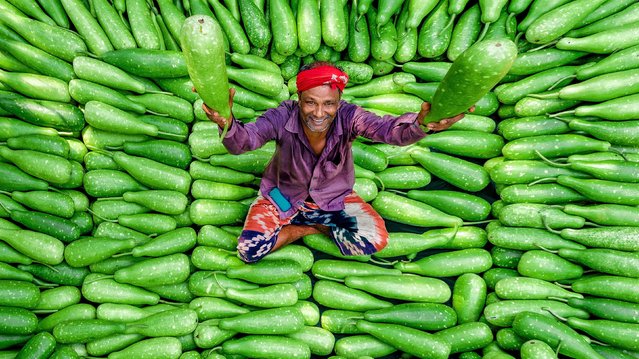
A market trader in Gaibandha in Bangladesh on September 25, 2019, surrounded by bottle gourd vegetables, which sell for around 3p ($ 0.04) each. (Photo by Solent News)
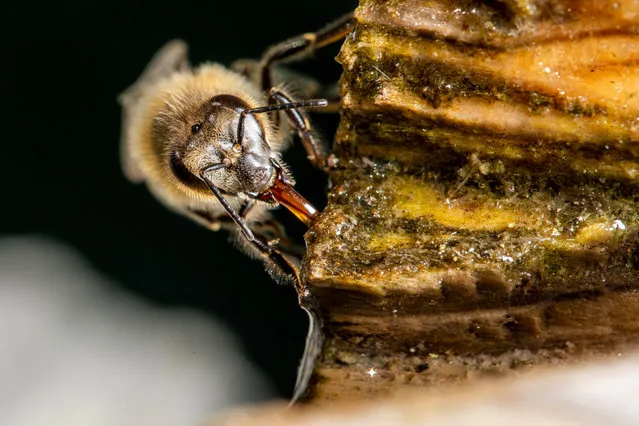
A Western honey bee feeds off acacia pollen at an apiary in Nagyszenas, eastern Hungary, 25 April 2020. The preparation of the bees for the acacia bloom began two weeks later than usual this year; due to the late frosts, this season's yield of Hungaricum acacia honey is expected to be lower. (Photo by Tibor Rosta/EPA/EFE)