Loading...
Done
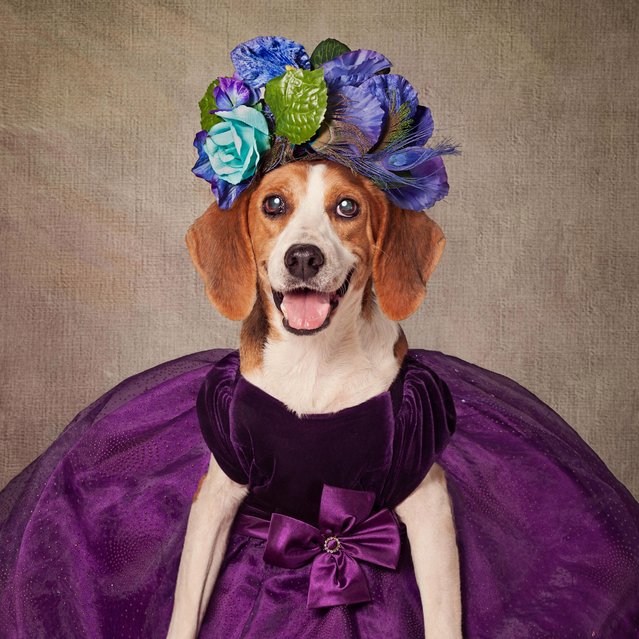
A dog in a purple dress, taken in El Dorado, Arkansas, December 2016. (Photo by Tammy Swarek/Barcroft Images)

A dog in a purple dress, taken in El Dorado, Arkansas, December 2016. The dapper dogs in clothes are back with a second series, and they’re feeling festive. (Photo by Tammy Swarek/Barcroft Images)
Details
23 Dec 2016 07:59:00
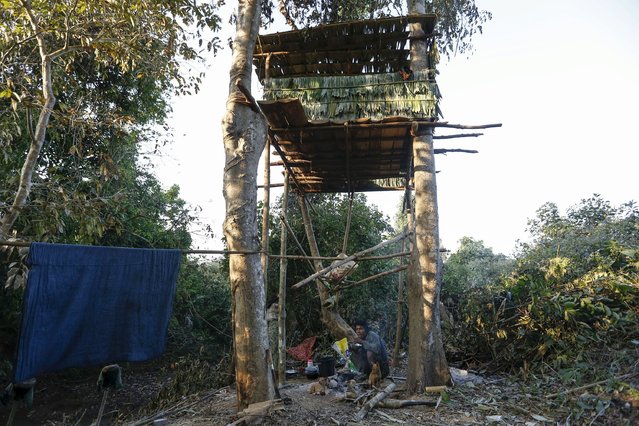
A man eats a meal under his tree house, which acts as a shelter from wild elephants, in Gwe Cho village, Shwe Taung Yan township Ayeyarwady division January 18, 2016. (Photo by Soe Zeya Tun/Reuters)

A man eats a meal under his tree house, which acts as a shelter from wild elephants, in Gwe Cho village, Shwe Taung Yan township Ayeyarwady division January 18, 2016. Wild elephants are driving villagers in a Myanmar township to seek refuge while the animals storm their rice paddies, in Ayeyarwady in the Delta region, West of Yangon. (Photo by Soe Zeya Tun/Reuters)
Details
20 Jan 2016 08:05:00
A woman cries as she stands next to house destroyed by the earthquake in the Pacific coastal town of Pedernales, Ecuador, Sunday, April 17, 2016. (Photo by Dolores Ochoa/AP Photo)

A woman cries as she stands next to house destroyed by the earthquake in the Pacific coastal town of Pedernales, Ecuador, Sunday, April 17, 2016. A magnitude-7.8 quake, the strongest since 1979, hit Ecuador flattening buildings, buckling highways along its Pacific coast and killing hundreds. (Photo by Dolores Ochoa/AP Photo)
Details
18 Apr 2016 09:57:00
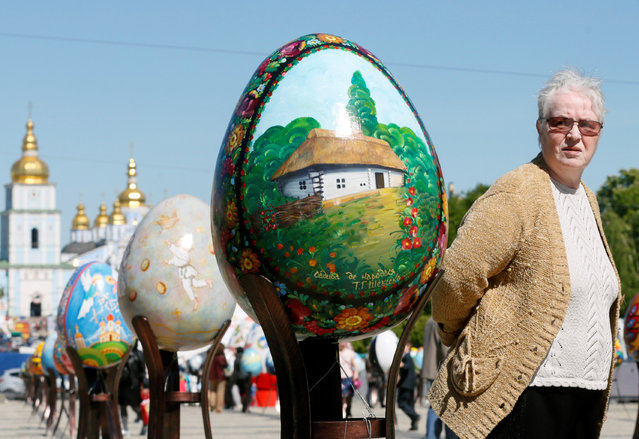
A woman looks at traditional Ukrainian Easter eggs “Pysanka”, installed as part of the upcoming celebrations of Easter, in central Kiev, Ukraine, April 29, 2016. A pysanka is a Ukrainian Easter egg, decorated with traditional Ukrainian folk designs using a wax-resist (batik) method. The word pysanka comes from the verb pysaty, “to write”, as the designs are not painted on, but written with beeswax. Many other eastern European ethnic groups decorate eggs using wax resist for Easter. These include the Belarusians, Bulgarians, Croats, Czechs, Hungarians, Lithuanians, Poles, Romanians, Serbs, Slovaks, Slovenes and Sorbs. (Photo by Valentyn Ogirenko/Reuters)

A woman looks at traditional Ukrainian Easter eggs “Pysanka”, installed as part of the upcoming celebrations of Easter, in central Kiev, Ukraine, April 29, 2016. A pysanka is a Ukrainian Easter egg, decorated with traditional Ukrainian folk designs using a wax-resist (batik) method. The word pysanka comes from the verb pysaty, “to write”, as the designs are not painted on, but written with beeswax. Many other eastern European ethnic groups decorate eggs using wax resist for Easter. These include the Belarusians, Bulgarians, Croats, Czechs, Hungarians, Lithuanians, Poles, Romanians, Serbs, Slovaks, Slovenes and Sorbs. (Photo by Valentyn Ogirenko/Reuters)
Details
30 Apr 2016 09:00:00
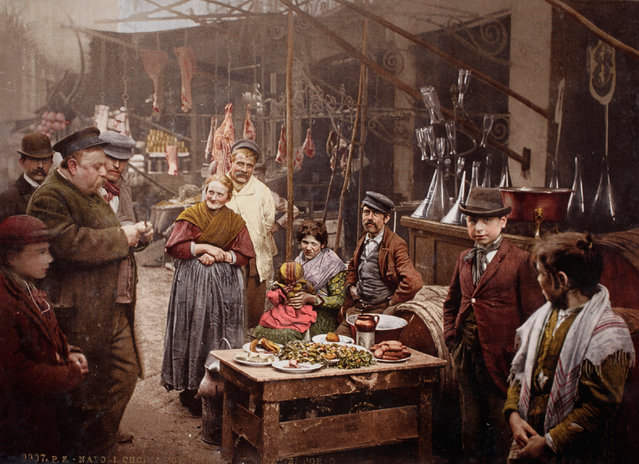
The finished photochromes were produced using at least six different tint stones, although many more were often used. Here: Street food in the Strada del Porto in Naples, Italy, 1899. (Photo by Swiss Camera Museum/The Guardian)

Photochromes are vibrant and nuanced prints hand-coloured from black-and-white negatives. Created using a process pioneered in the 1880s, these images offer a fascinating insight into the world when colour photography was still in its infancy. A Tour of the World in Photochromes is at the Swiss Camera Museum, Vevey, until 21 August. Here: Street food in the Strada del Porto in Naples, Italy, 1899. (Photo by Swiss Camera Museum/The Guardian)
Details
07 Jul 2016 10:56:00
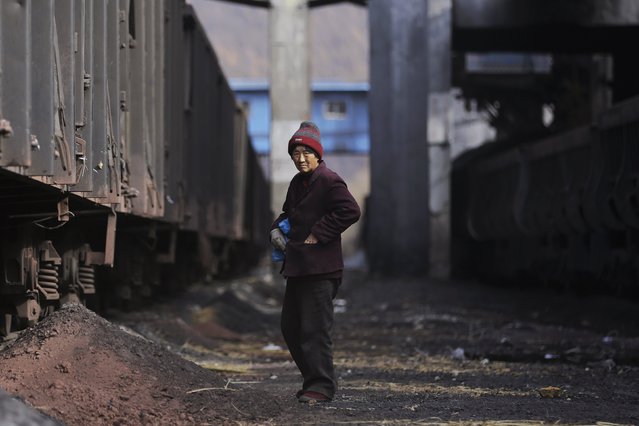
A rag-and-bone woman stands next to carriages of a coal train outside a coal mine of the state-owned Longmay Group on the outskirts of Jixi, in Heilongjiang province, China, October 22, 2015. (Photo by Jason Lee/Reuters)

A rag-and-bone woman stands next to carriages of a coal train outside a coal mine of the state-owned Longmay Group on the outskirts of Jixi, in Heilongjiang province, China, October 22, 2015. (Photo by Jason Lee/Reuters)
Details
07 Nov 2015 08:00:00
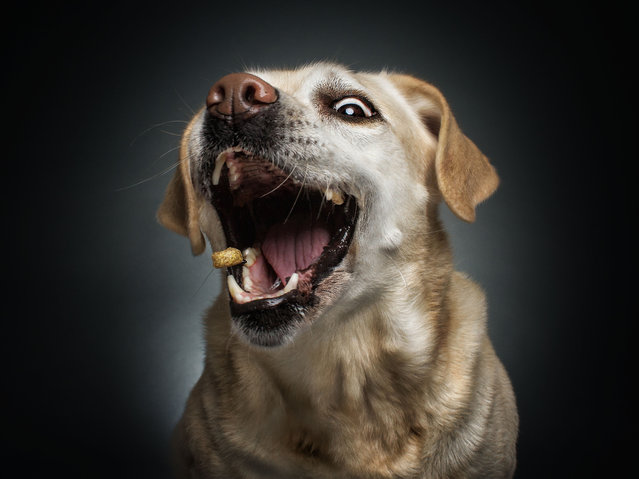
A photographer has created a series of paw-traits of hungry dogs pulling hilarious faces as they try and catch treats. Using a unique technique, the shots are captured at the exact moment the adorable pooches attempt to catch an airborne piece of food. The dogs appear surprised, happy, sad, confused – and sometimes even so blasé they miss the treat entirely. The images were taken by Christian Vieler, a photographer from Waltrop, Germany. Here: A labrador retriever. (Photo by Christian Vieler/Caters News)

A photographer has created a series of paw-traits of hungry dogs pulling hilarious faces as they try and catch treats. Using a unique technique, the shots are captured at the exact moment the adorable pooches attempt to catch an airborne piece of food. The dogs appear surprised, happy, sad, confused – and sometimes even so blasé they miss the treat entirely. The images were taken by Christian Vieler, a photographer from Waltrop, Germany. Here: A labrador retriever. (Photo by Christian Vieler/Caters News)
Details
20 Dec 2015 08:02:00
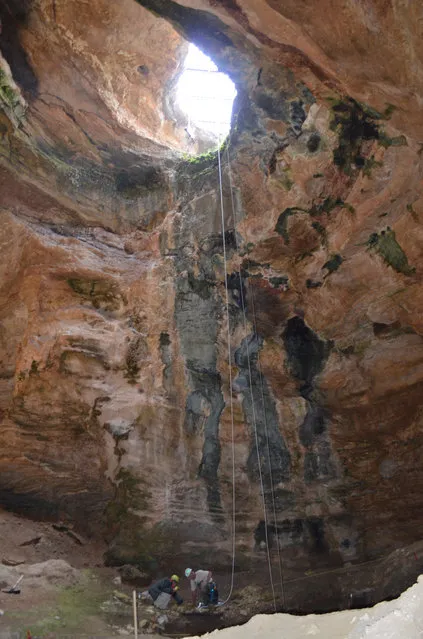
This July 2014 image provided by the Bureau of Land Management shows the interior of the Natural Trap Cave in north-central Wyoming. The cave holds the remains of tens of thousands of animals, including many now-extinct species, from the late Pleistocene period tens of thousands of years ago. Scientists have resumed digging for the first time in more than 30 years. (Photo by AP Photo/Bureau of Land Management)

This July 2014 image provided by the Bureau of Land Management shows the interior of the Natural Trap Cave in north-central Wyoming. The cave holds the remains of tens of thousands of animals, including many now-extinct species, from the late Pleistocene period tens of thousands of years ago. Scientists have resumed digging for the first time in more than 30 years. (Photo by AP Photo/Bureau of Land Management)
Details
10 Aug 2014 10:35:00