Loading...
Done
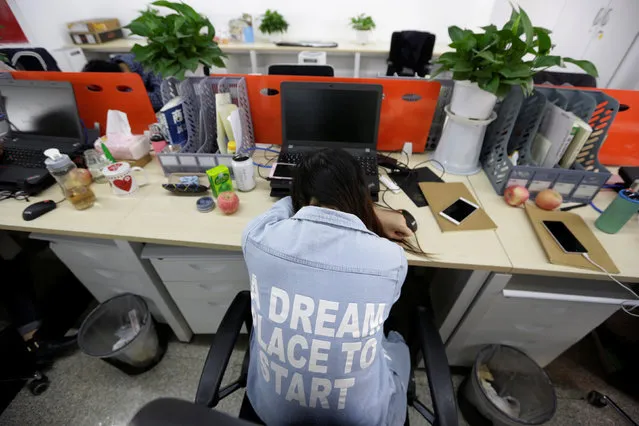
Yang Juan, an employee at Goopal Group, takes a nap in her seat after lunch, in Beijing, China, April 21, 2016. (Photo by Jason Lee/Reuters)

Yang Juan, an employee at Goopal Group, takes a nap in her seat after lunch, in Beijing, China, April 21, 2016. Office workers sleeping on the job is a common sight in China, where a surplus of cheap labour can lead to downtime at work. But in China's technology sector, where business is growing faster than many start-up firms can hire new staff, workers burn the midnight oil to meet deadlines and compete with their rivals. Some companies provide sleeping areas and beds for workers to rest during late nights. (Photo by Jason Lee/Reuters)
Details
12 May 2016 14:53:00
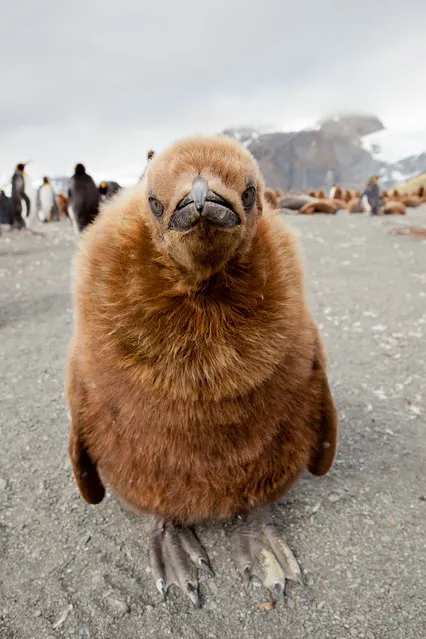
“Cub”. In the colony of penguins in South Georgia. (Photo and caption by Ondrej Zaruba/National Geographic Traveler Photo Contest)

“Cub”. In the colony of penguins in South Georgia. (Photo and caption by Ondrej Zaruba/National Geographic Traveler Photo Contest)

ATTENTION! All pictures are presented in high resolution. To see Hi-Res images – just TWICE click on any picture. In other words, click small picture – opens the BIG picture. Click BIG picture – opens VERY BIG picture.
Details
28 Jun 2013 12:32:00


Smithfield meat porters march on the Home Office, bearing a petition which calls for an end to all immigration into Britain, 25th August 1972. (Photo by Keystone/Hulton Archive/Getty Images)
Details
14 Apr 2011 08:42:00
Nigerian fashion models are made up for their fashion show to promote ethnic fashion June 13, 2006 in Tel Aviv, Israel

Nigerian fashion models are made up for their fashion show to promote ethnic fashion June 13, 2006 in Tel Aviv, Israel. The models said they hope to use the travelling show as a springboard to international fame, in the words of one, “to be the next Naomi Campbell”. (Photo by Uriel Sinai/Getty Images)
Details
31 Jul 2011 14:23:00
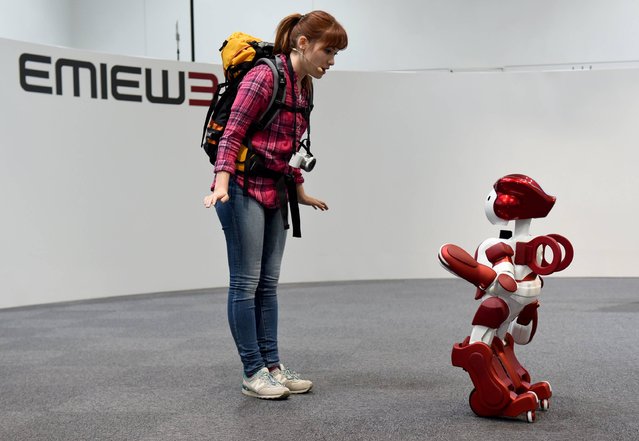
The “EMIEW3” robot (R) demonstrates communicating with a visitor during a press preview in Tokyo on April 8, 2016. Japanese electronics giant Hitachi unveiled its humanoid customer service and guidance robot “EMIEW3” and “remote brain” robotics IT platform. (Photo by Toshifumi Kitamura/AFP Photo)

The “EMIEW3” robot (R) demonstrates communicating with a visitor during a press preview in Tokyo on April 8, 2016. Japanese electronics giant Hitachi unveiled its humanoid customer service and guidance robot “EMIEW3” and “remote brain” robotics IT platform. (Photo by Toshifumi Kitamura/AFP Photo)
Details
08 Apr 2016 15:26:00
Rugby Union, New Zealand vs Tonga, IRB Rugby World Cup 2015 Pool C, St James' Park, Newcastle, Englandon October 9, 2015: Fans is fancy dress before the game. (Photo by Andrew Yates/Reuters)

Rugby Union, New Zealand vs Tonga, IRB Rugby World Cup 2015 Pool C, St James' Park, Newcastle, Englandon October 9, 2015: Fans is fancy dress before the game. (Photo by Andrew Yates/Reuters)
Details
11 Oct 2015 08:09:00
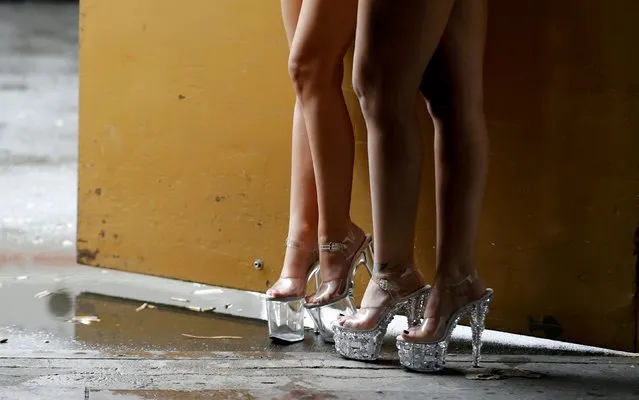
p*rn actresses take a break at the Venus erotic fair in Berlin, Germany, October 15, 2015. (Photo by Fabrizio Bensch/Reuters)

Pоrn actresses take a break at the Venus erotic fair in Berlin, Germany, October 15, 2015. The event, which represents the erotic business in the German capital, is open till October 18, 2015. (Photo by Fabrizio Bensch/Reuters)
Details
17 Oct 2015 08:07:00
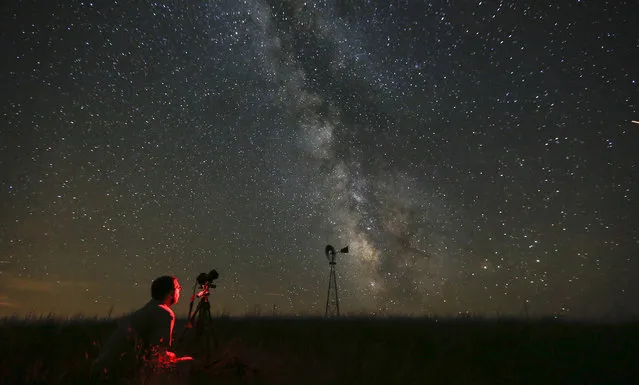
In this Wednesday, July 23, 2014 file photo, Omaha photographer Lane Hickenbottom photographs the night sky in a pasture near Callaway, Neb. With no moon in the sky, the Milky Way was visible to the naked eye. More than one-third of the world’s population can no longer see the Milky Way because of man-made lights, according to a scientific paper by Light Pollution Science and Technology Institute's Fabio Falchi and his team members, published on Friday, June 10, 2016. (Photo by Travis Heying/The Wichita Eagle via AP Photo)

In this Wednesday, July 23, 2014 file photo, Omaha photographer Lane Hickenbottom photographs the night sky in a pasture near Callaway, Neb. With no moon in the sky, the Milky Way was visible to the naked eye. More than one-third of the world’s population can no longer see the Milky Way because of man-made lights, according to a scientific paper by Light Pollution Science and Technology Institute's Fabio Falchi and his team members, published on Friday, June 10, 2016. (Photo by Travis Heying/The Wichita Eagle via AP Photo)
Details
11 Jun 2016 12:37:00