Loading...
Done
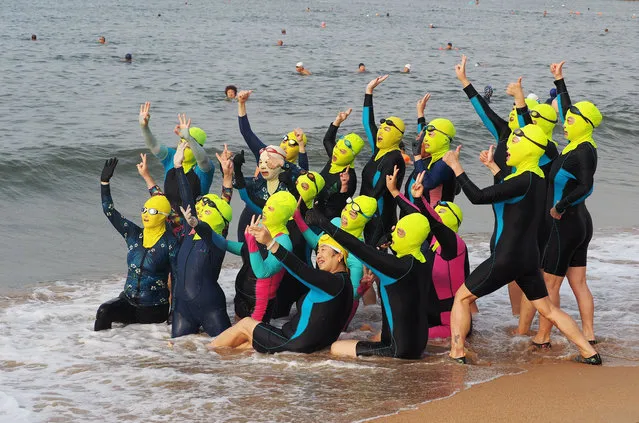
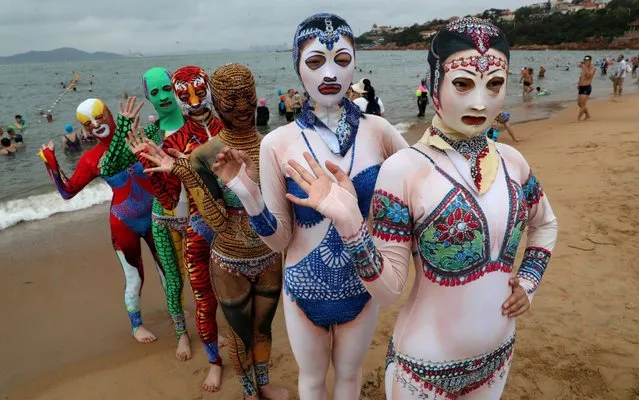
Models wearing facekinis, popular with female bathers who want to protect more than just their modesty, pose for a picture on a beach on August 5, 2019 in the Chinese seaside city of Qingdao, Shandong Province of China. (Photo by Xu Chongde/VCG via Getty Images)

Models wearing facekinis, popular with female bathers who want to protect more than just their modesty, pose for a picture on a beach on August 5, 2019 in the Chinese seaside city of Qingdao, Shandong Province of China. (Photo by Xu Chongde/VCG via Getty Images)
Details
09 Aug 2019 00:01:00
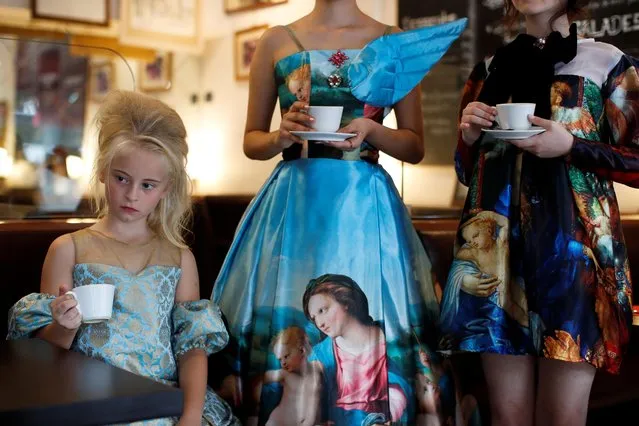
Model Daisy-May Demetre, 9 year-old double amputee who will walk the runway during Paris Fashion Week, is seen during a photo shoot a day before the show of luxury children's wear label Lulu et Gigi in Paris, France, September, 26, 2019. (Photo by Gonzalo Fuentes/Reuters)

Model Daisy-May Demetre, 9 year-old double amputee who will walk the runway during Paris Fashion Week, is seen during a photo shoot a day before the show of luxury children's wear label Lulu et Gigi in Paris, France, September, 26, 2019. (Photo by Gonzalo Fuentes/Reuters)
Details
29 Oct 2019 00:05:00
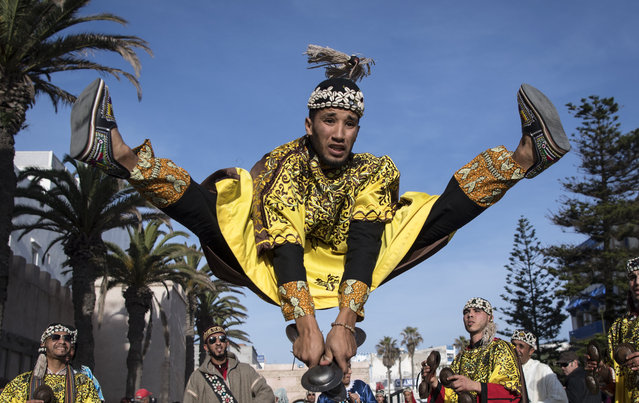
A Gnawa traditional group performs in the city of Essaouira on December 14, 2019, to celebrate the decision of adding the Gnawa culture to UNESCO's list of Intangible Cultural Heritage of Humanity. Gnawa culture, a centuries-old Moroccan practice rooted in music, African rituals and Sufi traditions, was added to UNESCO's list of Intangible Cultural Heritage of Humanity earlier in the week. Gnawa refers to a “set of musical productions, fraternal practices and therapeutic rituals where the secular mixes with the sacred”, according to the nomination submitted by Morocco. Often dressed in colourful outfits, Gnawa musicians play the guenbri, a type of lute with three strings, accompanied by steel castanets called krakebs. (Photo by Fadel Senna/AFP Photo)

A Gnawa traditional group performs in the city of Essaouira on December 14, 2019, to celebrate the decision of adding the Gnawa culture to UNESCO's list of Intangible Cultural Heritage of Humanity. Gnawa culture, a centuries-old Moroccan practice rooted in music, African rituals and Sufi traditions, was added to UNESCO's list of Intangible Cultural Heritage of Humanity earlier in the week. Gnawa refers to a “set of musical productions, fraternal practices and therapeutic rituals where the secular mixes with the sacred”, according to the nomination submitted by Morocco. Often dressed in colourful outfits, Gnawa musicians play the guenbri, a type of lute with three strings, accompanied by steel castanets called krakebs. (Photo by Fadel Senna/AFP Photo)
Details
18 Dec 2019 00:05:00
A team of female swimmers wearing facekini pose on beach by the sea on August 18, 2020 in Qingdao, Shandong Province of China. (Photo by Qian Han/VCG via Getty Images)

A team of female swimmers wearing facekini pose on beach by the sea on August 18, 2020 in Qingdao, Shandong Province of China. (Photo by Qian Han/VCG via Getty Images)
Details
25 Aug 2020 00:05:00
Russian people walk during heavy rain in Moscow, Russia 17 September 2020. Over two hours a third of the monthly average rainfall fell in Moscow. (Photo by Yuri Kochetkov/EPA/EFE)

Russian people walk during heavy rain in Moscow, Russia on 17 September 2020. Over two hours a third of the monthly average rainfall fell in Moscow. (Photo by Yuri Kochetkov/EPA/EFE)
Details
26 Sep 2020 00:03:00
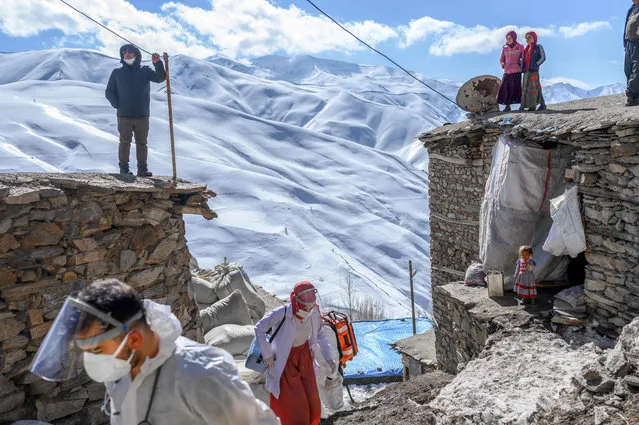
In this photograph taken on February 15, 2021, doctor Sergen Saracoglu (L) and nurse Yilzdiz Ayten (C) from the Bahcesaray public hospital vaccination team, arrive at the village of Guneyyamac in eastern Turkey, as part of an expedition to vaccinate residents of 65 years old or above with Sinovac's CoronaVac Covid-19 vaccine. Turkey's population of more than 83 million is spread out across Europe and Asia and covers some seemingly impregnable terrain. The vaccination effort with China's CoronaVac jab kicked off with a bang in mid-January when Turkey inoculated more than half a million people in the first few days. But it slowed down considerably when doctors left the big cities and tried to reach remote places such as Imamli and Ozbeyli – two ethnically Kurdish hamlets of a few hundred herders and farmers each. (Photo by Bulent Kilic/AFP Photo)

In this photograph taken on February 15, 2021, doctor Sergen Saracoglu (L) and nurse Yilzdiz Ayten (C) from the Bahcesaray public hospital vaccination team, arrive at the village of Guneyyamac in eastern Turkey, as part of an expedition to vaccinate residents of 65 years old or above with Sinovac's CoronaVac Covid-19 vaccine. (Photo by Bulent Kilic/AFP Photo)
Details
18 Mar 2021 09:32:00
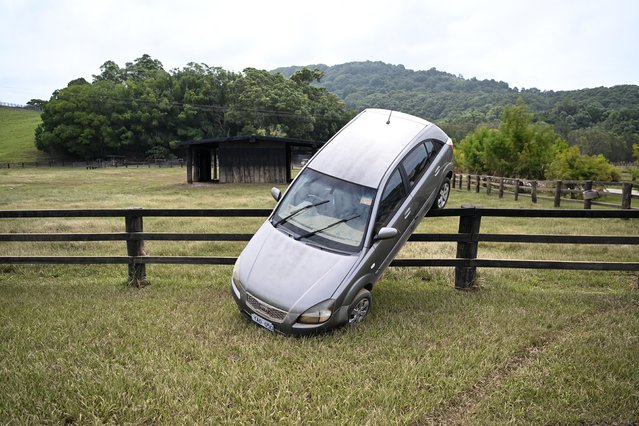
A car rests on a fence after it was carried there by floodwater on March 06, 2022 in Tumbulgum, Australia. Residents of southeast Queensland and northern New South Wales are still cleaning up following unprecedented storms and the worst flooding in a decade. (Photo by Dan Peled/Getty Images)

A car rests on a fence after it was carried there by floodwater on March 06, 2022 in Tumbulgum, Australia. Residents of southeast Queensland and northern New South Wales are still cleaning up following unprecedented storms and the worst flooding in a decade. (Photo by Dan Peled/Getty Images)
Details
16 Apr 2022 05:32:00
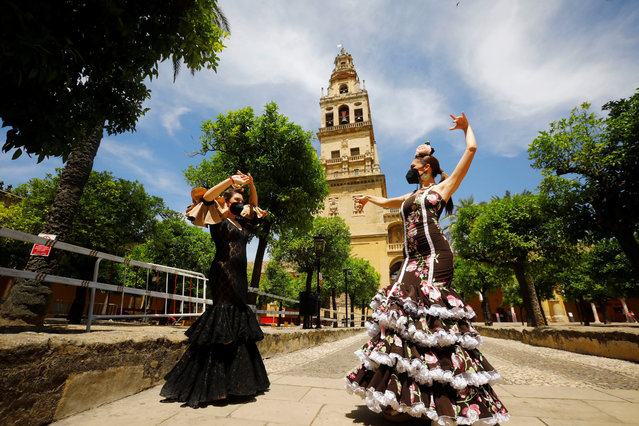
Women wearing traditional dresses dance next to Cathedral–Mosque of Cordoba, Andalusia, Spain, 26 May 2021, to celebrate the Cordoba Fair that was suspended due to coronavirus COVID-19 pandemic for a second consecutive year. The Cordoba Fair is held every year in May for a week during which flamenco, food, and wine are the main attractions for thousands of people. (Photo by Salas/EPA/EFE)

Women wearing traditional dresses dance next to Cathedral–Mosque of Cordoba, Andalusia, Spain, 26 May 2021, to celebrate the Cordoba Fair that was suspended due to coronavirus COVID-19 pandemic for a second consecutive year. The Cordoba Fair is held every year in May for a week during which flamenco, food, and wine are the main attractions for thousands of people. (Photo by Salas/EPA/EFE)
Details
27 May 2021 09:00:00