Loading...
Done
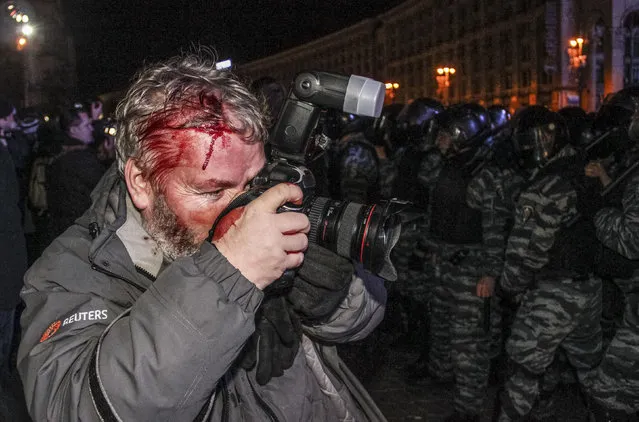
Wounded Reuters photographer Gleb Garanich, who was injured by riot police, takes pictures as riot police block protesters during a scuffle at a demonstration in support of EU integration at Independence Square in Kiev November 30, 2013. Riot police in the Ukrainian capital Kiev used batons and stun grenades to disperse hundreds of pro-Europe protesters from the city's main Independence Square early on Saturday, witnesses said. (Photo by Reuters/Stringer)

Wounded Reuters photographer Gleb Garanich, who was injured by riot police, takes pictures as riot police block protesters during a scuffle at a demonstration in support of EU integration at Independence Square in Kiev November 30, 2013. Riot police in the Ukrainian capital Kiev used batons and stun grenades to disperse hundreds of pro-Europe protesters from the city's main Independence Square early on Saturday, witnesses said. (Photo by Reuters/Stringer)
Details
04 Dec 2013 08:14:00
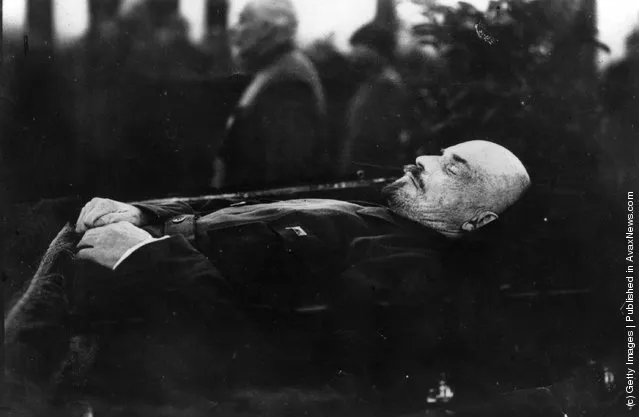
1924:  Vladimir Ilyich Lenin lying in state in the Kremlin

Photo: Vladimir Ilyich Lenin (1870 – 1924) lying in state in the Kremlin. (Photo by Hulton Archive/Getty Images). 1924

Important! For the same article in Russian language click here.

Something quite intriguing is happening within Russian-speaking internet during the last few – should you type a fully academic inquiry (at least, according to Russian academic requirements) in national search engines for "Lenin's mausoleum" – the first thing you get (even in top 10 searches) is website pages talking about black magic and occult. Website authors view this construction differently, but unconditionally agree on one thing: the mausoleum of the "leader of the world proletariat” – the essence of a magical artifact, a sort of “energy vampire”. It was built with a certain purpose: to drain the energy out of miserable Soviet citizens on one hand; and to poison the anthroposphere of one-sixth part of the earth with its vibes (the exact territory that was occupied by the former Soviet Union), depriving the Russian people of will to resist on the other hand. Complete nonsense? No doubt. Nevertheless, an intriguing one. Well, probably because some oddities do exist in mausoleum's history. These oddities are the thing we are going to discuss this time. First, let me refresh you memory on the subject.
Details
16 Oct 2011 11:27:00
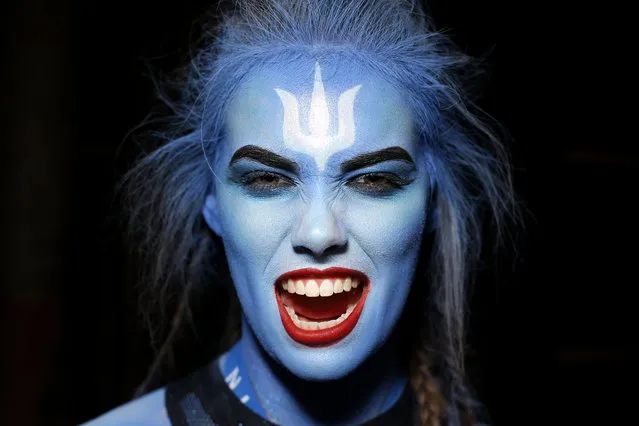
A model poses backstage ahead of the NLP show at Mercedes-Benz Fashion Week Australia 2014 at Carriageworks on April 7, 2014 in Sydney, Australia.  (Photo by Brendon Thorne/Getty Images)

A model poses backstage ahead of the NLP show at Mercedes-Benz Fashion Week Australia 2014 at Carriageworks on April 7, 2014 in Sydney, Australia. (Photo by Brendon Thorne/Getty Images)
Details
12 Apr 2014 13:06:00
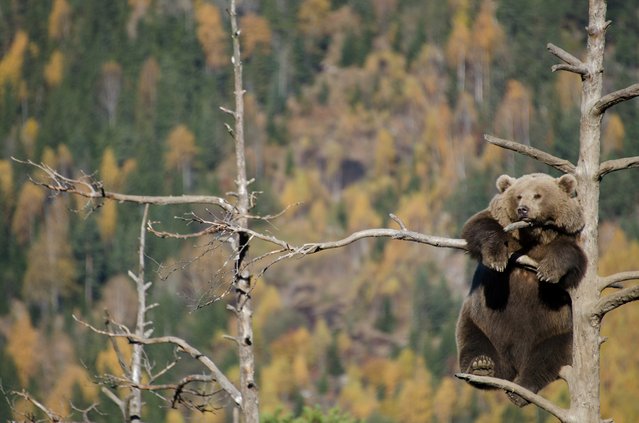
“Just hanging out”. As full autumn hits the valley of Hallingdal in Norway, this bear chills out in a tree which seems to barely cover its weight. Photo location: Flå, Hallingdal, Norway. (Photo and caption by Jorgen Tharaldsen/National Geographic Photo Contest)

“Just hanging out”. As full autumn hits the valley of Hallingdal in Norway, this bear chills out in a tree which seems to barely cover its weight. Photo location: Flå, Hallingdal, Norway. (Photo and caption by Jorgen Tharaldsen/National Geographic Photo Contest)
Details
30 Apr 2014 07:35:00
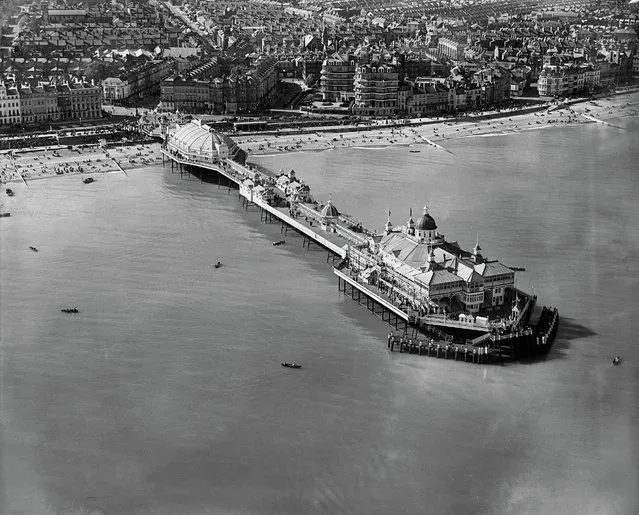
While the lido was described as bringing “modernism to the masses” on the British coast it was just the latest example of a trend that had been developing since Victorian times – transforming seaside towns into resorts for leisure and entertainment. In the latter half of the nineteenth century, the fashion was for local authorities to build great piers stretching from the promenade out into the sea

While the lido was described as bringing “modernism to the masses” on the British coast it was just the latest example of a trend that had been developing since Victorian times – transforming seaside towns into resorts for leisure and entertainment. In the latter half of the nineteenth century, the fashion was for local authorities to build great piers stretching from the promenade out into the sea. The Eastbourne Pier, pictured here in May 1931, was erected between 1866 and 1870 to an ingenious design by Eugenius Birch, which saw the structure sitting on special cups allowing the supporting struts to “move” in bad weather. Arranged on the pier's 1,000-foot length were kiosks, a theatre, a ballroom and a camera obscura. 1931. (Photo by Aerofilms Collection via “A History of Britain From Above”)
Details
25 Feb 2014 12:59:00
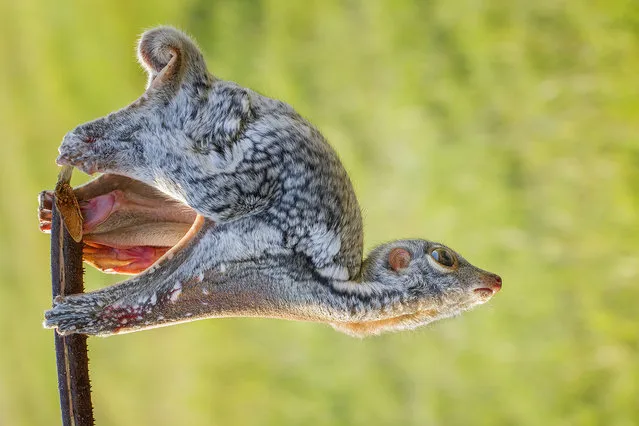
“Warming up”. This photo I capture in the early afternoon, the animal species of lemurs fly. Photo location: Sambas, West Kalimantan, Indonesia. (Photo and caption by Hendy Mp/National Geographic Photo Contest)

“Warming up”. This photo I capture in the early afternoon, the animal species of lemurs fly. Photo location: Sambas, West Kalimantan, Indonesia. (Photo and caption by Hendy Mp/National Geographic Photo Contest)
Details
03 Oct 2014 11:52:00
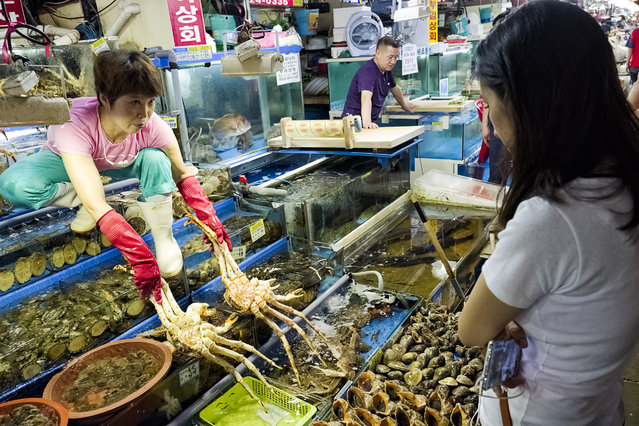
A sales woman of a fish shop shows king crabs to a customer and negotiates the price in Noryangjin Fish Market is seen on August 1, 2015 in Seoul, South Korea. Noryangjin Fish Market was established in 1927 as Gyeongseong Susan in Jung-gu near Seoul Station and moved to its current location in 1971. (Photo by Shin Woong-jae/The Washington Post)

A sales woman of a fish shop shows king crabs to a customer and negotiates the price in Noryangjin Fish Market is seen on August 1, 2015 in Seoul, South Korea. Noryangjin Fish Market was established in 1927 as Gyeongseong Susan in Jung-gu near Seoul Station and moved to its current location in 1971. (Photo by Shin Woong-jae/The Washington Post)
Details
11 Sep 2015 12:21:00
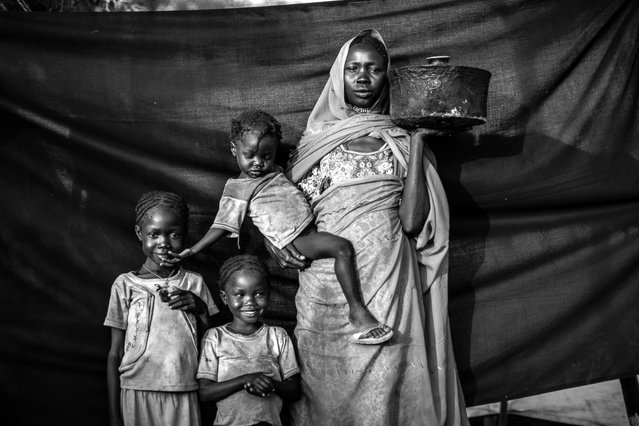
Magbola Alhadi, 20, and her three children pose for a portrait in Jamam refugee camp in Maban County, South Sudan on August 11th, 2012. Magboola and her family weathered aerial bombing raids for several months, but decided it was time to leave their village of Bofe the night that soldiers arrived and opened fire. (Photo by Brian Sokol/Panos Pictures)

Magbola Alhadi, 20, and her three children pose for a portrait in Jamam refugee camp in Maban County, South Sudan on August 11th, 2012. Magboola and her family weathered aerial bombing raids for several months, but decided it was time to leave their village of Bofe the night that soldiers arrived and opened fire. With her three children, she travelled for 12 days from Bofe to the town of El Fudj, on the South Sudanese border. The most important thing that Magboola was able to bring with her is the saucepan she holds in this photograph. It wasn't the largest pot that she had in Bofe, but it was small enough she could travel with it, yet big enough to cook sorghum for herself and her three daughters (from left: Aduna Omar, 6, Halima Omar, 4, and Arfa Omar, 2) during their journey. (Photo by Brian Sokol/Panos Pictures)
Details
18 Sep 2015 15:04:00