Loading...
Done
Christopher Jonassen’s Alien Landscapes

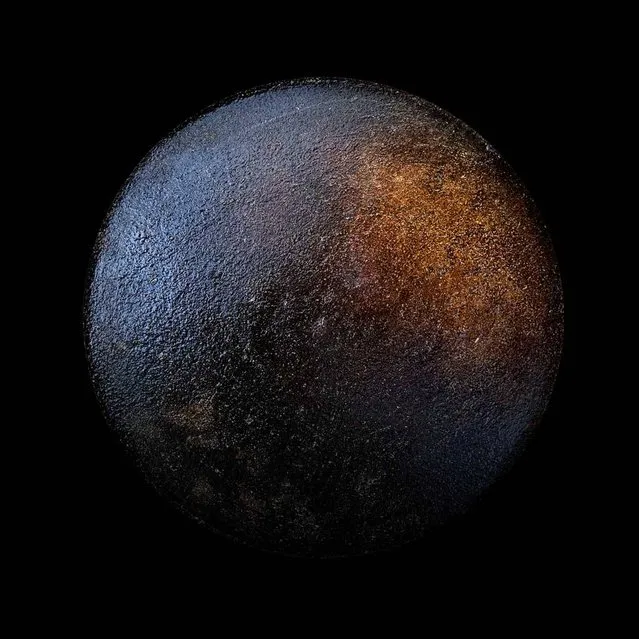
Is it the surface of the Mars or Venus or an undiscovered planet? Not at all. These pictures aren’t what you think they are. Christopher Jonassen, a Norwegian photographer shot these beautiful and otherworldly series called ‘Devour of frying pan bottoms’, which are visually similar to craters and scars on a planet’s surface. In his series Jonassen refers to a quote of Jean-Paul Satre who said: ‘To eat is to appropriate destruction’ and the meaning of the word ‘devour’, which stands for eating up greedily, destroying, consuming, and wasting.
Details
30 Aug 2013 08:18:00
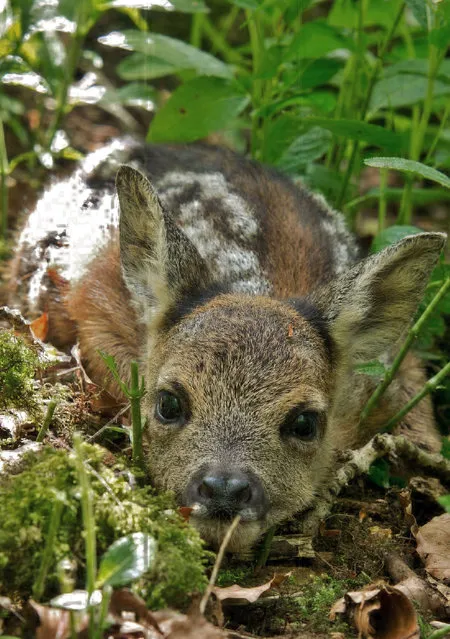
Young fawn shelters in the wood. He is so at one with nature that he knows how to call animals to him, and often gets within 30ft of them. (Photo by Adam Tatlow/BNPS)

Cotswold gamekeeper shoots amazing pictures of British wildlife – without the aid of long lenses and elaborate techniques. The photos may look like they have been shot from miles away – but amazingly Adam Tatlow is actually just feet away from his wild subjects. Photo: Young fawn shelters in the wood. He is so at one with nature that he knows how to call animals to him, and often gets within 30ft of them. (Photo by Adam Tatlow/BNPS)
Details
24 Sep 2013 08:31:00
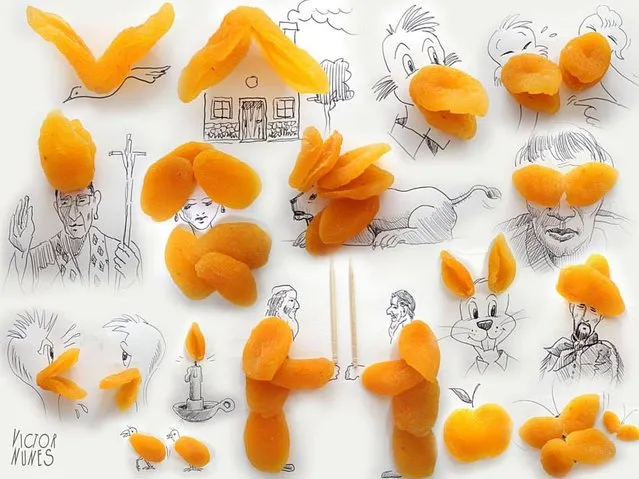
Food In Faces By Victor Nunes

Artist Victor Nunes combines every-day objects with simple illustrations to turn them into pictures of faces, animals and other playful scenes. His images invite us to look at the world differently and find creative images in our surroundings. Nunes’ art is a great example of pareidolia, which is our propensity to give meaning to random objects (like in this post about seeing faces in random objects). It’s the reason why we associate a smiley face with a human face and why some of Nunes’ pieces of popcorn or bread resemble faces to us.
Details
02 Feb 2014 11:58:00
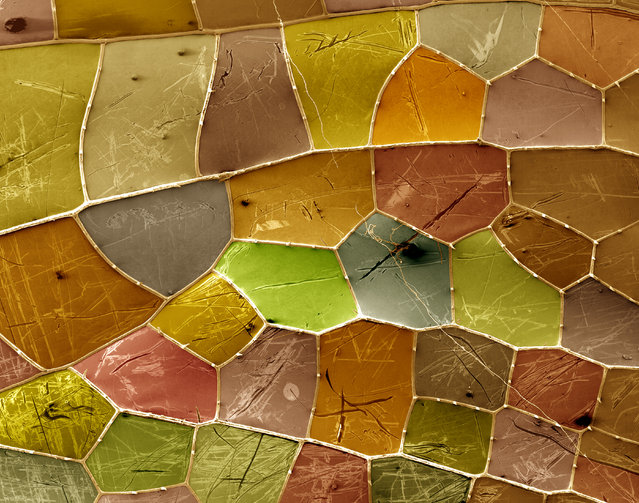
Micro or Macro? It's micro: this is an electron microscope image of the wing of a Green Darner dragonfly. (Photo by P. Kelly)

Macro or Micro? Scientists’ pictures baffle our sense of scale. It began when Stephen Young, a geography professor at Salem State University in Massachusetts, tricked his biologist colleague Paul Kelly into thinking a satellite image was one of his electron microscope scans. Can you guess whether they are close-up or very far away? (Photo by Paul Kelly)
Details
21 Apr 2014 10:24:00
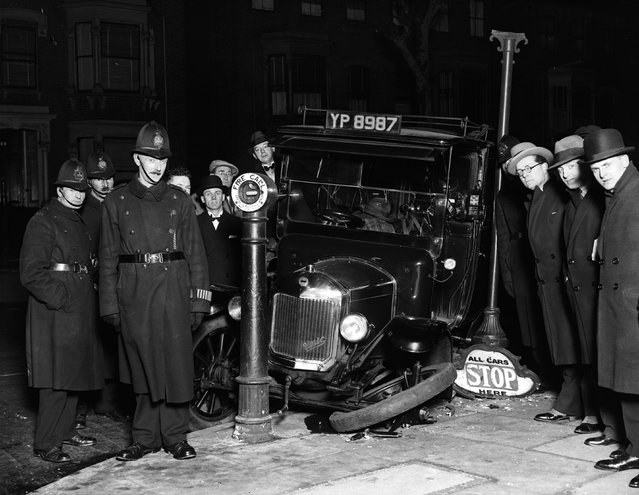
A group of policemen and passers-by survey the wreckage of a taxi in Stoke Newington, London. Its front wheel lies on the pavement next to a sign bearing the ironic instruction “All Cars Stop Here”. 14th February 1930. (Photo by Fox Photos)

A group of policemen and passers-by survey the wreckage of a taxi in Stoke Newington, London. Its front wheel lies on the pavement next to a sign bearing the ironic instruction “All Cars Stop Here”. 14th February 1930. (Photo by Fox Photos). P.S. All pictures are presented in high resolution.
Details
09 Sep 2012 09:31:00
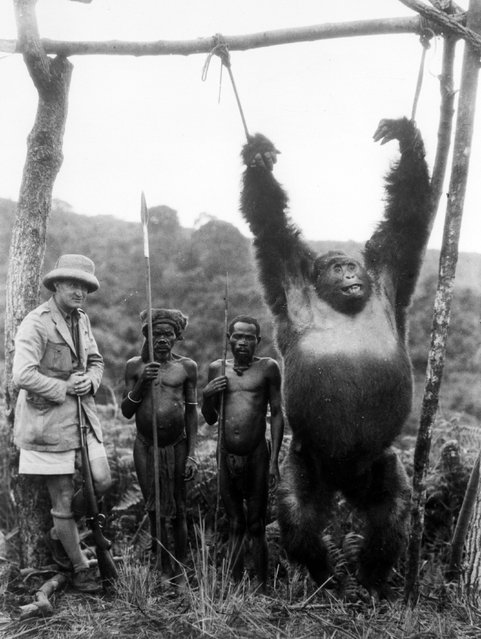
British Captain A. Gatti and two pygmies with a 500lb gorilla strung from a pole, which the captain shot in the Tchibinda forest in the Lake Kivu region, Democratic Republic of the Congo, circa 1930. (Photo by General Photographic Agency)

British captain A. Gatti and two pygmies with a 500lb gorilla strung from a pole, which the captain shot in the Tchibinda forest in the Lake Kivu region, Democratic Republic of the Congo, circa 1930. (Photo by General Photographic Agency). P.S. All pictures are presented in high resolution.
Details
18 Sep 2012 09:35:00
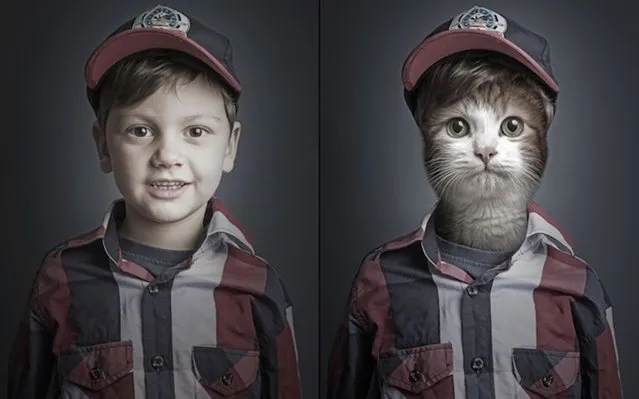
Undercats By Sebastian Magnani

They might look like something straight out of a horror film, but these extraordinary images have been created to show the special bond between cats and their owners. Photographer Sebastian Magnani, 28, from Brig, Switzerland, took pictures of dogs and their owners using the same position and camera settings before working his magic with editing software. The result is this startling set of images, which show the pooches with human clothes – one wearing a hoodie, another with a red coat, one with a shirt and cardigan, and another with a blue jacket. (Photos by Sebastian Magnani)
Details
20 May 2015 10:33:00
Beluga Whales Blowing Bubbles in Japan (video)

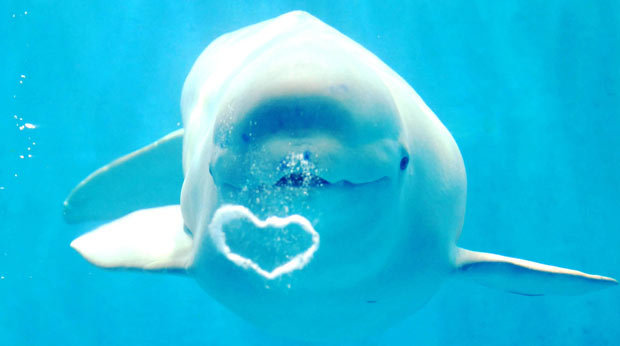
The talent in bubbles unfurled the white Beluga whales living in Shimane Aquarium in Japan.As shown in the picture, have learned to make bubble rings, indicative of high intelligence.Whales blowing air from the mouth to create a stream and immediately after xanafysoun powerfully in the same place so that the bubbles to form a ring.Beluga whales are organized in groups and are social animals. They live in Arctic and sub​​-Arctic and known as "sea canaries" and mimic a wide range of sounds.
Details
28 Oct 2016 22:52:00