Loading...
Done
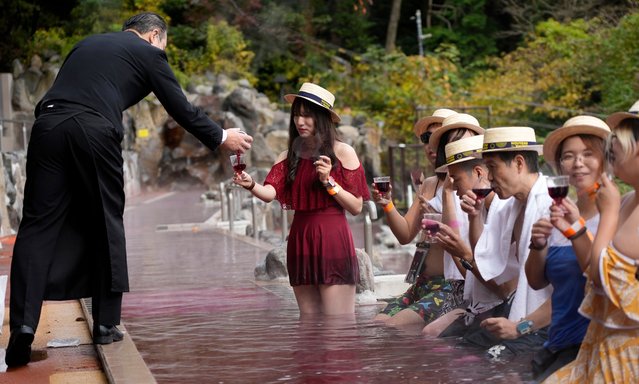
A sommelier serves the glass with 2021 Beaujolais Nouveau wine of a young woman bathing in a red colored hot water bath, on the day of the Beaujolais Nouveau official release, at Hakone Kowakien Yunessun hot spring resort in Hakone, Japan, 18 November 2021. Japan is a major market for the Beaujolais Nouveau. However, the country's total Beaujolais Nouveau imports are expected to fall by 20 per cent from 2019 to around 3,6 million bottles, amid the ongoing coronavirus pandemic. (Photo by Franck Robichon/EPA/EFE)

A sommelier serves the glass with 2021 Beaujolais Nouveau wine of a young woman bathing in a red colored hot water bath, on the day of the Beaujolais Nouveau official release, at Hakone Kowakien Yunessun hot spring resort in Hakone, Japan, 18 November 2021. Japan is a major market for the Beaujolais Nouveau. However, the country's total Beaujolais Nouveau imports are expected to fall by 20 per cent from 2019 to around 3,6 million bottles, amid the ongoing coronavirus pandemic. (Photo by Franck Robichon/EPA/EFE)
Details
25 Nov 2021 07:43:00
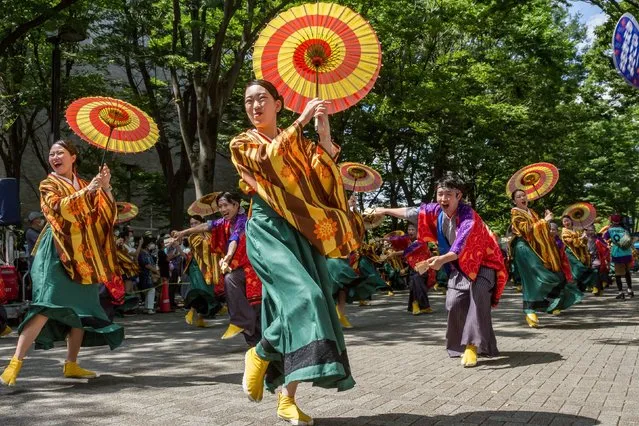
Dancers perform at the Harajuku Omotesando Super Yosakoi Dance festival in Shibuya, Tokyo on August 27, 2022. Super Yosakoi festival, is a two day festival that sees thousands of dancers, in hundreds of teams, energetically perform this unique Japanese dance style that combines traditional and more modern elements of movement and costume. (Photo by Damon Coulter/SOPA Images/Rex Features/Shutterstock)

Dancers perform at the Harajuku Omotesando Super Yosakoi Dance festival in Shibuya, Tokyo on August 27, 2022. Super Yosakoi festival, is a two day festival that sees thousands of dancers, in hundreds of teams, energetically perform this unique Japanese dance style that combines traditional and more modern elements of movement and costume. (Photo by Damon Coulter/SOPA Images/Rex Features/Shutterstock)
Details
07 Sep 2022 05:17:00
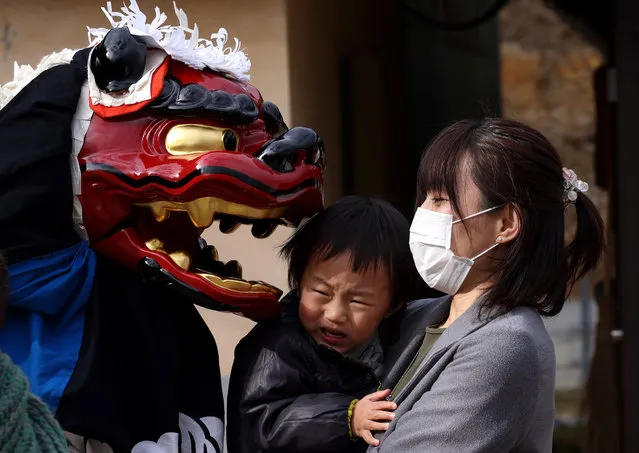
A performer wearing a lion mask performs the Ise Daikagura lion dance at the remote village of Yamanawa on February 08, 2021 in Ryuo, Japan. Ise Daikagura is a group of traditional Lion Dance performers who pray in front of farmers houses and businesses for good grain harvests and disease-free lives. Performers play sacred music using drums and flutes with two lion mask dancers. A lion mask is considered a symbol of God, who enters the house and performs in front of the Shinto God, a statue placed inside the house, mostly in the kitchen. These prayers are called “Kamodo Barai”. After the prayers, they are gifted with money, rice, sake and Japanese sweets from the householders. A group can travel for more than one hundred days to thousands of households and businesses throughout rural-villages in western Japan, and pray to those who are unable to visit the country’s most sacred shrine, the Grand Ise Shrine in Mie Prefecture. The group started its performance in the Edo era between 1603 to 1868 according to Japanese history. The Japanese government designated it as an important folk cultural national property in 1981. (Photo by Buddhika Weerasinghe/Getty Images)

A performer wearing a lion mask performs the Ise Daikagura lion dance at the remote village of Yamanawa on February 08, 2021 in Ryuo, Japan. Ise Daikagura is a group of traditional Lion Dance performers who pray in front of farmers houses and businesses for good grain harvests and disease-free lives. (Photo by Buddhika Weerasinghe/Getty Images)
Details
18 Feb 2021 09:27:00
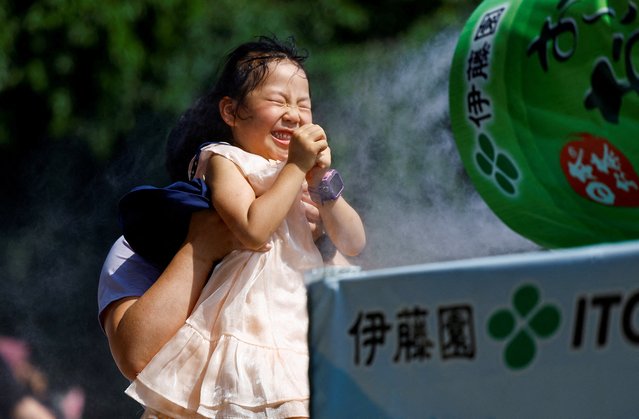
A child reacts as a family takes a break next to a cooling mist at the Sensoji temple as Japanese government issued heat stroke alerts in 39 of the country's 47 prefectures in Tokyo, Japan on July 22, 2024. (Photo by Issei Kato/Reuters)

A child reacts as a family takes a break next to a cooling mist at the Sensoji temple as Japanese government issued heat stroke alerts in 39 of the country's 47 prefectures in Tokyo, Japan on July 22, 2024. (Photo by Issei Kato/Reuters)
Details
29 Jul 2024 03:37:00
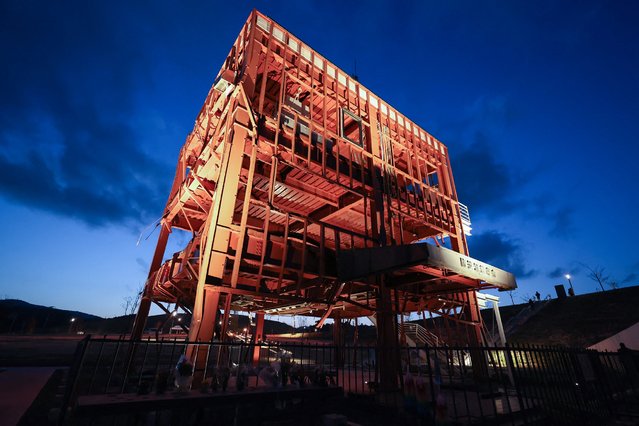
This photo taken on March 10, 2025 shows the former disaster prevention office building in Minamisanriku Town, Miyagi Prefecture, lit up on the eve of the 14th anniversary of the 2011 earthquake and tsunami disaster. (Photo by JIJI Press/AFP Photo)

This photo taken on March 10, 2025 shows the former disaster prevention office building in Minamisanriku Town, Miyagi Prefecture, lit up on the eve of the 14th anniversary of the 2011 earthquake and tsunami disaster. (Photo by JIJI Press/AFP Photo)
Details
14 Apr 2025 03:54:00
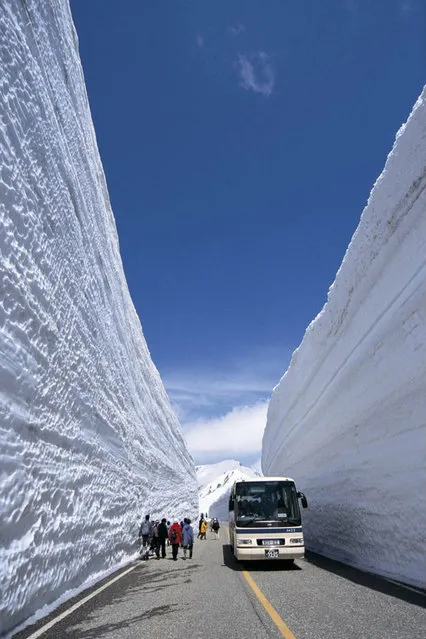
Snow Wall in Japan

The Tateyama Kurobe Alpine Route is an international mountain sightseeing route some 90 kilometers (56 miles) long. The route goes across the 3,000-meter-high North Alpine mountains, the so-called “roof of Japan,” and connects Toyama and Shinano Omachi. You can enjoy the panorama by taking a train, highland bus, trolley bus, cable car, and ropeway. Since the lines opened in June 1971, the Tateyama mountain area has been transformed from an isolated spot into one of the nation’s best sightseeing areas, where a million guests visit every year.
Details
27 Jul 2012 09:28:00


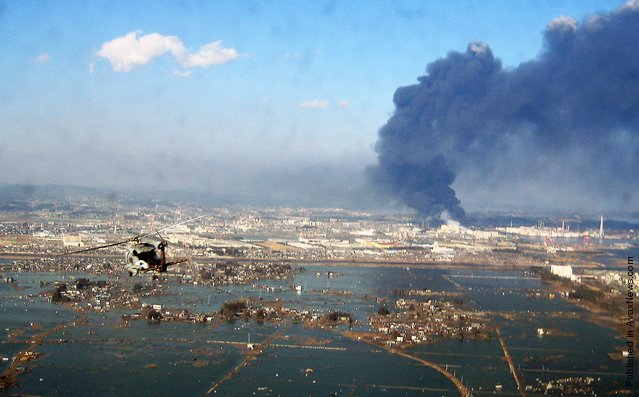
“With a fourth explosion rocking the Fukushima nuclear plant on Tuesday, danger of the spent nuke fuel pool boiling and radiation levels at the facility's gate increasing hundredfold, fears of a meltdown in Japan skyrocket”. – Russia Today

Photo: In this handout image provided by U.S. Navy, an aerial view of tsunami and earthquake damage is seen from an SH-60B helicopter assigned to the Chargers of Helicopter Antisubmarine Squadron (HS) 14 from Naval Air Facility Atsugi March 12, 2011 seen from the air of Sendai, Japan. (Photo by U.S. Navy via Getty Images)
Details
16 Mar 2011 10:19:00
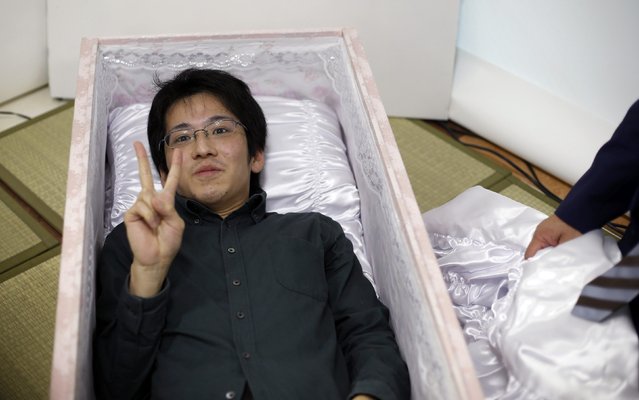
Noriaki Iwashima gestures as he lies in a coffin to try it out during an end-of-life seminar held by Japan's largest retailer Aeon Co in Tokyo October 24, 2014. (Photo by Toru Hanai/Reuters)

Noriaki Iwashima gestures as he lies in a coffin to try it out during an end-of-life seminar held by Japan's largest retailer Aeon Co in Tokyo October 24, 2014. Funeral arrangements are normally left to those who have been left behind but the latest trend in Japan, which literally translates to “End of life” preparations, is for the ageing to prepare their own funerals and graves before they set off on their journey to the great beyond. With a population that is expected to shrink by nearly 30 million people over the next 50 years, the market for funerals, graves and anything related to the afterlife is still very much alive. (Photo by Toru Hanai/Reuters)
Details
10 Nov 2014 13:48:00