Loading...
Done
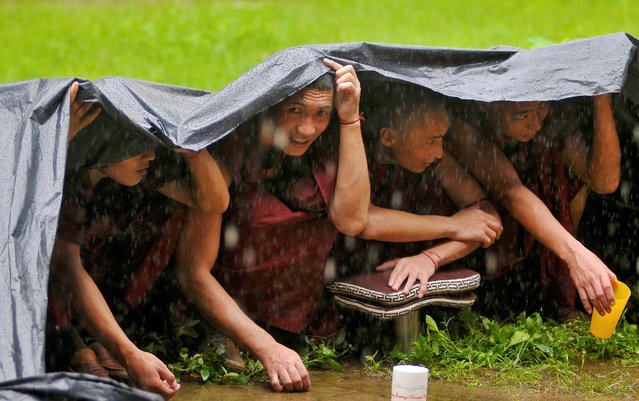
Buddhist monks take shelter under a tarpaulin sheet to protect themselves from the rain as they attend the birthday celebrations of the Tibetan spiritual leader the Dalai Lama (unseen) at Drepung Loseling Monastery in Mundgod, in the southern state of Karnataka, India, July 6, 2016. (Photo by Abhishek N. Chinnappa/Reuters)

Buddhist monks take shelter under a tarpaulin sheet to protect themselves from the rain as they attend the birthday celebrations of the Tibetan spiritual leader the Dalai Lama (unseen) at Drepung Loseling Monastery in Mundgod, in the southern state of Karnataka, India, July 6, 2016. (Photo by Abhishek N. Chinnappa/Reuters)
Details
07 Jul 2016 11:23:00
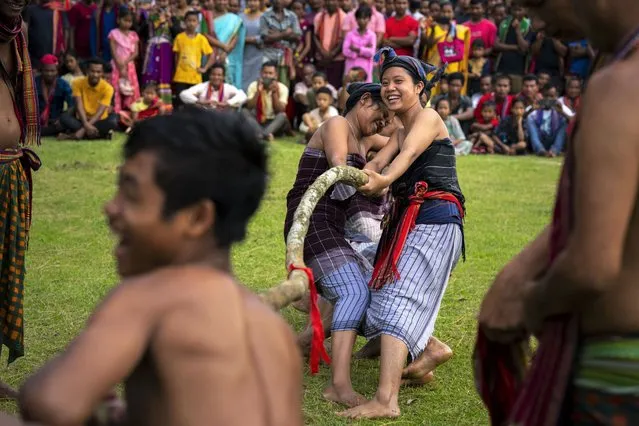
Indian Rabha tribal women in traditional attire take part in a tug of war competition with men during Baikho festival at Gamerimura village along the Assam Meghalaya border, west of Gauhati, India, Saturday, June 4, 2022. (Photo by Anupam Nath/AP Photo)

Indian Rabha tribal women in traditional attire take part in a tug of war competition with men during Baikho festival at Gamerimura village along the Assam Meghalaya border, west of Gauhati, India, Saturday, June 4, 2022. (Photo by Anupam Nath/AP Photo)

Details
09 Jun 2022 04:57:00
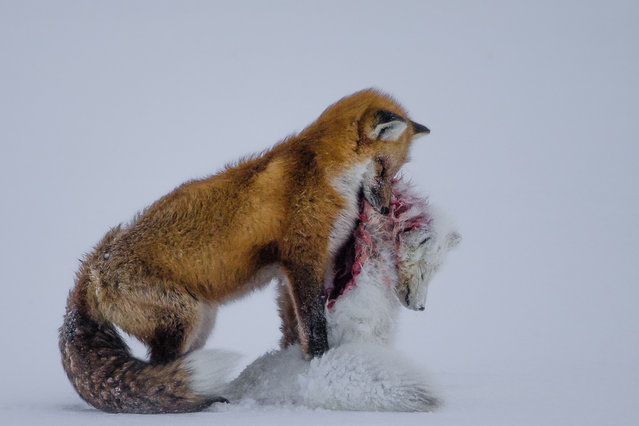
A tale of two foxes. Surprising behaviour, witnessed in Wapusk national park, on Hudson Bay, Canada, in early winter. Red foxes don’t actively hunt Arctic foxes, but where the ranges of two predators overlap, there can be conflict. Though the light was poor, the snow-covered tundra provided the backdrop for the moment that the red fox paused with the smaller fox in its mouth in a grim pose. (Photo by Don Gutoski/2015 Wildlife Photographer of the Year)

A tale of two foxes. Surprising behaviour, witnessed in Wapusk national park, on Hudson Bay, Canada, in early winter. Red foxes don’t actively hunt Arctic foxes, but where the ranges of two predators overlap, there can be conflict. Though the light was poor, the snow-covered tundra provided the backdrop for the moment that the red fox paused with the smaller fox in its mouth in a grim pose. (Photo by Don Gutoski/2015 Wildlife Photographer of the Year)
Details
20 Oct 2015 08:02:00
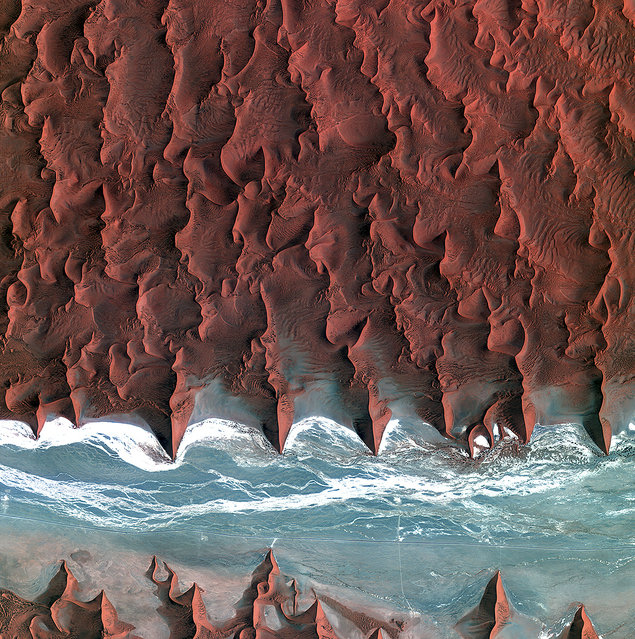
These are the dunes of the Namib Desert, taken by Korea's Kompstat-2 satellite. The blue and white area is the dried riverbed of the Tsauchab river. (Photo by The European Space Agency)

These are the dunes of the Namib Desert, taken by Korea's Kompstat-2 satellite. The blue and white area is the dried riverbed of the Tsauchab river. (Photo by The European Space Agency)
Details
17 Aug 2014 09:13:00
Children Photos By Kim Anderson Part 2

Kim Anderson photography career, now overseen from his home base in a Swiss mountainside village, began the way of many shutter bugs. His early photos focused on fashion and people, as well as photography for advertising agencies.
Details
28 Mar 2014 17:29:00
Shironeko, The Relaxed Cat Part 2

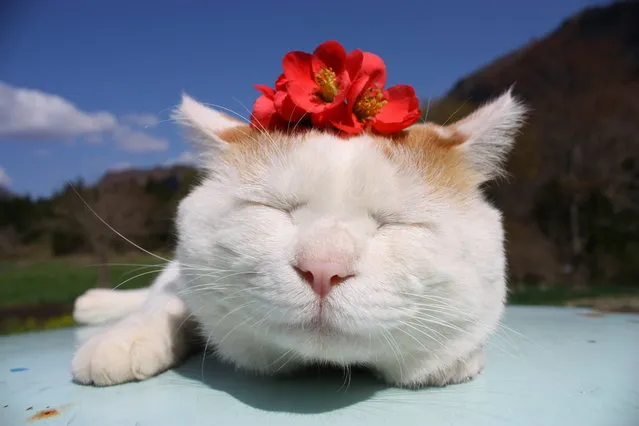
Shironeko, also known as “Basket Cat”, is a Turkish van cat called “Shiro”, which is best known for his extremely relaxed demeanor and ability to balance things on his head, similar to Oolong the Pancake Bunny. The cat has been given several nicknames by its fans, most notably “Basket Cat” and “Zen Cat.”
Details
09 Apr 2014 08:55:00
The new MacBook Pro

The new MacBook Pro is shown during the keynote address at the Apple 2012 World Wide Developers Conference (WWDC) at Moscone West on June 11, 2012 in San Francisco, California. This is Apple’s latest flagship laptop featuring an updated processor and a super high resolution screen that features 5.1 million pixels – 3 million more than a typical high-definition television.
Details
13 Jun 2012 10:10:00


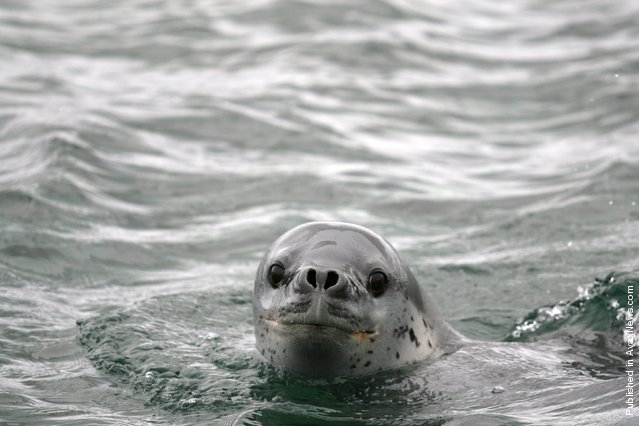
“The leopard seal (Hydrurga leptonyx), also referred to as the sea leopard, is the second largest species of seal in the Antarctic (after the southern elephant seal). It is most common in the southern hemisphere along the coast of Antarctica and on most sub-Antarctic islands, but can also be found on the coasts of southern Australia, Tasmania, South Africa, New Zealand, Lord Howe Island, Tierra del Fuego, the Cook Islands, and the Atlantic coast of South America. It can live twenty-six years, possibly more. Orcas and large sharks are the only natural predators of leopard seals”. – Wikipedia

Photo by: Gilad Rom; Source: Flickr
Details
13 Nov 2011 11:24:00