Loading...
Done
Cormorant masters and boatmen prepare sea cormorants for the nights “Ukai” on July 2, 2014 in Gifu, Japan. In this traditional fishing art “ukai”, a cormorant master called “usho” manages cormorants to capture ayu or sweetfish. The ushos of River Nagara have been the official staff of the Imperial Household Agency of Japan since 1890. Currently six imperial fishermen of Nagara River conduct special fishing to contribute to the Imperial family eight times a year, on top of daily fishing from mid-May to mid-October. (Photo by Chris McGrath/Getty Images)

Cormorant masters and boatmen prepare sea cormorants for the nights “Ukai” on July 2, 2014 in Gifu, Japan. In this traditional fishing art “ukai”, a cormorant master called “usho” manages cormorants to capture ayu or sweetfish. The ushos of River Nagara have been the official staff of the Imperial Household Agency of Japan since 1890. Currently six imperial fishermen of Nagara River conduct special fishing to contribute to the Imperial family eight times a year, on top of daily fishing from mid-May to mid-October. (Photo by Chris McGrath/Getty Images)
Details
04 Jul 2014 09:41:00
President of sushi restaurant chain Sushi-Zanmai, Kiyoshi Kimura, displays a 222kg bluefin tuna at his main restaurant near Tokyo's Tsukiji fish market on January 5, 2013. The bluefin tuna was traded at 155.4 million yen (1.77 million USD) at the wholesale market, smashing a previous record. (Photo by Yoshikazu Tsuno/AFP Photo)

Japanese businessman Kiyoshi Kimura has paid 1.38 million euros ($1.76 million, or 155.4 million yen) for a blue fin tuna – more than three times the previous high – which he also set one year ago. The 222-kilogram fish will be served to Kimura’s customers. Blue fin tuna is annually sold in a traditional New Year’s auction. Japan consumes 80 percent blue fin tuna caught worldwide.

Photo: President of sushi restaurant chain Sushi-Zanmai, Kiyoshi Kimura, displays a 222kg bluefin tuna at his main restaurant near Tokyo's Tsukiji fish market on January 5, 2013. The bluefin tuna was traded at 155.4 million yen (1.77 million USD) at the wholesale market, smashing a previous record. (Photo by Yoshikazu Tsuno/AFP Photo)
Details
06 Jan 2013 13:26:00
Second Place Winner: “Thunderstorm at False Kiva”. I hiked out to these ruins at night hoping to photograph them with the Milky Way, but instead a thunderstorm rolled through, creating this dramatic image. – Max Seigal. (Photo and caption by Max Seigal/National Geographic Traveler Photo Contest)

Second Place Winner: “Thunderstorm at False Kiva”. I hiked out to these ruins at night hoping to photograph them with the Milky Way, but instead a thunderstorm rolled through, creating this dramatic image. – Max Seigal. National Geographic Traveler Director of Photography Dan Westergren, one of this year's judges, shares his thoughts on the second place winner: “This photo combines two different scenes into one: the small kiva in a cliff dwelling and the grand vista of Canyonlands National Park across the valley. I really like the two different color palettes – warm inside and purple outside. This two-for-one scene was caused by the lightning storm outside the dwelling, which lit up the landscape like it was a huge electronic flash. Looking at this picture I can imagine what a wonderful sight it must have been for the ancient people who lived here. It doesn't seem too amazing now in our modern world, but might have been mind-blowing for the prehistoric residents”. Location: Utah. (Photo and caption by Max Seigal/National Geographic Traveler Photo Contest)
Details
02 Aug 2013 06:16:00
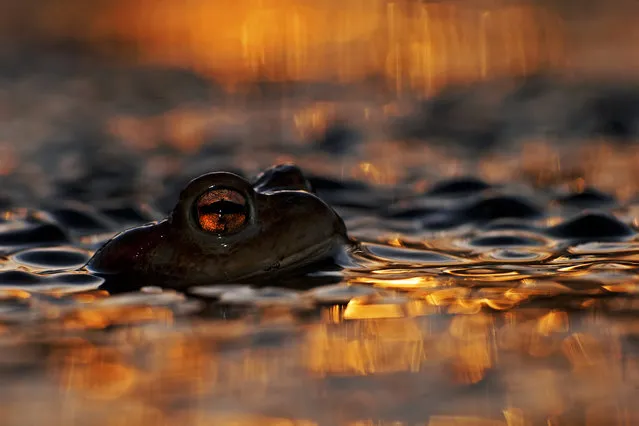
“Eye of a toad”. Animal Portraits, Łukasz Bożycki, Poland.  (Photo by Łukasz Bożycki)

“Eye of a toad”. Animal Portraits, Łukasz Bożycki, Poland. Early spring sees a pond near Łukasz’s home city of Warsaw, Poland, full of mating frogs and a few toads. On this March day, Łukasz shared the pond with them for an evening, sitting in the icy water in his chest-high waders, keeping as still as possible, despite the numbing cold, so that the amphibians could get used to him. “I wanted to find a fresh way of portraying the amphibians”, he says, “at water level”. Using a telephoto lens, he focused on one lone toad and waited for the sun to dip almost below the horizon before pressing the shutter, using flash to bring out the details in the shadow. His prize was “the glorious pool of sunset colour” and fiery glow of the toad’s eye. Nikon D80 + 70-300mm f4.5-5.6 lens + extension tube; 1/125 sec at f9 (-2.3 e/v); ISO 100; built-in flash. (Photo by Łukasz Bożycki)

Details
28 Aug 2013 11:45:00
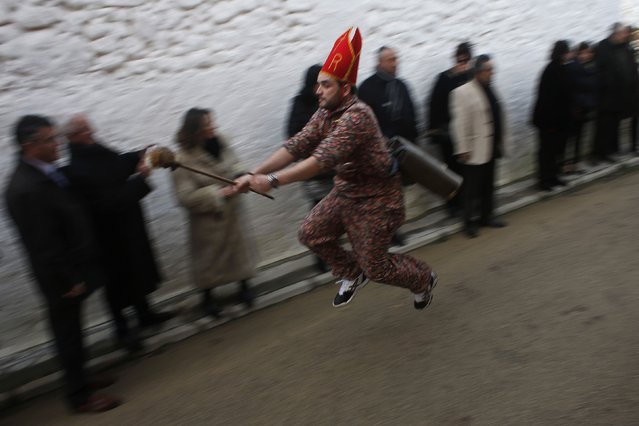
A believer dressed as a “diablo” (devil) jumps at the San Blas' (Saint Blaise) procession during the “Endiablada” festival in Almonacid del Marquesado, in central Spain February 3, 2015. In the “Endiablada”, an undated traditional festival in honour of the Candelaria Virgin and San Blas. (Photo by Susana Vera/Reuters)

A believer dressed as a “diablo” (devil) jumps at the San Blas' (Saint Blaise) procession during the “Endiablada” festival in Almonacid del Marquesado, in central Spain February 3, 2015. In the “Endiablada”, an undated traditional festival in honour of the Candelaria Virgin and San Blas, believers are dressed in colourful costumes, wear a mitre with lead cowbells tied to their waists that ring as they wander around the village and in front of the saints' statues during their processions. (Photo by Susana Vera/Reuters)
Details
05 Feb 2015 12:02:00
An Iraqi man comforts his 4-year-old son at a regroupment center for POWs of the 101st Airborne Division near An Najaf, Iraq

An Iraqi man comforts his 4-year-old son at a regroupment center for POWs of the 101st Airborne Division near An Najaf, Iraq, March 31, 2003. The man was seized in An Najaf with his son and the U.S. military did not want to separate them. (Photo by Jean-Marc Bouju/Associated Press)
Details
18 Jul 2012 06:22:00


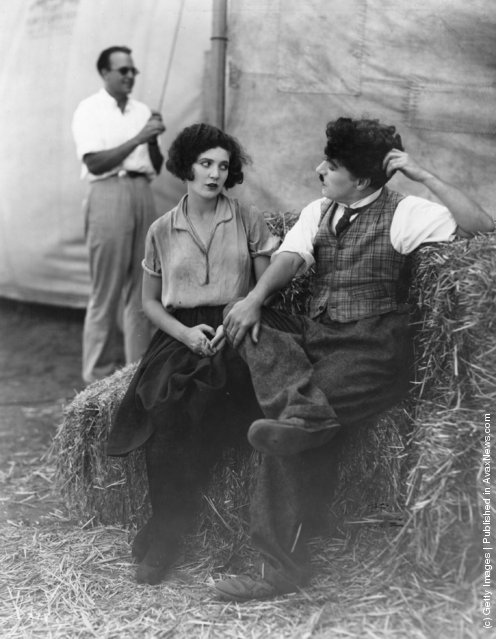
English comic actor and director Charlie Chaplin (Sir Charles Spencer Chaplin, 1889–1977) seated on straw bales during the filming of “The Circus” with his leading lady Merna Kennedy (1908–1944). (Photo by Margaret Chute/Getty Images). 1928
Details
16 Apr 2011 09:08:00
Afghanistan: Dogs of War Part 1

Throughout the course of the long war in Afghanistan, Coalition troops have relied on thousands of military working dogs to help keep them safe, and make their jobs easier. The dogs are trained to detect explosives, to find illegal drugs, to search for missing comrades, or target enemy combatants. Not only are they active on the front lines, but behind the lines they serve as therapy dogs, service dogs, and loyal companions. They also share the same risks as the ground troops, suffering injuries and sometimes death on the battlefields. Gathered here are images of these dogs and their handlers in Afghanistan and back home, from over the past several years, part of the ongoing series here on Afghanistan.
Details
03 Jun 2014 21:02:00