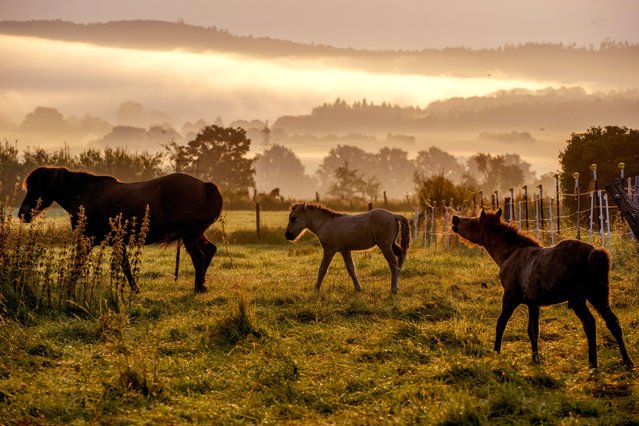
Icelandic horses play in their paddock at a stud farm in Wehrheim near Frankfurt, Germany, as a mist rolls in on Thursday, August 5, 2021. (Photo by Michael Probst/AP Photo)
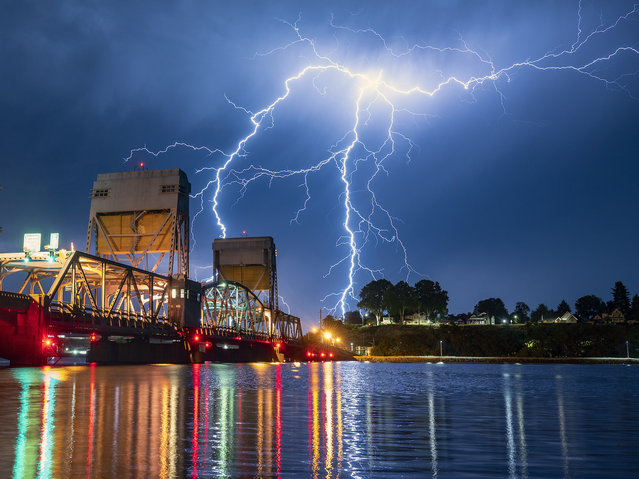
A bolt of lighting strikes over Lewiston, Idaho, behind the Interstate Bridge that spans the Snake River into Clarkston, Wash., on the morning of Thursday, July 1, 2021. Multiple thunderstorms moved through the area on Wednesday evening into Thursday morning. (Photo by Pete Caster/Lewiston Tribune via AP Photo)
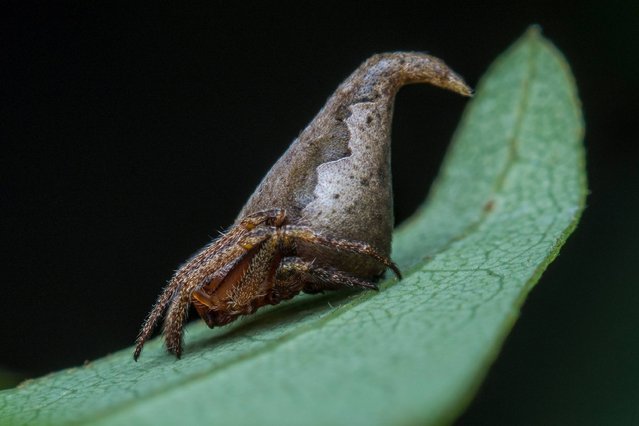
In this handout photograph received from Sumukha J.N on December 15, 2016, the newly-discovered spider Eriovixia Gryffindori sits on a leaf in the Kans in India's Western Ghats. (Photo by Sumukha J.N./AFP Photo)
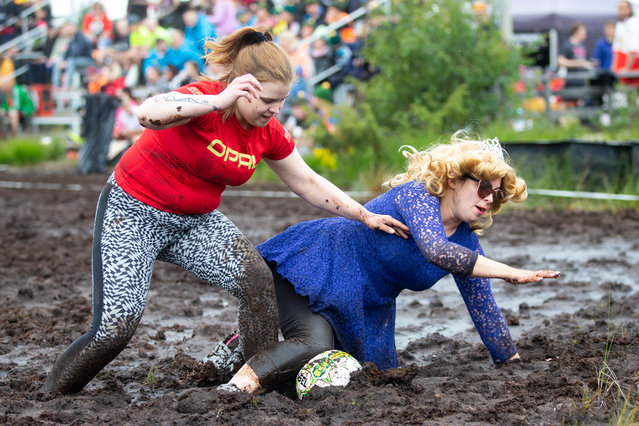
Players in action during the Swamp Soccer Championships 2019 in Hyrynsalmi, Finland, 19 July 2019. The World Championship in swamp football is played annually on Vuorisuo bog in Hyrynsalmi. (Photo by Tomi Hanninen/EPA/EFE)
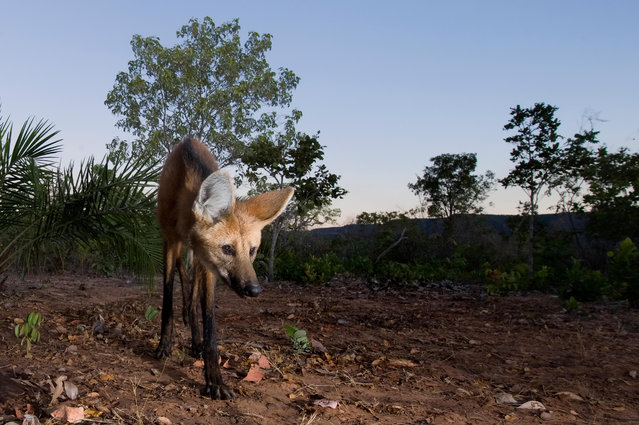
Global wildlife populations will decline by 67% by 2020 unless urgent action is taken to reduce human impact on species and ecosystems, warns the biennial Living Planet Index report from WWF (World Wide Fund for Nature) and ZSL (Zoological Society of London). From elephants to eels, here are some of the wildlife populations most affected by human activity. Here: The maned wolf is among the large mammals in the Brazilian Cerrado that are threatened by the increasing conversion of grasslands into farmland for grazing and growing crops. (Photo by Ben Cranke/Nature Picture Library/Alamy Stock Photo)
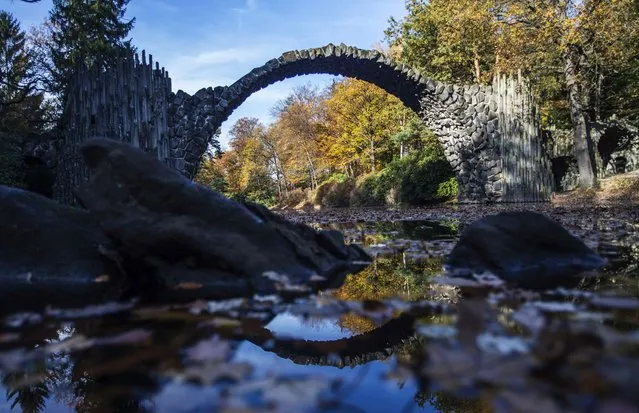
The Bridge “Rakotzbrücke” is pictured against trees in autumn colours in the the eastern German town of Kromlau November 4, 2014. (Photo by Hannibal Hanschke/Reuters)