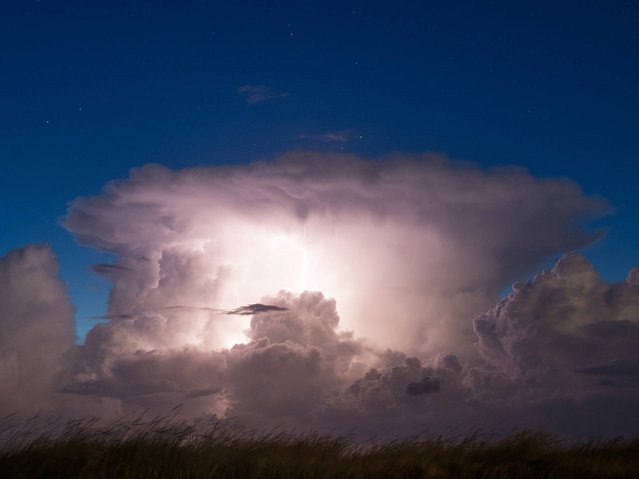
Lightning illuminates a thundercloud as a storm front hits the North Sea region near Westerhever, northern Germany, on August 11, 2014. (Photo by Daniel Reinhardt/AFP Photo/DPA)
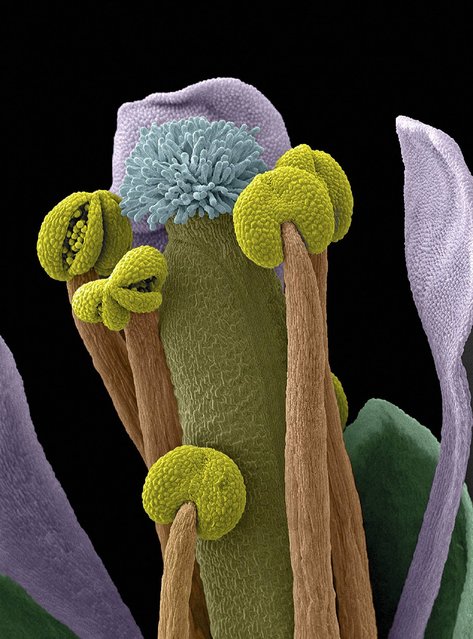
Beautiful, strange and occasionally alarming pictures from the shortlist for this year’s Wellcome image awards – which celebrate the very best in science photography and imaging – from an x-ray of a bat to a micrograph of a kidney stone. The exhibition opens on 12 March at three science centres and the Museum of Science and Industry in Manchester. Photo: Scanning electron micrograph (SEM) of an Arabidopsis thaliana flower, also commonly known as thale cress. Some of the anthers are open, revealing pollen grains ready for dispersal. Arabidopsis was the first plant to have its entire genome sequenced and is widely used as a model organism in molecular and plant biology. Horizontal width of image is 1200 microns. Magnification 100x. (Photo by Stefan Eberhard/Wellcome Images)
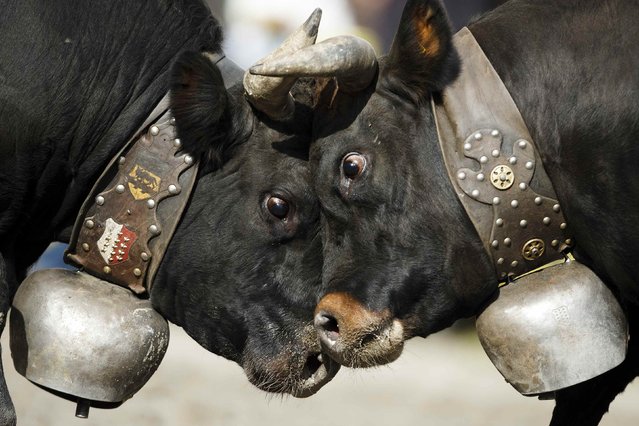
Two Herens cows lock horns during the qualification round of the annual “Battle of the Queens” cow fight finals in Aproz, in the western Alpine canton of Valais May 5, 2013. Each year when taken to the alpine pastures, the cows test their strength and fight for the herd's leadership. The competition continues until a new queen has forced all the other cows to retreat. (Photo by Valentin Flauraud/Reuters)
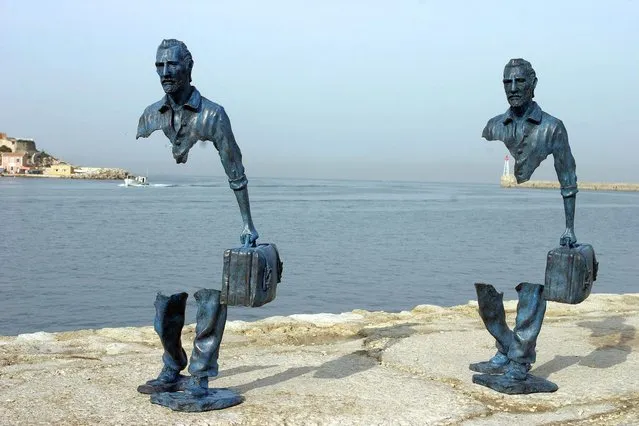
Two sculputures at the waterfront in Marseille – Ever feel like youve forgotten something? No its not a mind trick – these are the amazing photos of sculptures done by a French artist. The sculptures are the work of Bruno Catalano and might look like theyre missing vital organs but the invisible bodies represent a world citizen according to their creator. (Photo by Caters News Agency)
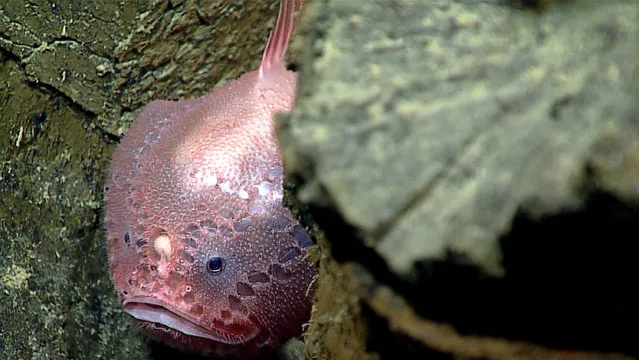
This April 30, 2016 image made available by NOAA shows a deep sea anglerfish living between pillow basalt rock formations, during a deepwater exploration of the Marianas Trench Marine National Monument area in the Pacific Ocean near Guam and Saipan. The ambush predator waits for prey to be attracted by its lure, located between its eyes, and gulps it with its large mouth. (Photo by NOAA Office of Ocean Exploration and Research via AP Photo)