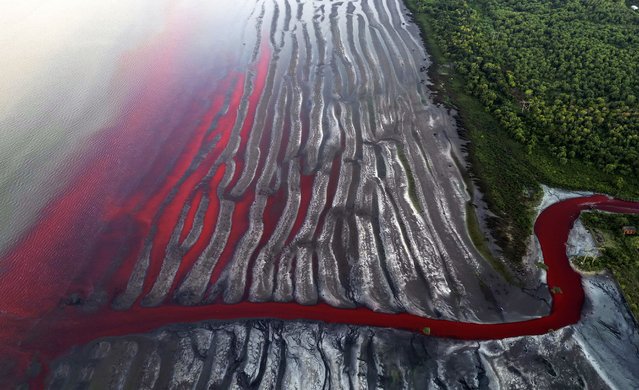
The “Sarandi” stream, dyed red due to unknown contaminants allege residents, flows into the Río de la Plata on the outskirts of Buenos Aires, Argentina, February 6, 2025. (Photo by Rodrigo Abd/AP Photo)
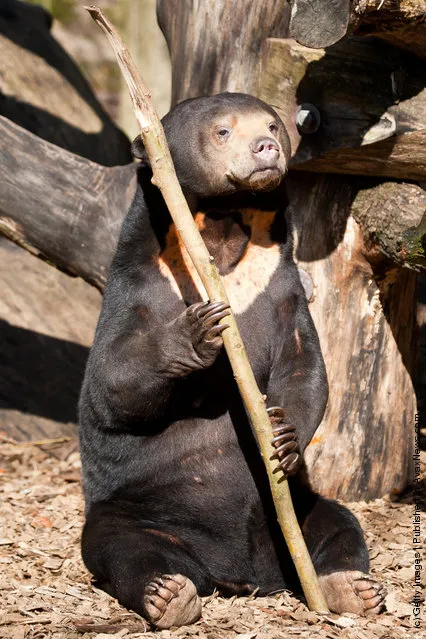
The sun bear (Ursus malayanus), also known as the honey bear, is a bear found primarily in the tropical rainforest (the dense lowland forests) in Southeast Asia; North-East India, Bangladesh, Myanmar, Thailand, Laos, Cambodia, Vietnam, Southern China, Peninsular Malaysia, and the islands of Sumatra and Borneo.
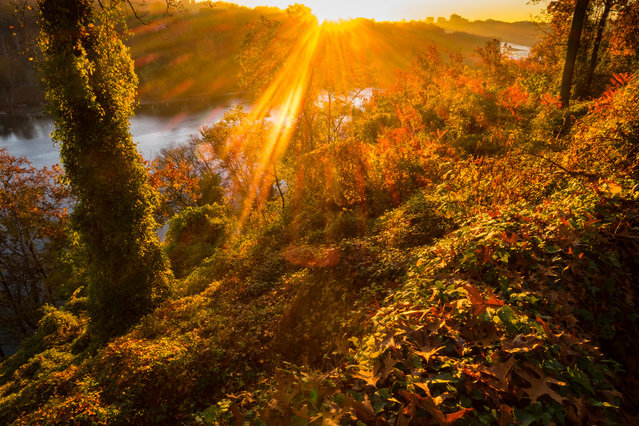
The sun streaks through the fall foliage at sunrise along the Potomac River in Arlington, Va., Wednesday, November 4, 2015 on a warm fall day in the nation's Capitol area. (Photo by J. David Ake/AP Photo)
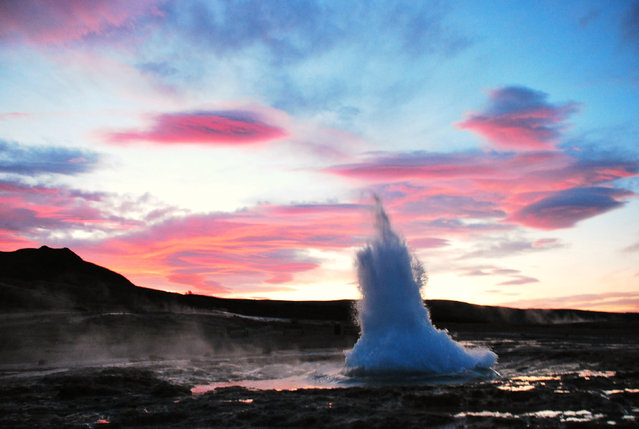
Strokkur geyser against cloudy sky at sunset. Strokkur is a fountain geyser located in a geothermal area beside the Hvítá River in Iceland in the southwest part of the country, east of Reykjavík. It is one of Iceland's most famous geysers, erupting once every 6–10 minutes. Its usual height is 15–20 m, although it can sometimes erupt up to 40 m high. (Photo by Teatsche Dijkhuis/Getty Images/EyeEm)
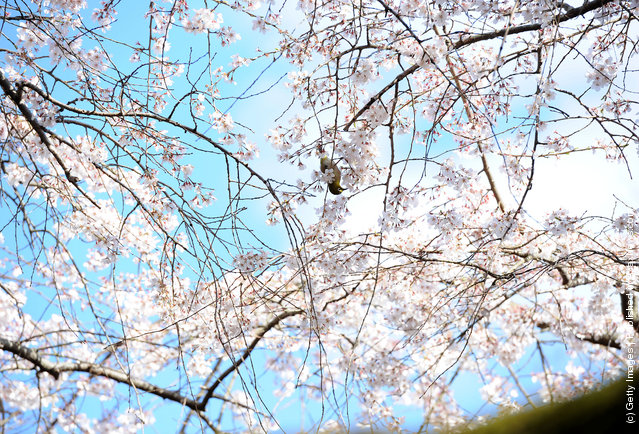
A Japanese white-eye is seen on a branch of cherry blossoms at Kyoto Imperial Palace on March 26, 2010 in Kyoto, Japan. (Photo by Akihiro I/Getty Images)
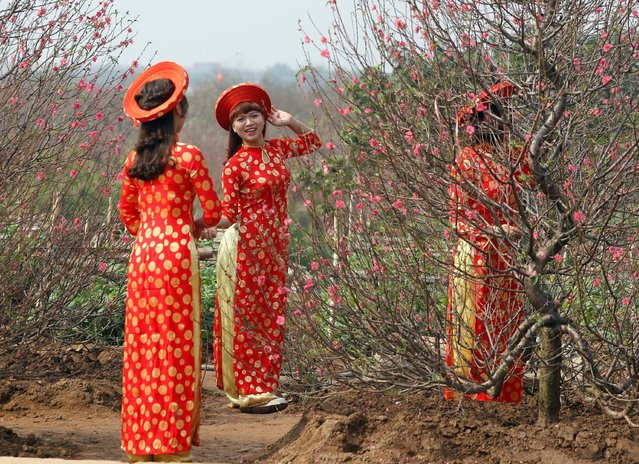
Women, wearing traditional “ao dai” dress, pose for a photo next to peach blossom flowers ahead of Vietnamese “Tet” (the lunar new year festival) in a field in Hanoi January 22, 2017. (Photo by Reuters/Kham)
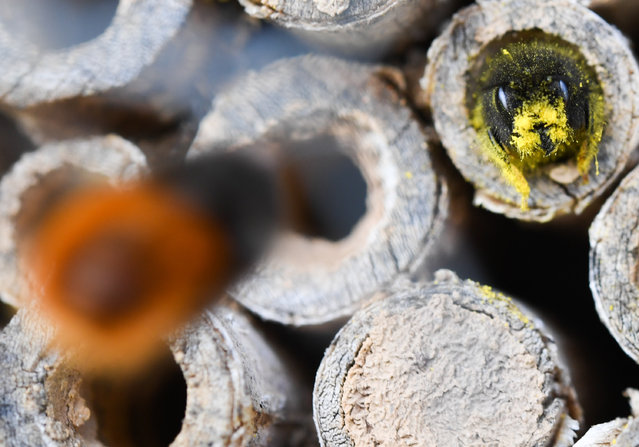
A mason bee deposits its collected pollen in an elderberry stick near Hessen, Germany on March 27, 2020. The food supply is sufficient for the eleven-month development of the brood from the egg to the finished bee. Wild bees are active in March and April and die before their offspring hatch. (Photo by Arne Dedert/dpa)