Loading...
Done
Spectators pose for a selfie before the running of the Melbourne Cup at the Flemington Racecourse in Melbourne, Australia, Tuesday, November 6, 2018. (Photo by Andy Brownbill/AP Photo)

Spectators pose for a selfie before the running of the Melbourne Cup at the Flemington Racecourse in Melbourne, Australia, Tuesday, November 6, 2018. (Photo by Andy Brownbill/AP Photo)
Details
06 Nov 2018 09:50:00
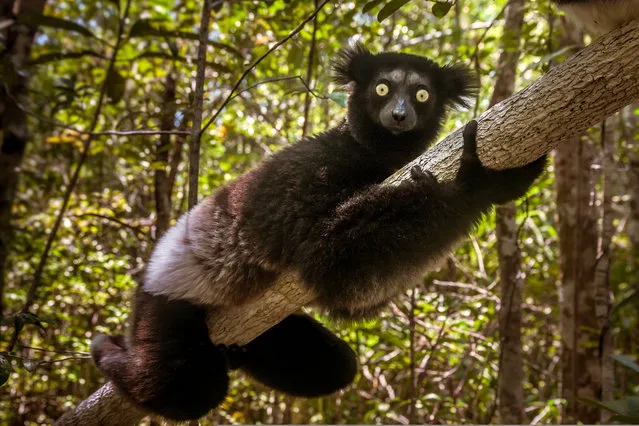
The secretive indri (Indri indri) of Madagascar, the largest living lemur. It is also critically endangered and highly evolutionarily distinct with no close relatives, which makes its branch one of most precarious on the mammal evolutionary tree. In the likely event that the indri goes extinct, we will lose 19m years of unique evolutionary history from the mammal tree of life. (Photo by Pierre-Yves Babelon/Aarhus University)

The secretive indri (Indri indri) of Madagascar, the largest living lemur. It is also critically endangered and highly evolutionarily distinct with no close relatives, which makes its branch one of most precarious on the mammal evolutionary tree. In the likely event that the indri goes extinct, we will lose 19m years of unique evolutionary history from the mammal tree of life. (Photo by Pierre-Yves Babelon/Aarhus University)
Details
18 Nov 2018 00:02:00
Actor John Travolta (L) and recording artist Lady Gaga attend Interscope's Grammy After Party with Lady Gaga at the Peppermint Club on February 12, 2017 in Los Angeles, California. (Photo by Christopher Polk/Getty Images for Interscope)

Actor John Travolta (L) and recording artist Lady Gaga attend Interscope's Grammy After Party with Lady Gaga at the Peppermint Club on February 12, 2017 in Los Angeles, California. (Photo by Christopher Polk/Getty Images for Interscope)
Details
14 Feb 2017 11:38:00
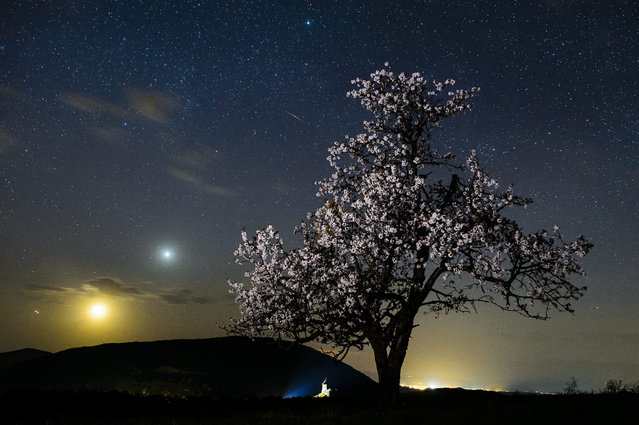
A meteorite burns up in the atmosphere as seen in this photo taken near of Salgotarjan, 109 kms northeast of Budapest, Hungary, late 21 April 2015. The Moon and Venus can be seen on the left. (Photo by Peter Komka/EPA)

A meteorite burns up in the atmosphere as seen in this photo taken near of Salgotarjan, 109 kms northeast of Budapest, Hungary, late 21 April 2015. The Moon and Venus can be seen on the left. (Photo by Peter Komka/EPA)
Details
04 May 2015 09:25:00
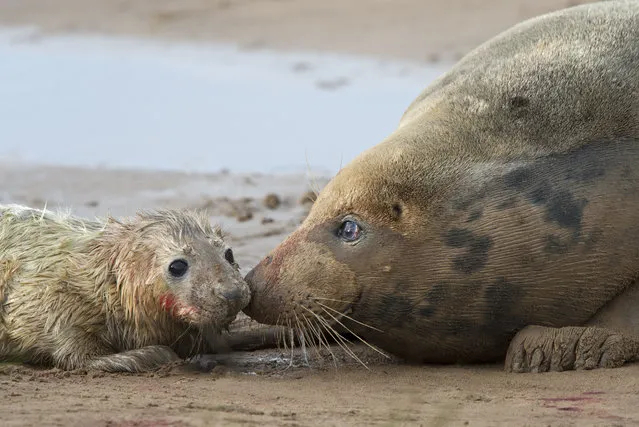
A newborn grey seal pup is tended by its mother at Donna Nook, a nature reserve on the county’s coastline managed by Lincolnshire Wildlife Trust in Lincolnshire, UK on November 23, 2015. (Photo by David Tipling/Rex Shutterstock)

A newborn grey seal pup is tended by its mother at Donna Nook, a nature reserve on the county’s coastline managed by Lincolnshire Wildlife Trust in Lincolnshire, UK on November 23, 2015. (Photo by David Tipling/Rex Shutterstock)
Details
30 Nov 2015 08:02:00
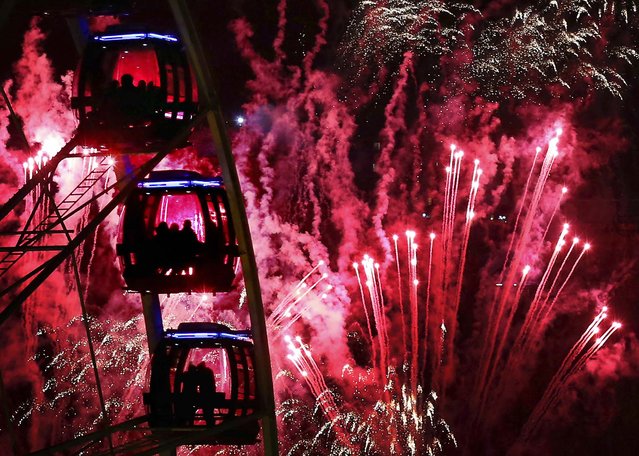
People ride a Ferris wheel as fireworks illuminate the sky over Edinburgh, Scotland. (Photo by David Cheskin/Press Association)

People ride a Ferris wheel as fireworks illuminate the sky over Edinburgh, Scotland. (Photo by David Cheskin/Press Association)
Details
01 Jan 2014 11:15:00
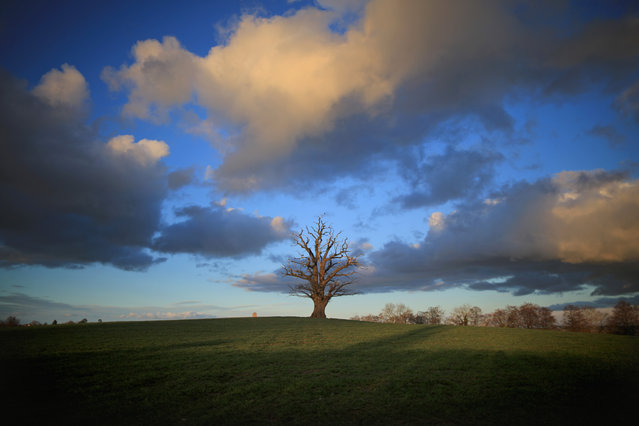
An ancient oak tree sits in a Shropshire field as the first signs of Spring begin to show across the United Kingdom on February 19, 2014 in Bridgnorth, England. (Photo by Christopher Furlong/Getty Images)

An ancient oak tree sits in a Shropshire field as the first signs of Spring begin to show across the United Kingdom on February 19, 2014 in Bridgnorth, England. (Photo by Christopher Furlong/Getty Images)
Details
24 Feb 2014 10:51:00
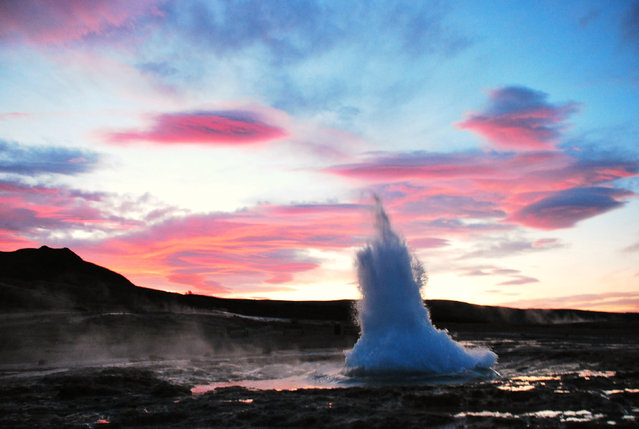
Strokkur geyser against cloudy sky at sunset. Strokkur is a fountain geyser located in a geothermal area beside the Hvítá River in Iceland in the southwest part of the country, east of Reykjavík. It is one of Iceland's most famous geysers, erupting once every 6–10 minutes. Its usual height is 15–20 m, although it can sometimes erupt up to 40 m high. (Photo by Teatsche Dijkhuis/Getty Images/EyeEm)


Strokkur geyser against cloudy sky at sunset. Strokkur is a fountain geyser located in a geothermal area beside the Hvítá River in Iceland in the southwest part of the country, east of Reykjavík. It is one of Iceland's most famous geysers, erupting once every 6–10 minutes. Its usual height is 15–20 m, although it can sometimes erupt up to 40 m high. (Photo by Teatsche Dijkhuis/Getty Images/EyeEm)
Details
18 Oct 2016 12:43:00