Loading...
Done
A family member of the Toraja ethnic group prepares the bodies of exhumed relatives from a community burial site to be cleaned and dressed in a series of traditional ceremonies honouring the dead known as Manene at Torea village, in North Toraja, Indonesia's South Sulawesi on August 17, 2022. (Photo by Andri Saputra/AFP Photo)

A family member of the Toraja ethnic group prepares the bodies of exhumed relatives from a community burial site to be cleaned and dressed in a series of traditional ceremonies honouring the dead known as Manene at Torea village, in North Toraja, Indonesia's South Sulawesi on August 17, 2022. (Photo by Andri Saputra/AFP Photo)
Details
06 Sep 2022 04:44:00
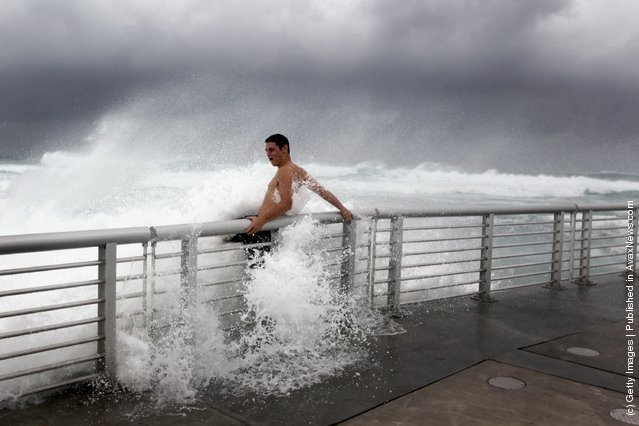
Florida Beaches Feel Effects Of Hurricane Irene

Cory Ritz braces himself as a wave bursts onto a pier at the Boynton Beach inlet on August 25, 2011 in Boynton Beach, Florida. Hurricane Irene is moving over the Bahamas and could still be a major storm as it approaches the North Carolina coast the morning of August 27. (Photo by Joe Raedle/Getty Images)
Details
26 Aug 2011 09:11:00


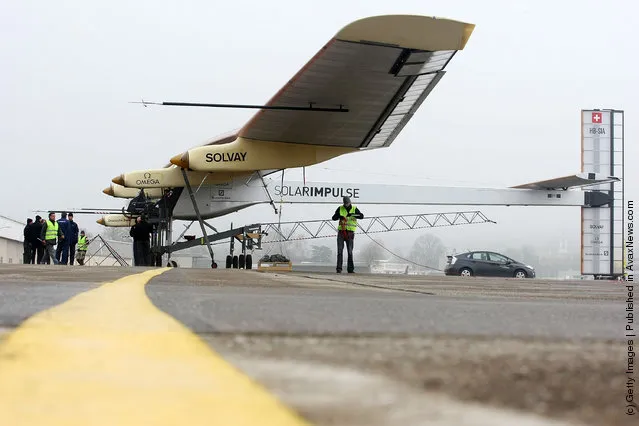
“Solar Impulse is a European long-range solar powered plane project being undertaken by Bertrand Piccard and André Borschberg. The project eventually hopes to succeed in the first circling of the earth with a piloted fixed-wing aircraft using only solar power. The first aircraft, bearing the Swiss aircraft registration code of HB-SIA, is a single-seater, capable of taking off under its own power, and intended to remain airborne up to 36 hours. This aircraft first flew an entire diurnal solar cycle, including nearly 9 hours of night flying, in a 26-hour flight on 7–8 July 2010”. – Wikipedia


Photo: Workers prepare the Solar Impulse airplane HB-SIA for a first runway test on November 19, 2009 in Dubendorf, Switzerland. Solar Impulse chairman Bertrand Piccard, psychatrist and aeronaut, who made the first non-stop round-the-world balloon flight, and CEO and former fighter pilot Andrй Borschberg plan a round-the-world flight, driven only by solar energy, for 2012. (Photo by Johannes Simon/Getty Images)
Details
16 May 2011 08:13:00


A young boy rests by empty USAID vegetable oil tins in the Dagahaley refugee camp which makes up part of the giant Dadaab refugee settlement on July 19, 2011 in Dadaab, Kenya. The refugee camp at Dadaab, located close to the Kenyan border with Somalia, was originally designed in the early 1990s to accommodate 90,000 people but the UN estimates over 4 times as many reside there. The ongoing civil war in Somalia and the worst drought to affect the Horn of Africa in six decades has resulted in an estimated 12 million people whose lives are threatened. (Photo by Oli Scarff/Getty Images)
Details
20 Jul 2011 12:08:00


An image produced by the Hubble telescope of the perfectly “edge-on” galaxy, or NGC 4013, March 1, 2001. This new Hubble picture reveals, with great detail, huge clouds of dust and gas extending along, as well as far above, the galaxy's main disk. NGC 4013 is a spiral galaxy, similar to the Milky Way, lying some 55 million light-years from Earth in the direction of the constellation Ursa Major. Viewed face-on, it would look like a nearly circular pinwheel, but NGC 4013 happens to be seen edge-on from our vantage point. Even at 55 million light-years, the galaxy is larger than Hubble's field of view, and the image shows only a little more than half of the object, albeit with unprecedented detail. (Photo Courtesy of NASA/Newsmakers)
Details
28 Feb 2015 22:33:00
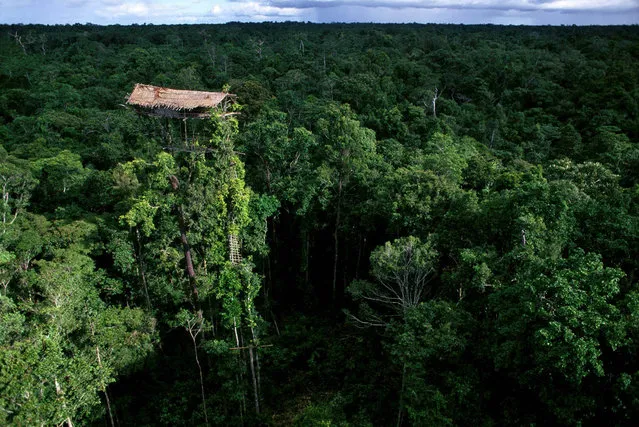
Korowai People

The Korowai, also called the Kolufo, are a people of southeastern Papua (i.e., the southeastern part of the western part of New Guinea). They number about 3,000. Until 1970, they were unaware of the existence of any people besides themselves.
Details
17 Mar 2013 12:45:00
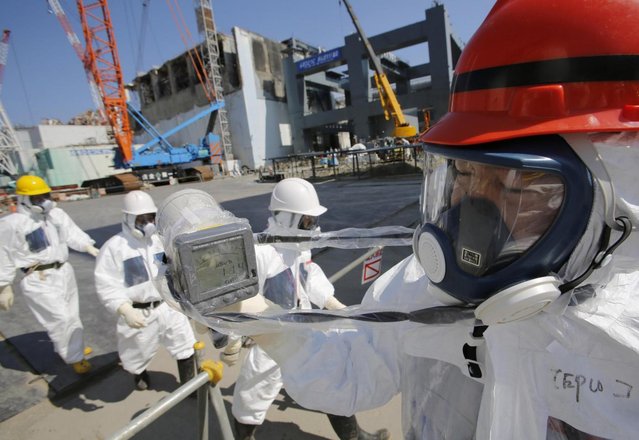
A radiation monitor indicates 114.00 microsieverts per hour near the building housing the plant's No. 4 reactor, center, and an under construction foundation, right, which will store the reactor's melted fuel rods at Tokyo Electric Power Co.'s tsunami-crippled Fukushima Dai-ichi nuclear power plant in Okuma, Fukushima prefecture, Wednesday, March 6, 2013, ahead of the second anniversary of the March 11, 2011 tsunami and earthquake. (Photo by Issei Kato/AP Photo/Pool)

A radiation monitor indicates 114.00 microsieverts per hour near the building housing the plant's No. 4 reactor, center, and an under construction foundation, right, which will store the reactor's melted fuel rods at Tokyo Electric Power Co.'s tsunami-crippled Fukushima Dai-ichi nuclear power plant in Okuma, Fukushima prefecture, Wednesday, March 6, 2013, ahead of the second anniversary of the March 11, 2011 tsunami and earthquake. Some 110,000 people living around the nuclear plant were evacuated after the massive March 11, 2011, earthquake and tsunami knocked out the plant's power and cooling systems, causing meltdowns in three reactors and spewing radiation into the surrounding air, soil and water. (Photo by Issei Kato/AP Photo/Pool)
Details
06 Mar 2013 13:19:00
Photography By Agustin Rafael Reyes

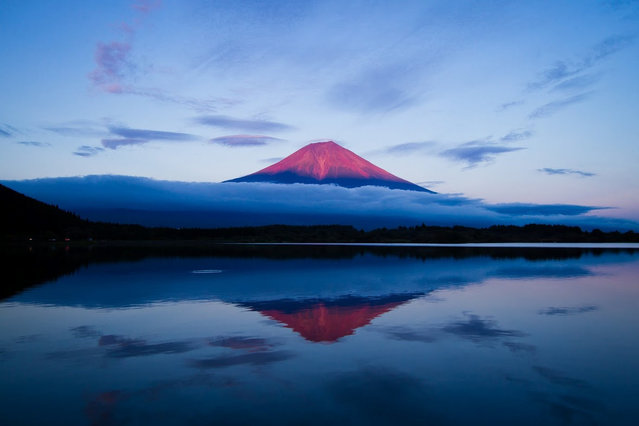
Amazing photographs by Agustin Rafael Reyes, software engineer and talented photographer from Manila, Philippines who currently based in Yokohama, Japan.
Details
27 May 2013 11:26:00