Loading...
Done
A cosplayer poses for a photograph during the Comic Market 90 (Comiket) event in Tokyo Big Sight on August 12, 2016, Tokyo, Japan. Many manga and anime fans wearing cosplay lined up in the sun for the first day of Comiket. Comiket was established in 1975 and focuses on manga, anime, gaming and cosplay. Organizers expect more than 500,000 visitors to attend this year's summer event which runs for three days until August 14. (Photo by Aflo/Splash News)

A cosplayer poses for a photograph during the Comic Market 90 (Comiket) event in Tokyo Big Sight on August 12, 2016, Tokyo, Japan. Many manga and anime fans wearing cosplay lined up in the sun for the first day of Comiket. Comiket was established in 1975 and focuses on manga, anime, gaming and cosplay. Organizers expect more than 500,000 visitors to attend this year's summer event which runs for three days until August 14. (Photo by Aflo/Splash News)
Details
13 Aug 2016 11:42:00
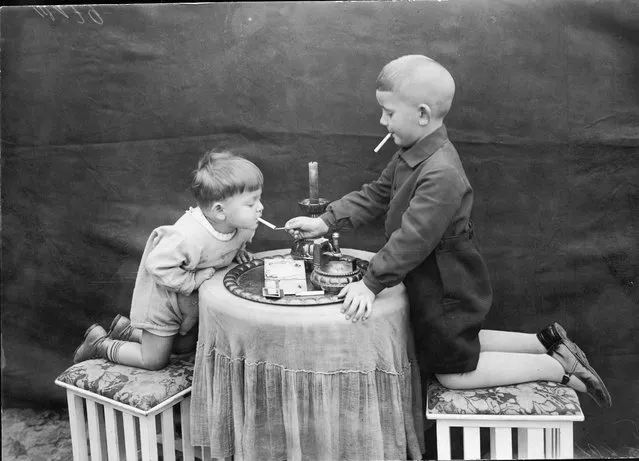
Two young boys kneel on stools on either side of a round table as one uses a match to this the other's cigarette, November 12, 1928. (Photo by FPG/Getty Images)

Two young boys kneel on stools on either side of a round table as one uses a match to this the other's cigarette, November 12, 1928. (Photo by FPG/Getty Images)
Details
17 Sep 2016 10:53:00
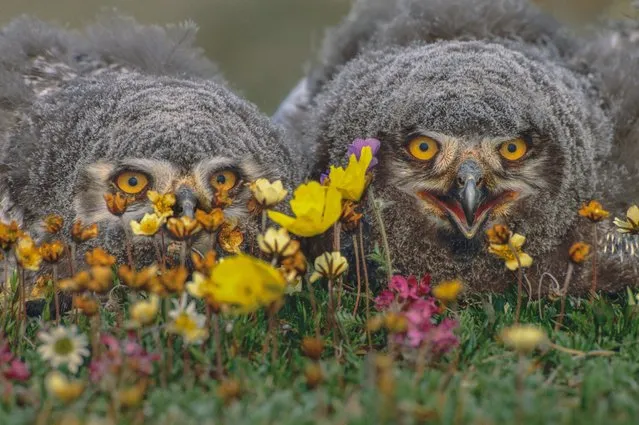
Snowy owlets (Bubo scandiacus), Arctic National Wildlife Refuge, Alaska, USA. “A pair of gray-feathered snowy owlets hunker down in the abundant flowers that flourish in the dropping-enriched soil of their nest mound”. (Photo by Art Wolfe/Art Wolfe Stock)

The photography of Art Wolfe covers the globe, capturing landscapes, wildlife, and cultures from every continent; here he talks through a selection of his favourite images. Art Wolfe is an American photographer and conservationist. His photographs have been noted by environmental advocacy groups for their “stunning” visual impact. Here: Snowy owlets (Bubo scandiacus), Arctic National Wildlife Refuge, Alaska, USA. (Photo by Art Wolfe/Art Wolfe Stock)
Details
19 Mar 2018 00:05:00
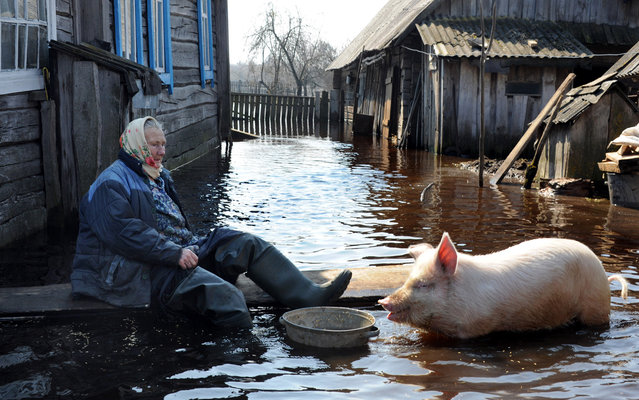
A woman feeds a pig in her yard during spring flood in the Belarus village of Snyadin near Pripyat river, some 300 km south of Minsk, on April 16, 2013. (Photo by Viktor Drachev/AFP Photo)

A woman feeds a pig in her yard during spring flood in the Belarus village of Snyadin near Pripyat river, some 300 km south of Minsk, on April 16, 2013. (Photo by Viktor Drachev/AFP Photo)
Details
20 Apr 2013 12:12:00
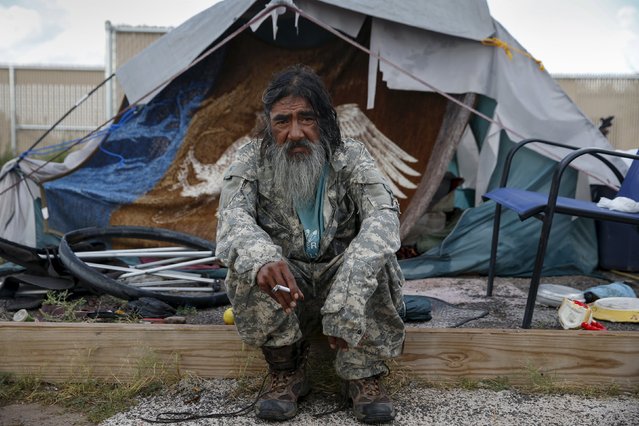
Daniel J. Wabsey, a 58-year-old war veteran, sits outside his tent at Camp Hope in Las Cruces, New Mexico October 6, 2015. “I've been traveling for 35 or 38 years. Getting inside would take a while to get used to. I just want to be able to eat, sleep and be safe. We all get along and understand in Camp Hope. We've all been there. With common sense you can survive out here”, Wabsey said. Camp Hope describe themselves as an “alternative transitional living project for the homeless”. Around 50 people live at the camp. (Photo by Shannon Stapleton/Reuters)

Daniel J. Wabsey, a 58-year-old war veteran, sits outside his tent at Camp Hope in Las Cruces, New Mexico October 6, 2015. “I've been traveling for 35 or 38 years. Getting inside would take a while to get used to. I just want to be able to eat, sleep and be safe. We all get along and understand in Camp Hope. We've all been there. With common sense you can survive out here”, Wabsey said. Camp Hope describe themselves as an “alternative transitional living project for the homeless”. Around 50 people live at the camp. (Photo by Shannon Stapleton/Reuters)
Details
19 Dec 2015 08:05:00
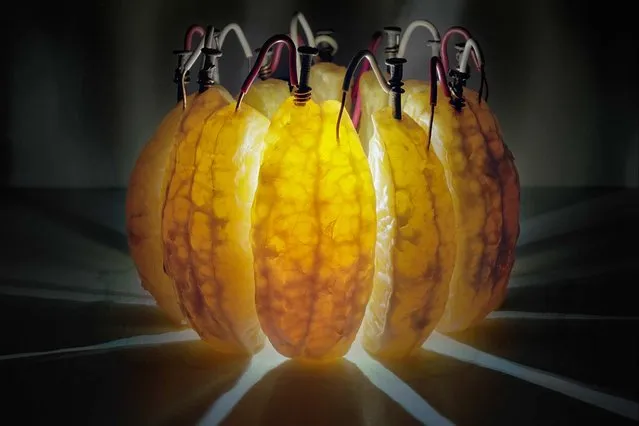
Wedges of an orange generate enough current and electrical juice – 3.5 volts – to power an LED. The fruit’s citric acid helps electrons flow from galvanized nails to copper wire in this 14-hour exposure. This image was published in September’s Visions of Earth, a trio of photos that appear in each issue of National Geographic. (Photo by Caleb Charland/National Geographic)

Wedges of an orange generate enough current and electrical juice – 3.5 volts – to power an LED. The fruit’s citric acid helps electrons flow from galvanized nails to copper wire in this 14-hour exposure. This image was published in September’s Visions of Earth, a trio of photos that appear in each issue of National Geographic. (Photo by Caleb Charland/National Geographic)
Details
06 Jan 2014 12:09:00
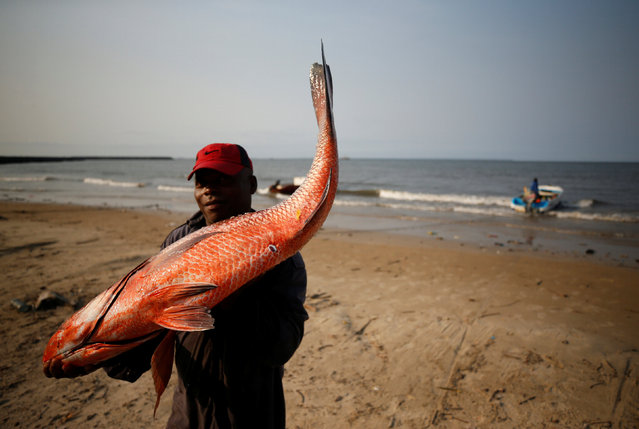
A fisherman carries his catch to sell on the beach in Libreville, Gabon, February 3, 2017. (Photo by Mike Hutchings/Reuters)

A fisherman carries his catch to sell on the beach in Libreville, Gabon, February 3, 2017. (Photo by Mike Hutchings/Reuters)
Details
08 Jul 2017 08:54:00
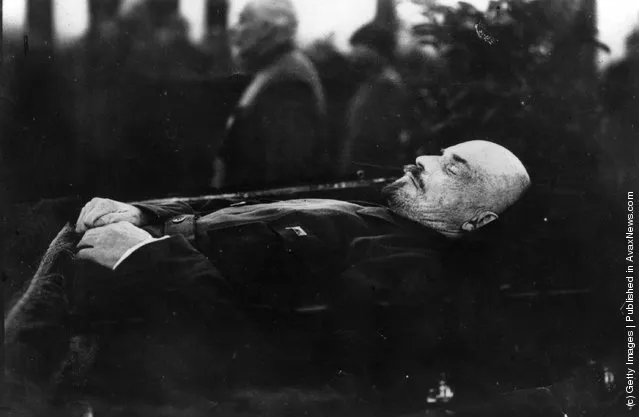
1924:  Vladimir Ilyich Lenin lying in state in the Kremlin

Photo: Vladimir Ilyich Lenin (1870 – 1924) lying in state in the Kremlin. (Photo by Hulton Archive/Getty Images). 1924

Important! For the same article in Russian language click here.

Something quite intriguing is happening within Russian-speaking internet during the last few – should you type a fully academic inquiry (at least, according to Russian academic requirements) in national search engines for "Lenin's mausoleum" – the first thing you get (even in top 10 searches) is website pages talking about black magic and occult. Website authors view this construction differently, but unconditionally agree on one thing: the mausoleum of the "leader of the world proletariat” – the essence of a magical artifact, a sort of “energy vampire”. It was built with a certain purpose: to drain the energy out of miserable Soviet citizens on one hand; and to poison the anthroposphere of one-sixth part of the earth with its vibes (the exact territory that was occupied by the former Soviet Union), depriving the Russian people of will to resist on the other hand. Complete nonsense? No doubt. Nevertheless, an intriguing one. Well, probably because some oddities do exist in mausoleum's history. These oddities are the thing we are going to discuss this time. First, let me refresh you memory on the subject.
Details
16 Oct 2011 11:27:00