Loading...
Done
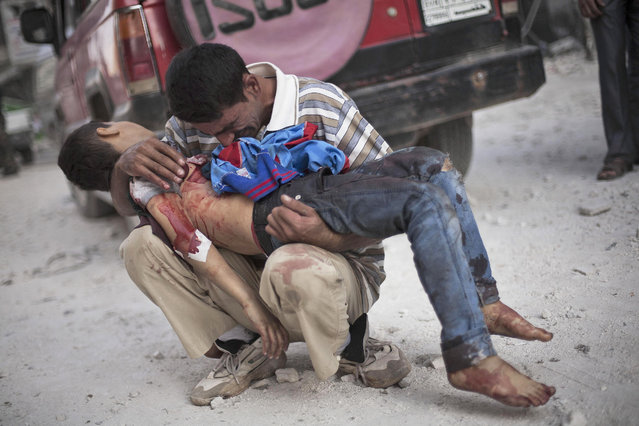
A Syrian man cries while holding the body of his son, killed by the Syrian Army, near Dar El Shifa hospital in Aleppo, Syria, Wednesday, October 3, 2012. (Photo by Manu Brabo/AP Photo)

Manu Brabo was born in Spain in 1981. After studying Photography in The School of Arts and Crafts in Oviedo, he moved to Madrid where he started Journalism in Carlos III University while he was working as a photographer for several humble newspapers and agencies. In 2011, Manu was held captive and then released by by Libyan forces. Brabo, along with fellow AP photographers were awarded the 2013 Pulitzer Prize for Breaking News Photography. Here: a Syrian man cries while holding the body of his son, killed by the Syrian Army, near Dar El Shifa hospital in Aleppo, Syria, Wednesday, October 3, 2012. (Photo by Manu Brabo/AP Photo)
Details
27 Oct 2015 08:04:00


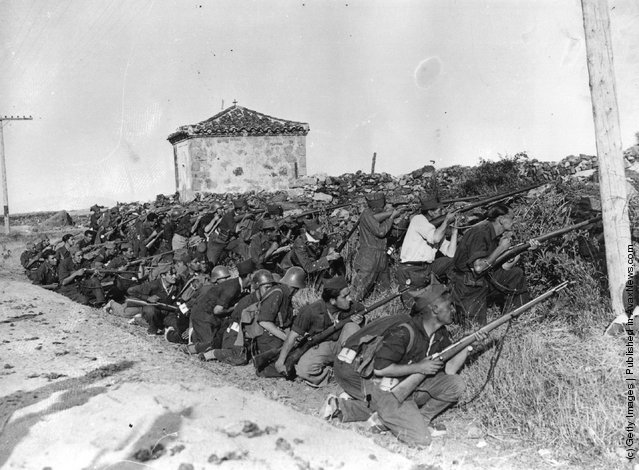
A Republican farmer defending a farm on the outskirts of Irun against Nationalist forces during the Spanish Civil War, 6th September 1936. A comrade lies dead by his side. (Photo by Keystone/Hulton Archive/Getty Images)
Details
23 May 2011 05:59:00
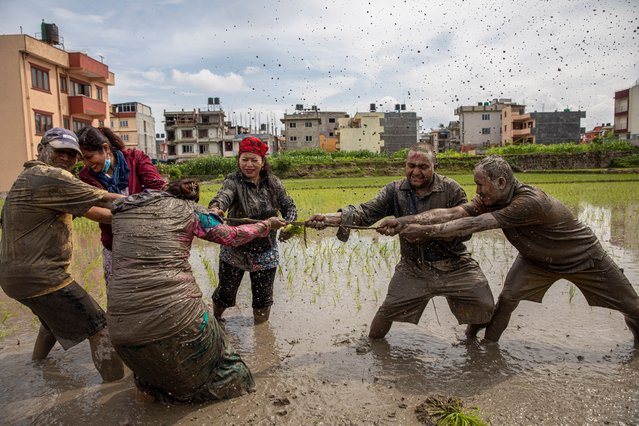
Farmers play tug of war in a paddy field on National Paddy Day in Tokha village, on the outskirt of capital Kathmandu, Nepal, 29 June 2021. Nepal is celebrating National Paddy Day with various events on 29 June. On this day, known as Asar Pandra, farmers begin the annual rice planting season and mark the day with various festivities such as preparing rice meals with muddy water, mud being a symbol for a prosperous season. Sixty percent of Nepal's agriculture industry relies on monsoon rain while 40 percent is carried out through irrigation. Agriculture is a major contributor to the country's GDP. (Photo by Narendra Shrestha/EPA/EFE)

Farmers play tug of war in a paddy field on National Paddy Day in Tokha village, on the outskirt of capital Kathmandu, Nepal, 29 June 2021. Nepal is celebrating National Paddy Day with various events on 29 June. On this day, known as Asar Pandra, farmers begin the annual rice planting season and mark the day with various festivities such as preparing rice meals with muddy water, mud being a symbol for a prosperous season. Sixty percent of Nepal's agriculture industry relies on monsoon rain while 40 percent is carried out through irrigation. Agriculture is a major contributor to the country's GDP. (Photo by Narendra Shrestha/EPA/EFE)
Details
26 Feb 2022 04:53:00
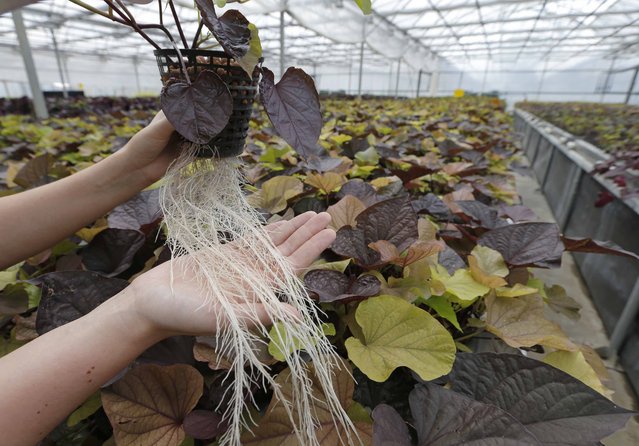
An employee holds a plant with roots at the Plant Advanced Technologies (PAT) company greenhouse in Laronxe near Nancy, Eastern France, June 19, 2015. The farmers employed at the site in Laronxe are growing plants in a special way with a view to “milking” them for use in medicines, cosmetics and agrochemicals. (Photo by Vincent Kessler/Reuters)

An employee holds a plant with roots at the Plant Advanced Technologies (PAT) company greenhouse in Laronxe near Nancy, Eastern France, June 19, 2015. The farmers employed at the site in Laronxe are growing plants in a special way with a view to “milking” them for use in medicines, cosmetics and agrochemicals. Several major brands, including Germany's BASF and France's Chanel, have teamed up with Plant Advanced Technologies (PAT) in the hope of securing privileged access to the so-called “biomolecules” it extracts through the use of a patented technique. (Photo by Vincent Kessler/Reuters)
Details
23 Jul 2015 10:56:00
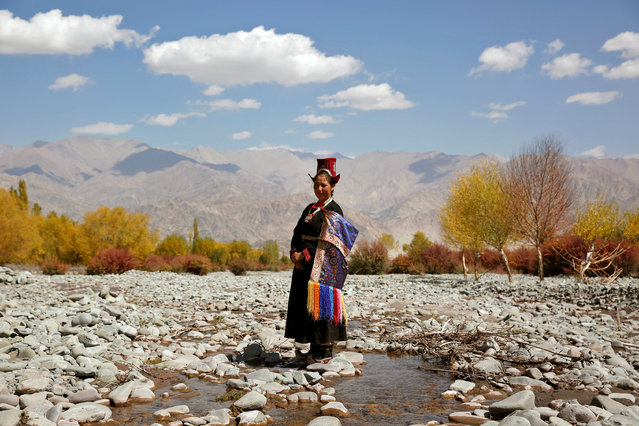
Tsewang Dolma, 33, a farmer and housewife poses for a photograph in Matho, a village nestled high in the Indian Himalayas, India September 29, 2016. When asked how living in the world's fastest growing major economy had affected life, Dolma replied: “Our culture is spoiled now. We don't wear our traditional dress”. (Photo by Cathal McNaughton/Reuters)

Tsewang Dolma, 33, a farmer and housewife poses for a photograph in Matho, a village nestled high in the Indian Himalayas, India September 29, 2016. When asked how living in the world's fastest growing major economy had affected life, Dolma replied: “Our culture is spoiled now. We don't wear our traditional dress”. (Photo by Cathal McNaughton/Reuters)
Details
13 Oct 2016 11:32:00
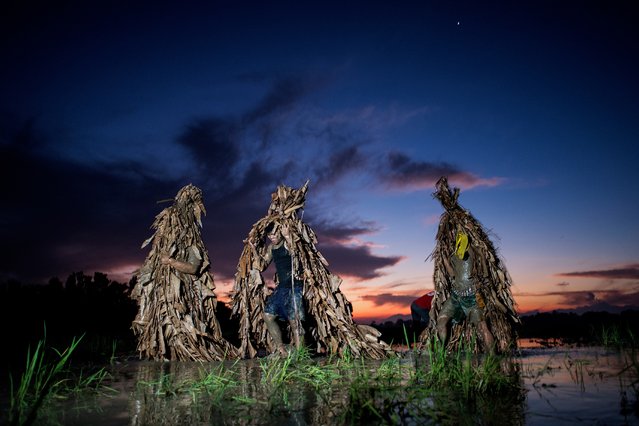
Devotees wear costumes made of banana leaves as they head to church to attend mass as part of a religious festival, in honor of St. John the Baptist, also known locally as the “mud people” festival, in Aliaga town, Nueva Ecija province, north of Manila, on June 24, 2017. Farmers coated in mud paraded in Philippine villages on June 24 to mark one of the Catholic nation's most colourful religious festivals. (Photo by Noel Celis/AFP Photo)

Devotees wear costumes made of banana leaves as they head to church to attend mass as part of a religious festival, in honor of St. John the Baptist, also known locally as the “mud people” festival, in Aliaga town, Nueva Ecija province, north of Manila, on June 24, 2017. Farmers coated in mud paraded in Philippine villages on June 24 to mark one of the Catholic nation's most colourful religious festivals. (Photo by Noel Celis/AFP Photo)
Details
27 Jun 2017 08:30:00
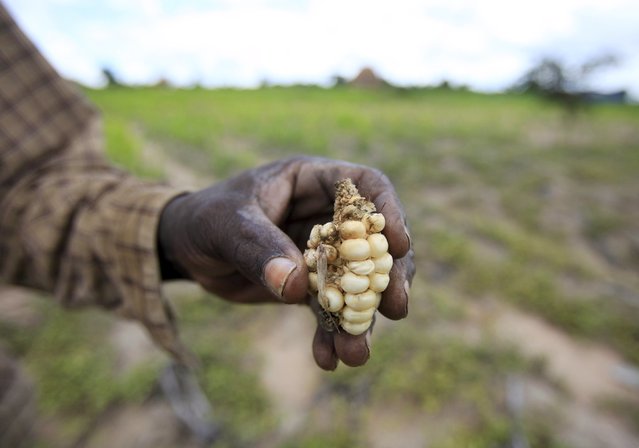
A Zimbabwean subsistence farmer holds a stunted maize cob in his field outside Harare, January 20, 2016. About 14 million people face hunger in Southern Africa because of a drought that has been exacerbated by an El Nino weather pattern, the United Nations World Food Programme (WFP) said on Monday. In Zimbabwe, 1.5 million people, more than 10 percent of the population, face hunger, WFP said. (Photo by Philimon Bulawayo/Reuters)

A Zimbabwean subsistence farmer holds a stunted maize cob in his field outside Harare, January 20, 2016. About 14 million people face hunger in Southern Africa because of a drought that has been exacerbated by an El Nino weather pattern, the United Nations World Food Programme (WFP) said on Monday. In Zimbabwe, 1.5 million people, more than 10 percent of the population, face hunger, WFP said. (Photo by Philimon Bulawayo/Reuters)
Details
22 Jan 2016 10:06:00
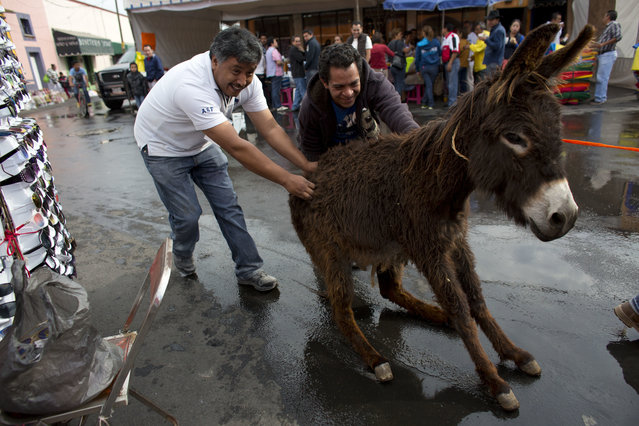
In this May 1, 2016 photo, a reluctant donkey is alternately pushed and pulled and enticed with carrots toward town hall in order to be dressed for the costume competition at the annual donkey festival in Otumba, Mexico state, Mexico. Otumba was an important donkey market during Spanish colonial times, standing at the crossroads of major roads leading to Mexico City, where the beasts pulled heavy loads and carried travelers. Today, however, farmers use tractors and pickup trucks, and the donkey population is in decline. (Photo by Rebecca Blackwell/AP Photo)

In this May 1, 2016 photo, a reluctant donkey is alternately pushed and pulled and enticed with carrots toward town hall in order to be dressed for the costume competition at the annual donkey festival in Otumba, Mexico state, Mexico. Otumba was an important donkey market during Spanish colonial times, standing at the crossroads of major roads leading to Mexico City, where the beasts pulled heavy loads and carried travelers. Today, however, farmers use tractors and pickup trucks, and the donkey population is in decline. (Photo by Rebecca Blackwell/AP Photo)
Details
04 May 2016 11:55:00