Loading...
Done
Pilot Felix Baumgartner of Austria is seen before his jump during the first manned test flight for Red Bull Stratos

“Felix Baumgartner (born 20 April 1969 in Salzburg, Austria) is a skydiver and a BASE jumper. He is renowned for the particularly dangerous nature of the stunts he has performed during his career. Baumgartner spent time in the Austrian military where he practiced parachute jumping, including training to land on small target zones”. – Wikipedia

Photo: Pilot Felix Baumgartner of Austria is seen before his jump during the first manned test flight for Red Bull Stratos on March 15, 2012 in Roswell, New Mexico. In this test he reach the altitude 21800 meters (71500 ft) and landed safely near Roswell. Red Bull Stratos is a mission to the edge of the earths atmosphere, where upon reaching altitude of 120,000 feet by helium baloon, pilot and basejumper Felix Baumgartner will then freefall to the ground in an attempt to break the speed of sound. (Photo by Jay Nemeth/Red Bull via Getty Images)
Details
17 Mar 2012 13:11:00
Kreuzberg Vegetable Battle

A female participant armed with a bottle of ketchup attacks in the annual Vegetable Battle in Kreuzberg district near Oberbaumbruecke Bridge on August 28, 2011 in Berlin, Germany. The event pits Kreuzberg district residents againts Friedrichshain district residents for control of the Oberbaumbruecke, and the two sides pelt each other with rotten vegetables, other foods, ketchup, water guns and styrofoam bats until one side has pushed the other from the bridge. The event had originally been cancelled for today, but so many participants showed up anyway and began battling on the Kreuzberg side, where the situation escalated and began to threaten traffic, that police relented and let them later battle it out on the bridge. Kreuzberg claimed victory. (Photo by Sean Gallup/Getty Images)
Details
29 Aug 2011 15:02:00


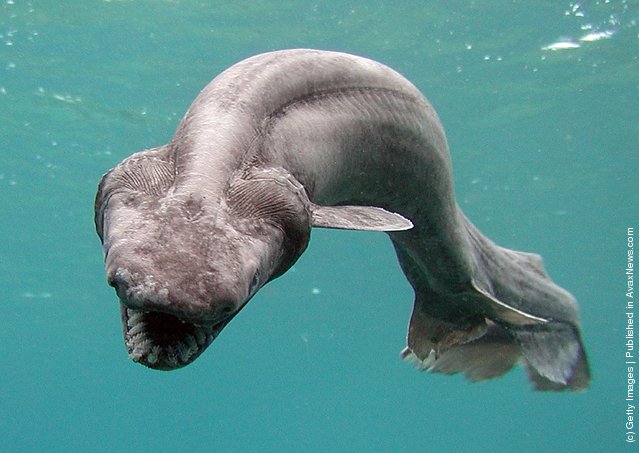
“The frilled shark (Chlamydoselachus anguineus) is one of two extant species of shark in the family Chlamydoselachidae, with a wide but patchy distribution in the Atlantic and Pacific Oceans. This uncommon species is found over the outer continental shelf and upper continental slope, generally near the bottom though there is evidence of substantial upward movements. It has been caught as deep as 1,570 m (5,150 ft), whereas in Suruga Bay, Japan it is most common at depths of 50–200 m (160–660 ft). Exhibiting several “primitive” features, the frilled shark has often been termed a «living fossil»”. – Wikipedia

Photo: A 1.6 meter long Frill shark swims in a tank after being found by a fisherman at a bay in Numazu, on January 21, 2007 in Numazu, Japan. The frill shark, also known as a Frilled shark usually lives in waters of a depth of 600 meters and so it is very rare that this shark is found alive at sea-level. It's body shape and the number of gill are similar to fossils of sharks which lived 350,000,000 years ago. (Photo by Awashima Marine Park/Getty Images)
Details
05 May 2011 10:01:00
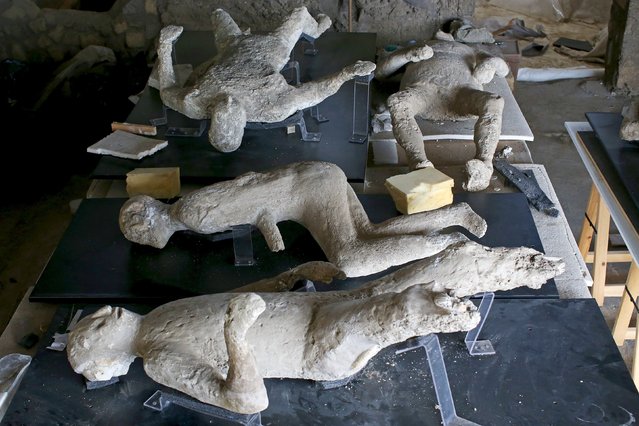
Plaster cast moulds of victims of the Mount Vesuvius eruption lie on a display table in a laboratory at Pompeii October 13, 2015. An expert team made up of archaeologists, radiologists, orthodontists and anthropologists began on September 2015 to use CAT scan technology (computerised axial tomography) to peer inside the plaster cast moulds of Pompeii's victims, in a study that has added more detail to previous findings. (Photo by Alessandro Bianchi/Reuters)

Plaster cast moulds of victims of the Mount Vesuvius eruption lie on a display table in a laboratory at Pompeii October 13, 2015. An expert team made up of archaeologists, radiologists, orthodontists and anthropologists began on September 2015 to use CAT scan technology (computerised axial tomography) to peer inside the plaster cast moulds of Pompeii's victims, in a study that has added more detail to previous findings. A 16-layer scan had to be used in order to penetrate the hardened plaster but the results showed up impressive skeletal remains and near perfect teeth. (Photo by Alessandro Bianchi/Reuters)
Details
22 Oct 2015 08:02:00


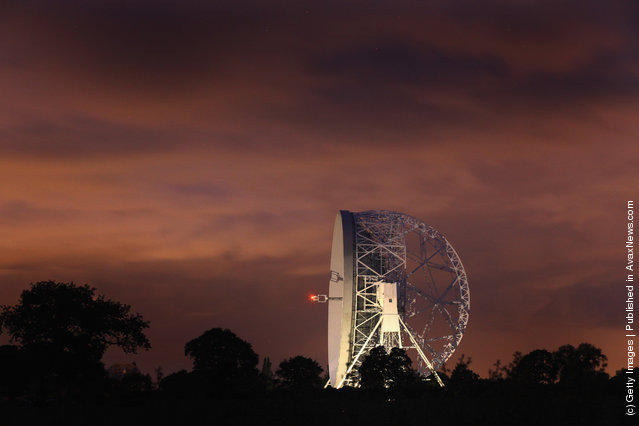
“The Lovell Telescope is a radio telescope at Jodrell Bank Observatory, near Goostrey, Cheshire in the north-west of England. When it was constructed in 1955, the telescope was the largest steerable dish radio telescope in the world at 76.2 m (250 ft) in diameter; it is now the third largest, after the Green Bank telescope in West Virginia, USA, and the Effelsberg telescope in Germany. It was originally known as the 250 ft (76 m) telescope or the Radio Telescope at Jodrell Bank, before becoming the Mark I telescope around 1961 when future telescopes (the Mark II, III, and IV) were being discussed. It was renamed to the Lovell Telescope in 1987 after Bernard Lovell, and became a Grade I listed building in 1988. The telescope forms part of the MERLIN and European VLBI Network arrays of radio telescopes”. – Wikipedia

Photo: The Lovell Telescope listens to the night sky for radio signals from space at Jodrell Bank on June 22, 2011 in Holmes Chapel, England. Jodrell Bank Centre for Astrophysics and it's world famous Lovell Telescope is on the shortlist of Britain's submission for Unesco World Heritage Site status. (Photo by Christopher Furlong/Getty Images)
Details
24 Jun 2011 09:34:00
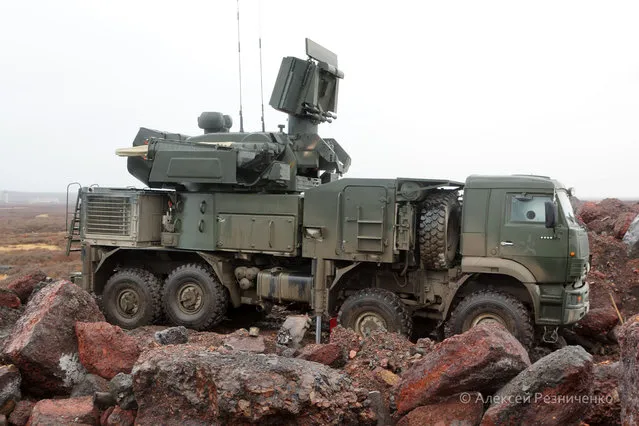
Test of the surface-to-air missile Pantsir-S rocket and gun system

“Pantsir-S1 (NATO reporting name SA-22 Greyhound) is a combined short to medium range surface-to-air missile and anti-aircraft artillery weapon system produced by KBP of Tula, Russia. The system is a further development of SA-19/SA-N-11 and represents the latest air defence technology by using phased-array radars for both target acquisition and tracking”. – Wikipedia

Photo: Test of the surface-to-air missile Pantsir-S rocket and gun system in the conditions of the Polar region on the range “Pemba” near Vorkuta, approximately on October 20 2012. According to the statement of military, during doctrines five cruise missiles from five were destroyed. (Photo by Alexey Reznichenko)

Details
28 Oct 2012 11:27:00
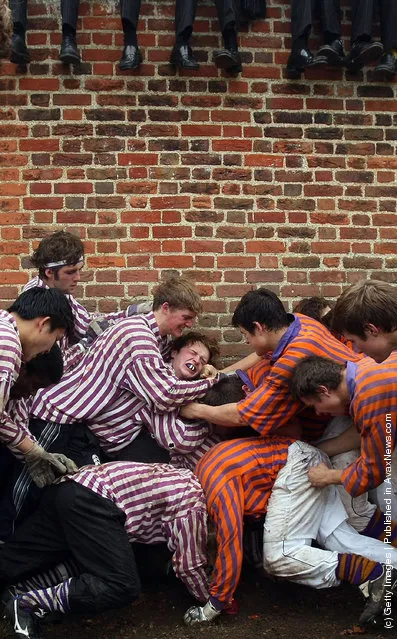
Eton Wall Game

“The Eton wall game is a game similar to football and Rugby Union, that originated from and is still played at Eton College. It is played on a strip of ground 5 metres wide and 110 metres long next to a slightly curved brick wall, erected in 1717”. – Wikipedia

Photo: The “Collegers” and the “Oppidans” of Eton College take part in the “Wall Game” as boys in their traditional school uniform watch from on top of the wall on November 17, 2007 in Eton, near Windsor, Berkshire, England. The first recorded “Wall Game” took place in 1766 with competition between the two houses at the boarding school remaining as fierce as ever on the annual St. Andrew's day event. The object of the game is to get the ball to either end of the wall and score a goal, which has not happened since 1909. As well as scoring a goal the players can win points with a “shy”, where the ball is held against the wall and touched by the hand and awarded one point. (Photo by Christopher Furlong/Getty Images)
Details
22 Sep 2011 11:01:00
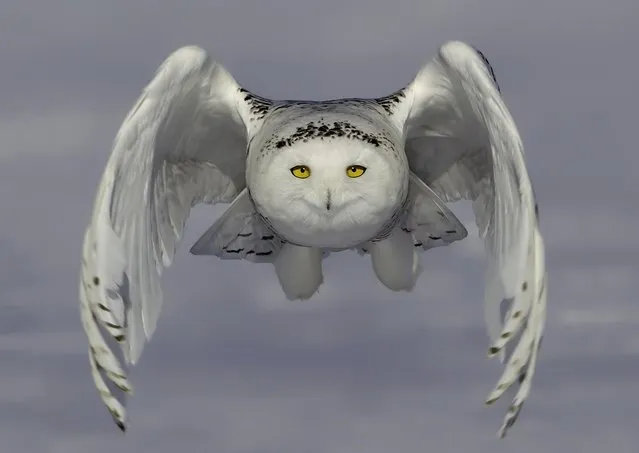
A beautiful snowy owl looks like she is flying above a cloud, but in fact she is gliding inches above a snowplain in a hunt for food. The owls fit in perfectly with their surroundings as both the male and female, which has darker markings on her feathers referred to as barres, hunt for voles. (Photo by Rick Dobson/Solent News/SIPA Press)

A beautiful snowy owl looks like she is flying above a cloud, but in fact she is gliding inches above a snowplain in a hunt for food. The owls fit in perfectly with their surroundings as both the male and female, which has darker markings on her feathers referred to as barres, hunt for voles. The female is so low to the ground she is almost touching it as she spots her prey in the snow. Nature photographer Rick Dobson captured the two birds hunting in corn fields near his home, just outside of Ottawa, Ontario, Canada. (Photo by Rick Dobson/Solent News/SIPA Press)
Details
24 Mar 2015 10:00:00