Loading...
Done
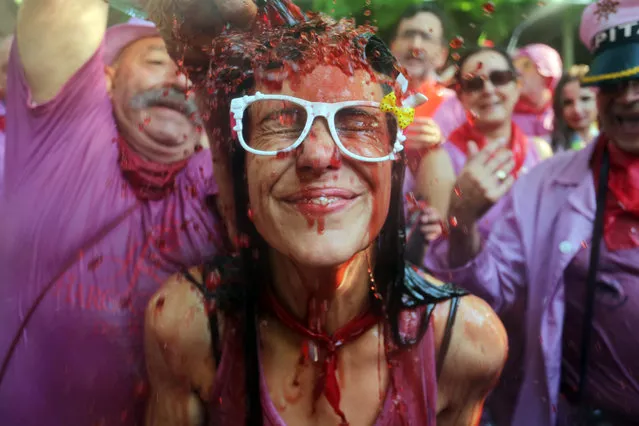
A man pours red wine on a girl's head during the Batalla del Vino (Battle of Wine) in Haro, on June 29, 2015. Every year thousands of locals and tourists climb a mountain in the northern Spanish province of La Rioja to celebrate St. Peter's day covering each other in red wine while tanker trucks filled with wine distribute the alcoholic beverage to water pistols, back mounted spraying devices, buckets which are randomly poured on heads and into any other available container. (Photo by Cesar Manso/AFP Photo)

A man pours red wine on a girl's head during the Batalla del Vino (Battle of Wine) in Haro, on June 29, 2015. Every year thousands of locals and tourists climb a mountain in the northern Spanish province of La Rioja to celebrate St. Peter's day covering each other in red wine while tanker trucks filled with wine distribute the alcoholic beverage to water pistols, back mounted spraying devices, buckets which are randomly poured on heads and into any other available container. More than nine thousand people threw around 130,000 litres of wine during this year's Haro Wine Festival, according to local media. (Photo by Cesar Manso/AFP Photo)
Details
30 Jun 2015 11:56:00
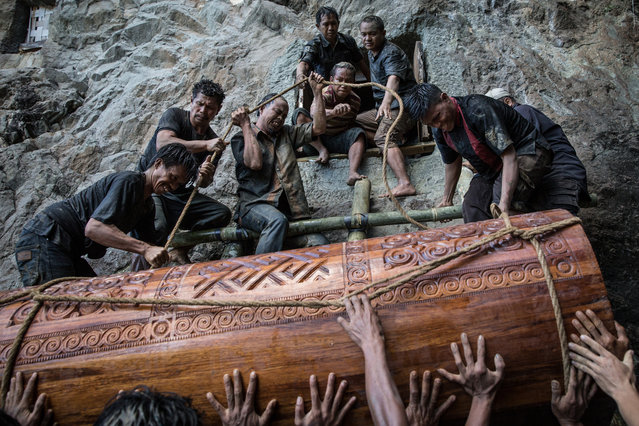
It is said that Torajans are people who “live to die”. For this Indonesian ethnic group, funerals are such extravagant events that they sometimes attract tourists. Families can postpone burials years (and the deceased are considered sick and hosted at home until the funeral) until the family can raise enough money and gather as many relatives as possible. And then it’s a jubilant multiday social event with a parade, dances and animal sacrifices. Agung Parameswara photographed these funerary practices when he traveled to South Sulawesi province, where the Torajans live. But often, their funeral isn’t the last time the dead are seen. In August, crypts are opened, coffins are slid back out and bodies delicately unsheathed. This tender ritual is known as Ma’Nene, which is customarily performed every few years. (Photo by Agung Parameswara/The Washington Post)

It is said that Torajans are people who “live to die”. For this Indonesian ethnic group, funerals are such extravagant events that they sometimes attract tourists. Families can postpone burials years (and the deceased are considered sick and hosted at home until the funeral) until the family can raise enough money and gather as many relatives as possible. And then it’s a jubilant multiday social event with a parade, dances and animal sacrifices. Agung Parameswara photographed these funerary practices when he traveled to South Sulawesi province, where the Torajans live. (Photo by Agung Parameswara/The Washington Post)
Details
06 Oct 2016 09:15:00
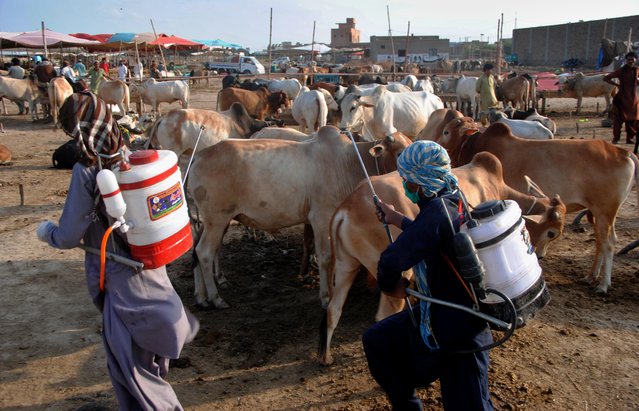
Health workers wearing face masks spray disinfectant liquid on sacrificial animals amid concerns over the spread of the SARS-CoV-2 coronavirus that causes the pandemic COVID-19 disease ahead of the Muslim festival of Eid al-Adha at an animal market in Hyderabad, southern Pakistan, 21 July 2020. Eid al-Adha, also known as the Festival of the Sacrifice, is the second and holiest of the two main Islamic holidays celebrated each year (the other one being Eid al-Fitr). Every year, on the 10th day of the Islamic lunar month of Dhu al-Hijjah, Muslims around the world ritually slaughter a sacrificial animal and split the meat into three parts: one is reserved for the family, another for friends and relatives, and the third is given to the poor and needy. The Saudi Supreme Court has declared that the first day of Eid al-Adha this year falls on 31 July. (Photo by Nadeem Khawar/EPA/EFE)

Health workers wearing face masks spray disinfectant liquid on sacrificial animals amid concerns over the spread of the SARS-CoV-2 coronavirus that causes the pandemic COVID-19 disease ahead of the Muslim festival of Eid al-Adha at an animal market in Hyderabad, southern Pakistan, 21 July 2020. (Photo by Nadeem Khawar/EPA/EFE)
Details
23 Jul 2020 00:07:00
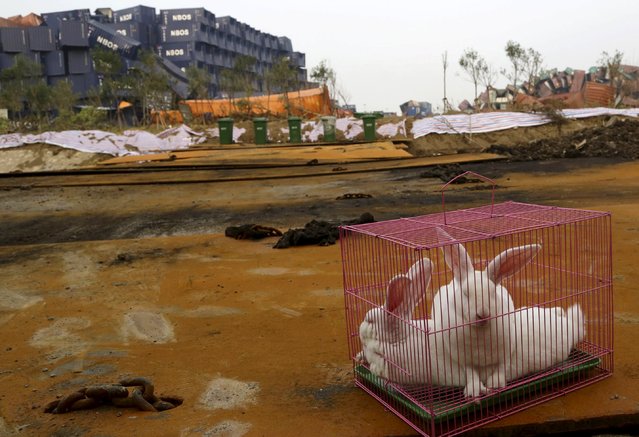
Rabbits are seen in a cage, which is placed by authority as a test of the living conditions near the site of last week's blasts at Binhai new district in Tianjin, China, August 19, 2015. (Photo by Reuters/Stringer)

Rabbits are seen in a cage, which is placed by authority as a test of the living conditions near the site of last week's blasts at Binhai new district in Tianjin, China, August 19, 2015. According to local media, the animals were alive after being placed near the blasts site for two hours. Four new fires have broken out at the site where two huge blasts last week killed 116 people, Chinese state media reported Friday soon after officials said safety hazards were found at almost 70 percent of firms handling dangerous chemicals in Beijing. (Photo by Reuters/Stringer)
Details
22 Aug 2015 12:16:00
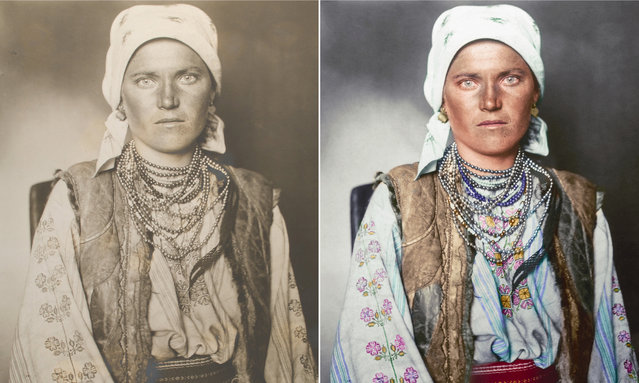
A Ruthenian woman circa 1906 from the region historically inhabiting the kingdom of the Rus, incorporating parts of modern-day Slavic speaking countries. Her outfit consists of a shirt and underskirt made from linen embroidered with traditional floral-based patterns. (Photo by Augustus Francis Sherman/New York Public Library/The Guardian)

Many of the 12 million people who entered the US through New York’s Ellis Island wore traditional dress from their homelands. Here: A Ruthenian woman circa 1906 from the region historically inhabiting the kingdom of the Rus, incorporating parts of modern-day Slavic speaking countries. Her outfit consists of a shirt and underskirt made from linen embroidered with traditional floral-based patterns. (Photo by Augustus Francis Sherman/New York Public Library/The Guardian)
Details
03 Oct 2016 09:15:00
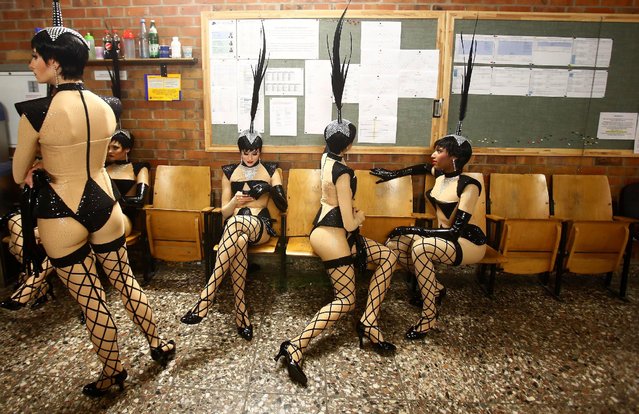
Dancers wait backstage during a dress rehearsal for the new “THE ONE Grand Show” at Friedrichstadt-Palast in Berlin, Germany, September 21, 2016. (Photo by Hannibal Hanschke/Reuters)

Dancers wait backstage during a dress rehearsal for the new “THE ONE Grand Show” at Friedrichstadt-Palast in Berlin, Germany, September 21, 2016. From silver body suits with giant mohawks to revealing fishnet tops with huge feathers, colourful, extravagant costumes take centre stage at a new theatrical show in Berlin. French couturier Jean Paul Gaultier has swapped the Paris runway for the German stage to create some 500 costumes for “THE ONE Grand Show”, an 11-million euro ($12.2 million) production showcasing plenty of singing, dancing and acrobatics. (Photo by Hannibal Hanschke/Reuters)
Details
08 Oct 2016 12:09:00
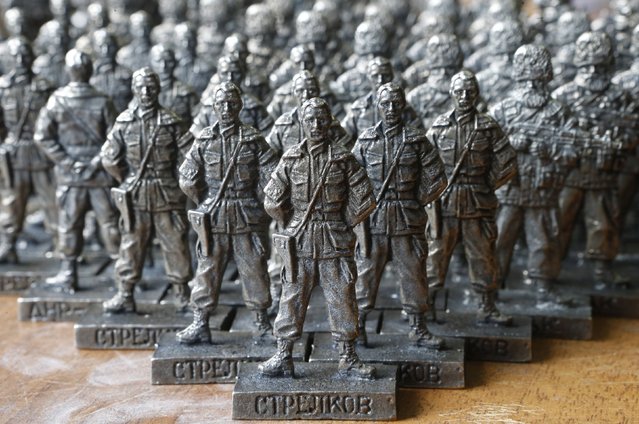
Figurines of former pro-Russian separatist commander Igor Strelkov from the collection entitled “Toy Soldiers of Novorossiya” are on display at a workshop in Moscow August 29, 2014. (Photo by Sergei Karpukhin/Reuters)

Figurines of former pro-Russian separatist commander Igor Strelkov from the collection entitled “Toy Soldiers of Novorossiya” are on display at a workshop in Moscow August 29, 2014. A Moscow-based maker of toy soldiers has sought inspiration for his creations from Ukrainian rebels fighting government troops in the east of Ukraine. Toy soldier maker, Timur Zamilov, displayed his new collection of rebel fighters cast in metal on Friday, before they are due to go on sale. His new collection is entitled “Toy Soldiers of Novorossiya” (New Russia), a reference to regions in eastern Ukraine where pro-Russian separatist fighters want full independence. Zamilov's selection includes models of Cossack soldiers, volunteers, soldiers bearing anti-aircraft missiles and even a miniature of prominent rebel leader Igor Strelkov. (Photo by Sergei Karpukhin/Reuters)
Details
01 Sep 2014 10:21:00
Photographers: David Doubilet

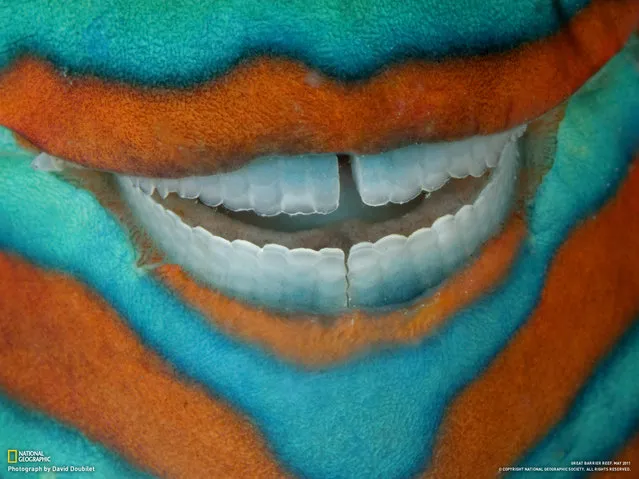
“David Doubilet (born 28 November 1946) is a well known underwater photographer known primarily for his work published in National Geographic Magazine. He was born in New York and started taking photos underwater at the young age of 12. He started with a Brownie Hawkeye in a rubber anesthesiologist's bag to keep the water out of the camera. During his summer holidays, he spent his time along the New Jersey coast. He later worked as a diver and photographer for the Sandy Hook Marine Laboratories in New Jersey. He also spent much time in the Caribbean. While a dive instructor in the Bahamas he found his motivation to capture the beauty of the sea and everything in it”. – Wikipedia. (Photo by David Doubilet/National Geographic)
Details
16 May 2012 12:21:00