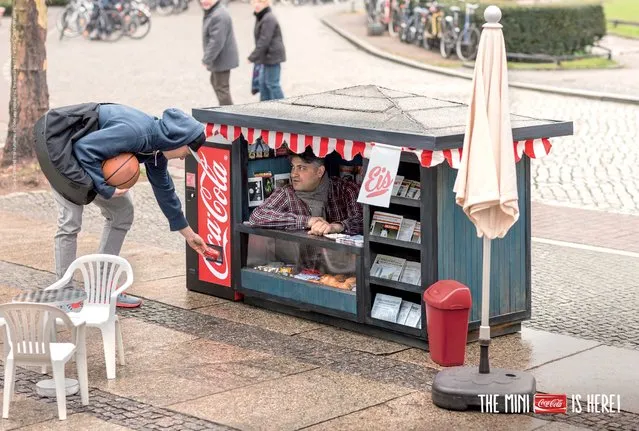
Coca-cola mini kiosks by ogilvy & mather Berlin promote tiny coke cans. To promote the launch of its tiny coke cans, coca-cola and advertising agency ogilvy & mather berlin deployed and installed a series of miniature kiosks throughout five different major cities in Germany.
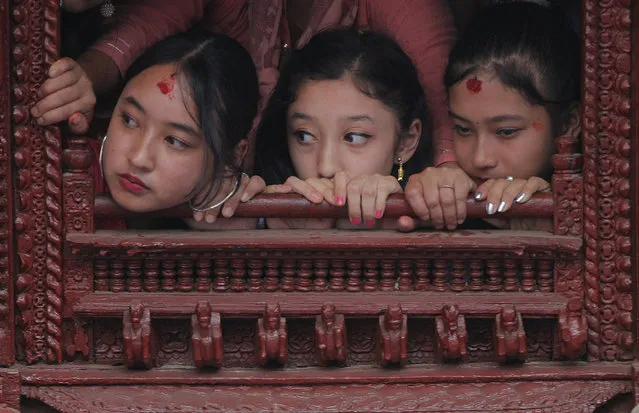
A former living goddess Kumari, middle, watches the Indra Jatra festival, an eight-day festival that honors Indra, the Hindu god of rain, in Kathmandu, Nepal, Friday, September 13, 2019. (Photo by Niranjan Shrestha/AP Photo)
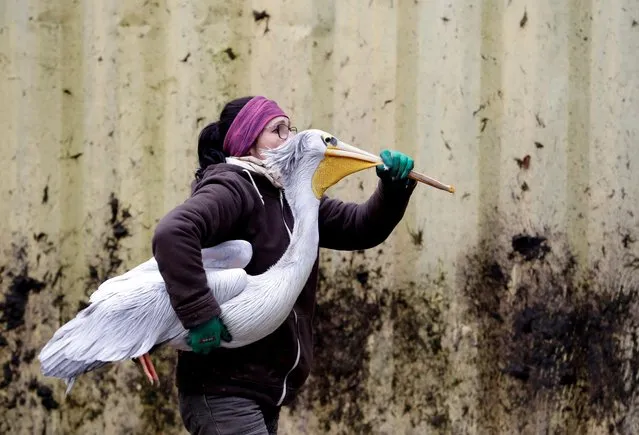
A zoo keeper carries a pelican to move it to its winter enclosure at Dvur Kralove Zoo in Dvur Kralove nad Labem, Czech Republic on November 5, 2019. (Photo by David W. Cerny/Reuters)
Los Angeles native Mike Stilkey has always been attracted to painting and drawing not only on vintage paper, record covers and book pages, but on the books themselves. Using a mix of ink, colored pencil, paint and lacquer, Stilkey depicts a melancholic and at times a whimsical cast of characters inhabiting ambiguous spaces and narratives of fantasy and fairy tales. A lingering sense of loss and longing hints at emotional depth and draws the viewer into their introspective thrall with a mixture of capricious poetry, wit, and mystery. (Photo by Mike Stilkey)
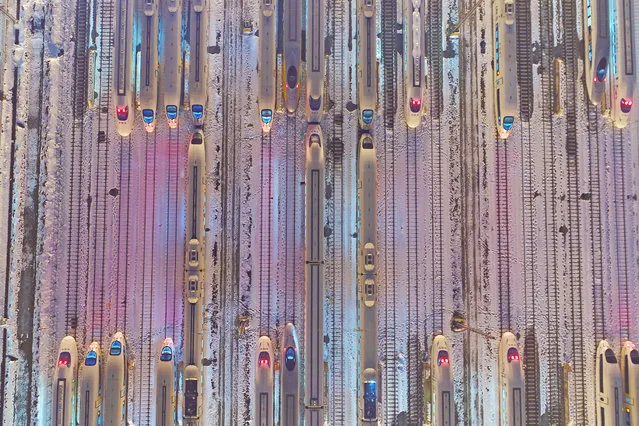
Aerial view of CRH bullet trains setting out ahead of Spring Festival travel rush on January 31, 2018 in Hefei, Anhui Province of China. About 2.98 billion trips will be made during the 40-day Spring Festival travel rush. China will take multiple measures to ensure a smooth Spring Festival travel rush. (Photo by VCG/VCG via Getty Images)
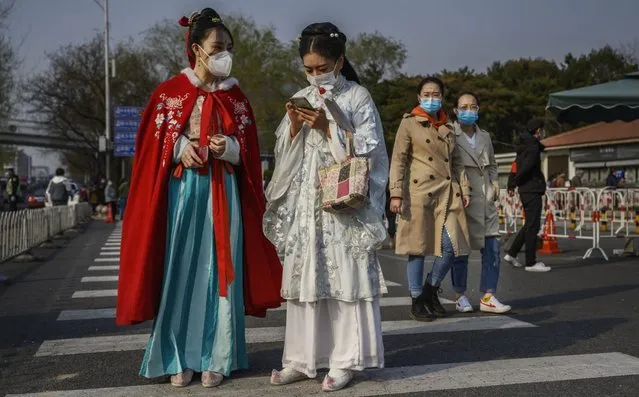
Chinese women wear protective masks as they are dressed in traditional clothing from the Qing Dynasty era outside a park on March 29, 2020 in Beijing, China. A limited section of the iconic tourist site was re-opened to the public this week allowing a smaller number of visitors to reserve tickets online in advance and to enter after passing health screening. (Photo by Kevin Frayer/Getty Images)
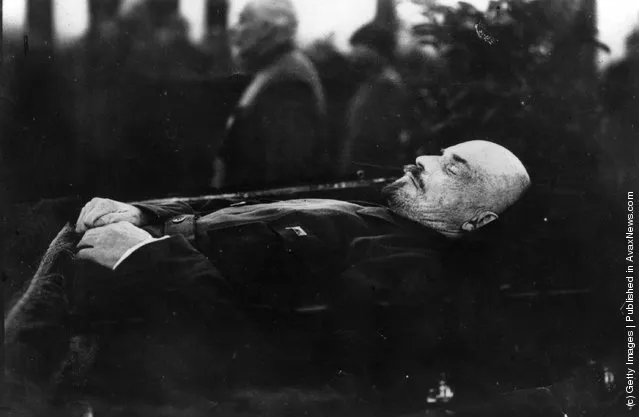
Photo: Vladimir Ilyich Lenin (1870 – 1924) lying in state in the Kremlin. (Photo by Hulton Archive/Getty Images). 1924
Important! For the same article in Russian language click here.
Something quite intriguing is happening within Russian-speaking internet during the last few – should you type a fully academic inquiry (at least, according to Russian academic requirements) in national search engines for "Lenin's mausoleum" – the first thing you get (even in top 10 searches) is website pages talking about black magic and occult. Website authors view this construction differently, but unconditionally agree on one thing: the mausoleum of the "leader of the world proletariat” – the essence of a magical artifact, a sort of “energy vampire”. It was built with a certain purpose: to drain the energy out of miserable Soviet citizens on one hand; and to poison the anthroposphere of one-sixth part of the earth with its vibes (the exact territory that was occupied by the former Soviet Union), depriving the Russian people of will to resist on the other hand. Complete nonsense? No doubt. Nevertheless, an intriguing one. Well, probably because some oddities do exist in mausoleum's history. These oddities are the thing we are going to discuss this time. First, let me refresh you memory on the subject.
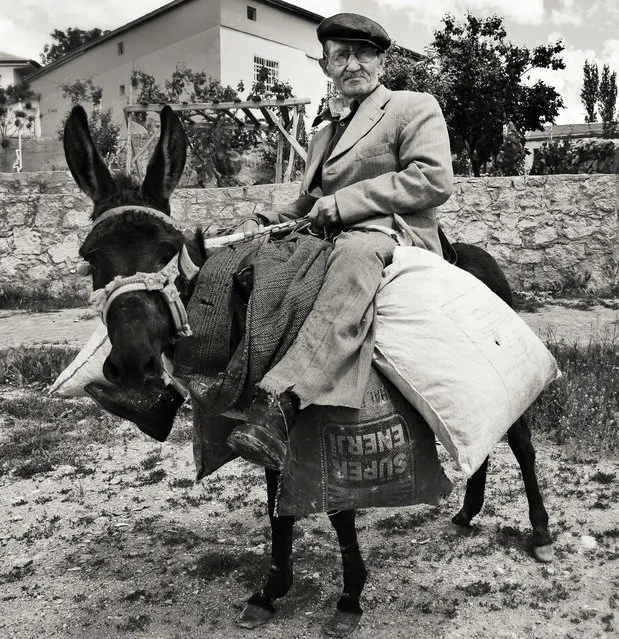
“Super Enerji”. Taken on my road trip through Turkey. (Photo and caption by Michelle Brandemuehl/National Geographic Traveler Photo Contest)
ATTENTION! All pictures are presented in high resolution. To see Hi-Res images – just TWICE click on any picture. In other words, click small picture – opens the BIG picture. Click BIG picture – opens VERY BIG picture.