Loading...
Done
Nuclear Football

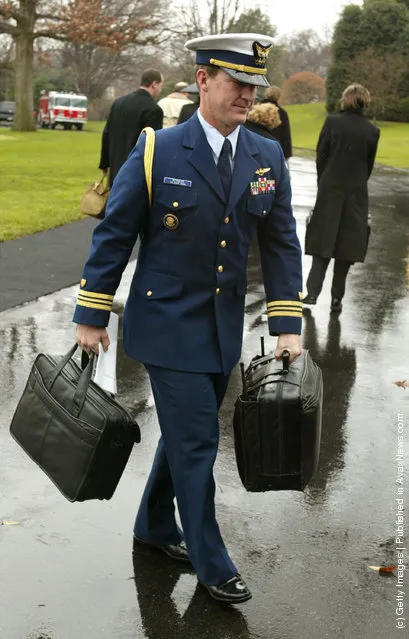
“The nuclear football (also known as the atomic football, the president's emergency satchel, the button, the black box, or just the football) is a briefcase, the contents of which are to be used by the President of the United States of America to authorize a nuclear attack while away from fixed command centers, such as the White House Situation Room. It functions as a mobile hub in the strategic defense system of the United States. It is a metallic Zero Halliburton briefcase carried in a black leather “jacket”. The package weighs around 45 pounds (20 kilograms). A small antenna protrudes from the bag near the handle”. – Wikipedia

Photo: A U.S. Military officer carries the “football”, which carries nuclear launch codes, on South Lawn after returning with U.S. President George W. Bush to the White House January 7, 2002 in Washington, DC. (Photo by Mark Wilson/Getty Images)
Details
06 Aug 2011 12:53:00
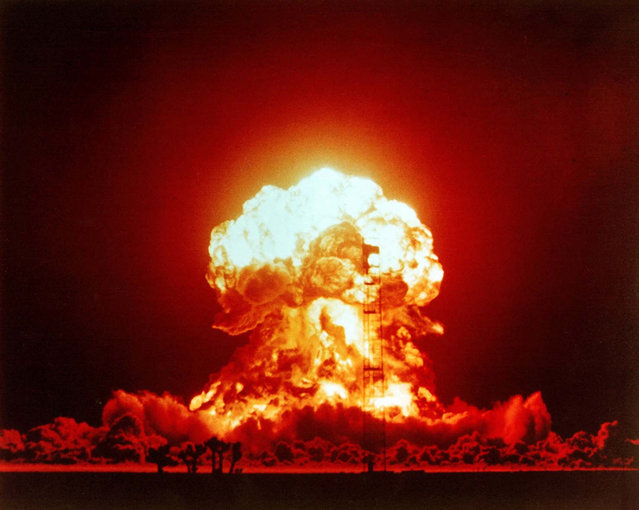
The BADGER shot was a 23 kiloton nuclear bomb. Over 2,000 US soldiers were within 3.7 kilometers of the explosion. (Photo by Alamy Stock Photo)

The BADGER shot was a 23 kiloton nuclear bomb. Over 2,000 US soldiers were within 3.7 kilometers of the explosion. (Photo by Alamy Stock Photo)
Details
12 Aug 2017 05:38:00
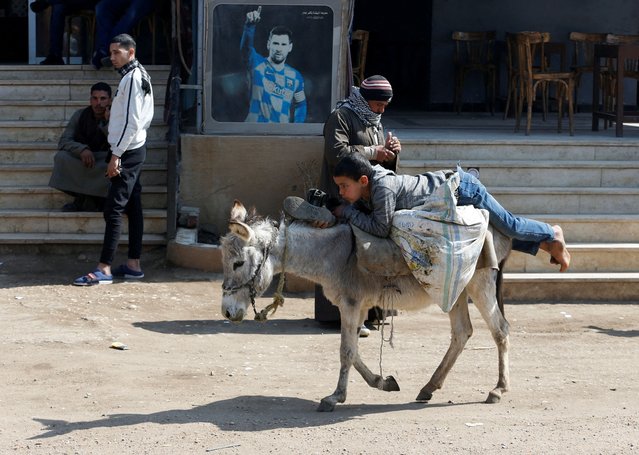
An Egyptian boy rides his donkey in front of a cafeteria with a picture of former Barcelona's forward player Lionel Messi at a village, near Giza, on the outskirts of Cairo, Egypt, February 7, 2022. (Photo by Amr Abdallah Dalsh/Reuters)

An Egyptian boy rides his donkey in front of a cafeteria with a picture of former Barcelona's forward player Lionel Messi at a village, near Giza, on the outskirts of Cairo, Egypt, February 7, 2022. (Photo by Amr Abdallah Dalsh/Reuters)
Details
10 Feb 2022 05:05:00
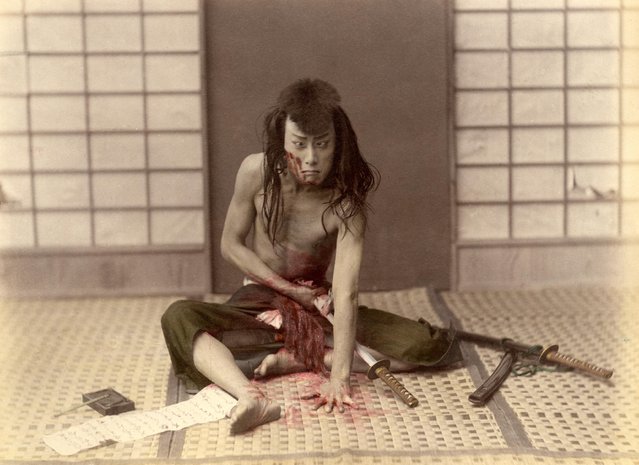
Samurai commiting seppuku (hara-kiri) in Japan, circa 1880. (Photo by adoc-photos/Corbis via Getty Images)

Samurai commiting seppuku (hara-kiri) in Japan, circa 1880. (Photo by adoc-photos/Corbis via Getty Images)
Details
27 Jan 2017 10:43:00
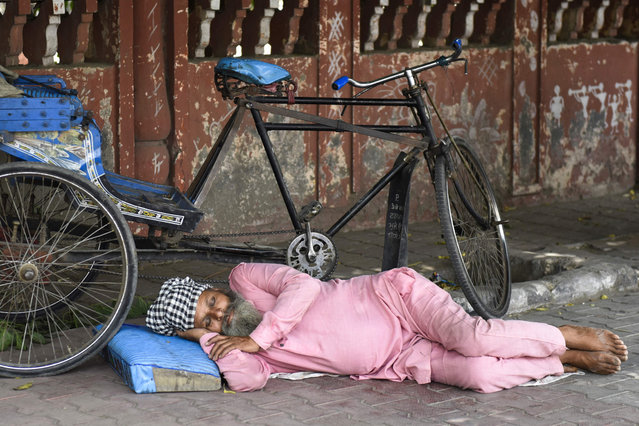
A cycle-rickshaw puller takes a nap during a hot afternoon along a street in Amritsar on April 19, 2022. (Photo by Narinder Nanu/AFP Photo)

A cycle-rickshaw puller takes a nap during a hot afternoon along a street in Amritsar on April 19, 2022. (Photo by Narinder Nanu/AFP Photo)
Details
26 Apr 2022 05:20:00
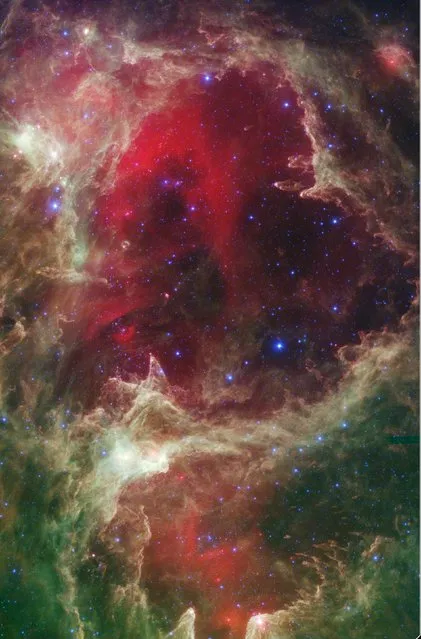
An infrared portrait from NASA's Spitzer Space Telescope which shows generations of stars is seen in this undated NASA handout image released February 14, 2013. In this wispy star-forming region, called W5, the oldest stars can be seen as blue dots in the centers of the two hollow cavities (other blue dots are background and foreground stars not associated with the region). Red shows heated dust that pervades the region's cavities, while green highlights dense clouds. (Photo by NASA/Reuters/JPL-Caltech/Harvard-Smithsonian/Handout)

An infrared portrait from NASA's Spitzer Space Telescope which shows generations of stars is seen in this undated NASA handout image released February 14, 2013. In this wispy star-forming region, called W5, the oldest stars can be seen as blue dots in the centers of the two hollow cavities (other blue dots are background and foreground stars not associated with the region). Red shows heated dust that pervades the region's cavities, while green highlights dense clouds. (Photo by NASA/Reuters/JPL-Caltech/Harvard-Smithsonian/Handout)
Details
03 Mar 2013 08:44:00
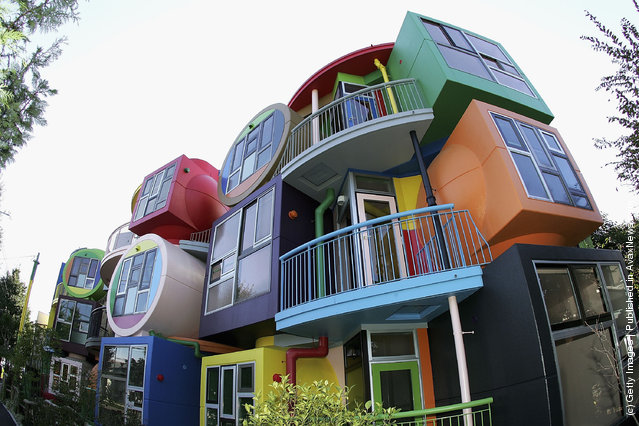
Concept Design Home Reversible Destiny Lofts MITAKA: In Memory Of Helen Keller By Reversible Destiny Foundation and Shusaku Arakawa

“The Reversible Destiny Lofts – Mitaka (In Memory of Helen Keller) is a nine-unit multiple dwelling. It was first completed example of procedural architecture put to residential use. These lofts reflexively articulate the residents’ operative tendencies and coordinating skills essential to and determinative of human thought and behavior; which means to say, the lofts manage, by virtue of how they are constructed, to reveal to their residents the ins and outs of what makes a person, in this case the resident. This is the same set of tendencies and skills to which Arakawa and Madeline Gins gave diagrammatic form in their decades-long research project The Mechanism of Meaning”. – Wikipedia

Photo: The exterior of the concept design home “Reversible Destiny Lofts MITAKA: In Memory of Helen Keller” is seen on October 27, 2005 in Tokyo, Japan. (Photo by Koichi Kamoshida/Getty Images)
Details
30 Nov 2011 11:58:00
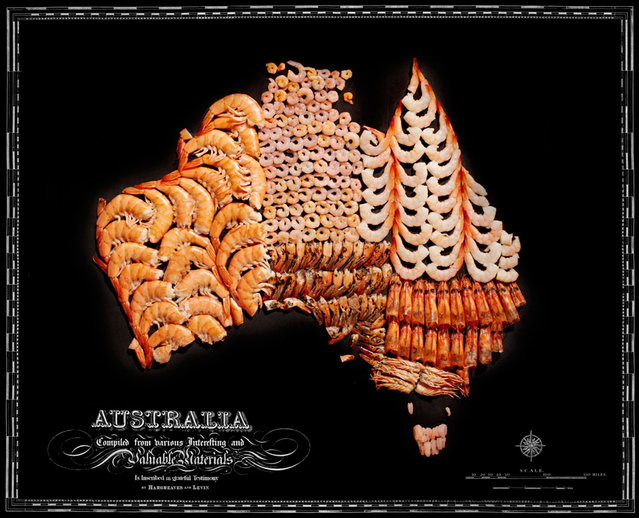
Wonderful Food Maps By Henry Hargreaves And Caitlin Levin

Photographer Henry Hargreaves and artist Caitlin Levin have been working together for about decade. Their shared love for “food, photography, travel, and art” has found an outlet in a series of maps that they have illustrated with food.
Details
14 Aug 2014 10:21:00