Loading...
Done
Gold bars from the vault of a bank and Swiss one franc coins are seen in this illustration picture taken in Zurich November 20, 2014. The “Save our Swiss gold” proposal, spearheaded by the right-wing Swiss People's Party (SVP), aims to ban the central bank from offloading its reserves and oblige it to hold at least 20 percent of its assets in gold. The referendum is scheduled for November 30. The SVP argues it would secure a stable Swiss franc. (Photo by Arnd Wiegmann/Reuters)

Gold bars from the vault of a bank and Swiss one franc coins are seen in this illustration picture taken in Zurich November 20, 2014. The “Save our Swiss gold” proposal, spearheaded by the right-wing Swiss People's Party (SVP), aims to ban the central bank from offloading its reserves and oblige it to hold at least 20 percent of its assets in gold. The referendum is scheduled for November 30. The SVP argues it would secure a stable Swiss franc. (Photo by Arnd Wiegmann/Reuters)
Details
22 Nov 2014 13:31:00
Canada's Mandy Marchak (R) is taken down by France's Pauline Biscarat during the final match of the Hong Kong Sevens rugby women's invitational cup in Hong Kong March 28, 2014. (Photo by Tyrone Siu/Reuters)

Canada's Mandy Marchak (R) is taken down by France's Pauline Biscarat during the final match of the Hong Kong Sevens rugby women's invitational cup in Hong Kong March 28, 2014. (Photo by Tyrone Siu/Reuters)
Details
29 Mar 2014 13:22:00
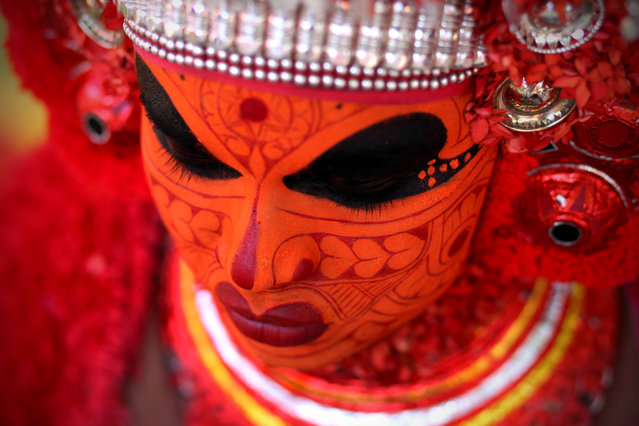
“Theyyam”. Preparation for the Theyyam performance in the surroundings of Kasaragod city. Theyyam is a popular ritual dance form of North Kerala, particularly in Kannur and Kasargod districts. The Theyyam represents a mythological, divine or heroic character. Make up of Theyyams is done by specialist. There are different types of face painting for which primarily and secondary colours are used. Photo location:  Kasaragod, India. (Photo and caption by Rafal Ziejewski/National Geographic Photo Contest)

“Theyyam”. Preparation for the Theyyam performance in the surroundings of Kasaragod city. Theyyam is a popular ritual dance form of North Kerala, particularly in Kannur and Kasargod districts. The Theyyam represents a mythological, divine or heroic character. Make up of Theyyams is done by specialist. There are different types of face painting for which primarily and secondary colours are used. Therefore it is essential that the makeup man should have perfect knowledge of primary and secondary colour combinations. Sometimes, it takes several hours to paint each face. Photo location: Kasaragod, India. (Photo and caption by Rafal Ziejewski/National Geographic Photo Contest)
Details
02 Jul 2014 10:42:00
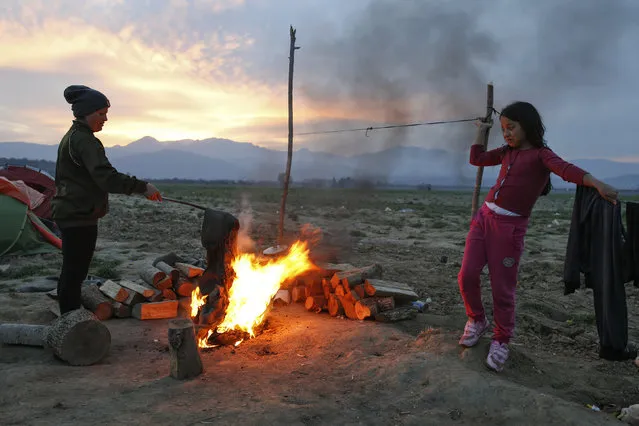
A woman and a child make a bonfire at a makeshift camp for migrants and refugees at the Greek-Macedonian border near the village of Idomeni, Greece, April 1, 2016. (Photo by Marko Djurica/Reuters)

A woman and a child make a bonfire at a makeshift camp for migrants and refugees at the Greek-Macedonian border near the village of Idomeni, Greece, April 1, 2016. (Photo by Marko Djurica/Reuters)
Details
04 Apr 2016 11:04:00
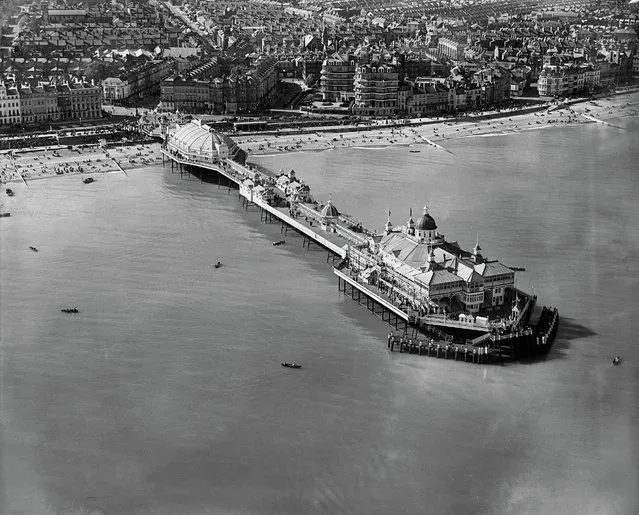
While the lido was described as bringing “modernism to the masses” on the British coast it was just the latest example of a trend that had been developing since Victorian times – transforming seaside towns into resorts for leisure and entertainment. In the latter half of the nineteenth century, the fashion was for local authorities to build great piers stretching from the promenade out into the sea

While the lido was described as bringing “modernism to the masses” on the British coast it was just the latest example of a trend that had been developing since Victorian times – transforming seaside towns into resorts for leisure and entertainment. In the latter half of the nineteenth century, the fashion was for local authorities to build great piers stretching from the promenade out into the sea. The Eastbourne Pier, pictured here in May 1931, was erected between 1866 and 1870 to an ingenious design by Eugenius Birch, which saw the structure sitting on special cups allowing the supporting struts to “move” in bad weather. Arranged on the pier's 1,000-foot length were kiosks, a theatre, a ballroom and a camera obscura. 1931. (Photo by Aerofilms Collection via “A History of Britain From Above”)
Details
25 Feb 2014 12:59:00
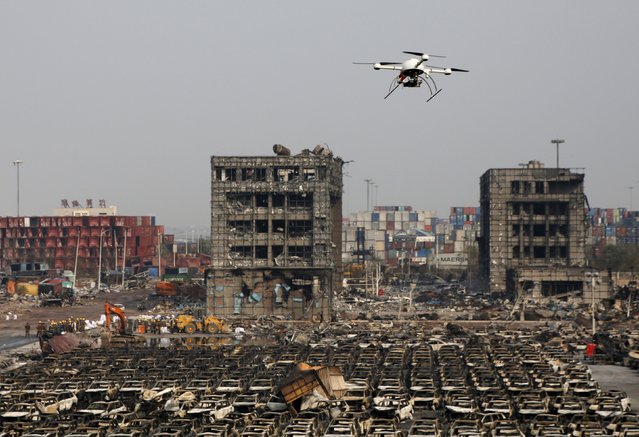
A drone operated by paramilitary police flies over the site of last week's explosions at Binhai new district in Tianjin, China, August 17, 2015. (Photo by Kim Kyung-Hoon/Reuters)

A drone operated by paramilitary police flies over the site of last week's explosions at Binhai new district in Tianjin, China, August 17, 2015. Many operations have resumed at China's Tianjin port, trade sources said, after explosions last week that killed more than 100 people and disrupted business at what is an important oil, gas and bulk import harbor for Asia's biggest economy. The explosions on August 12 led to the disruption of all chemical and oil tanker discharges at the port, and imports of iron ore were also affected. (Photo by Kim Kyung-Hoon/Reuters)
Details
18 Aug 2015 14:32:00
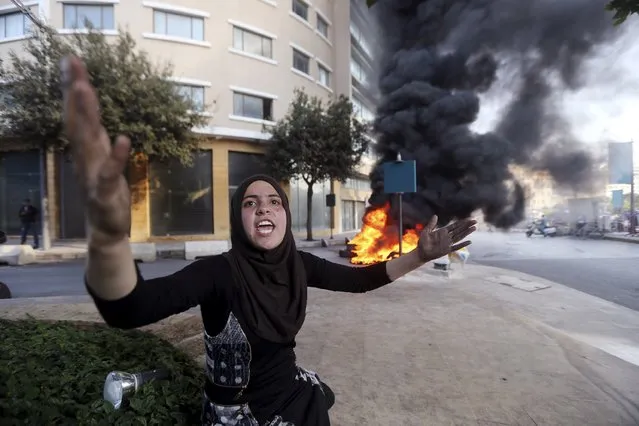
Wadha al-Sayyed, wife of captive Lebanese soldier Khaled Moqbel, protests for his release and government action, near burning tyres blocking a road in Beirut, December 15, 2014. More than two dozen members of the Lebanese security forces are being held by Sunni Islamists. (Photo by Hasan Shaaban/Reuters)

Wadha al-Sayyed, wife of captive Lebanese soldier Khaled Moqbel, protests for his release and government action, near burning tyres blocking a road in Beirut, December 15, 2014. More than two dozen members of the Lebanese security forces are being held by Sunni Islamists. (Photo by Hasan Shaaban/Reuters)
Details
20 Dec 2014 11:31:00
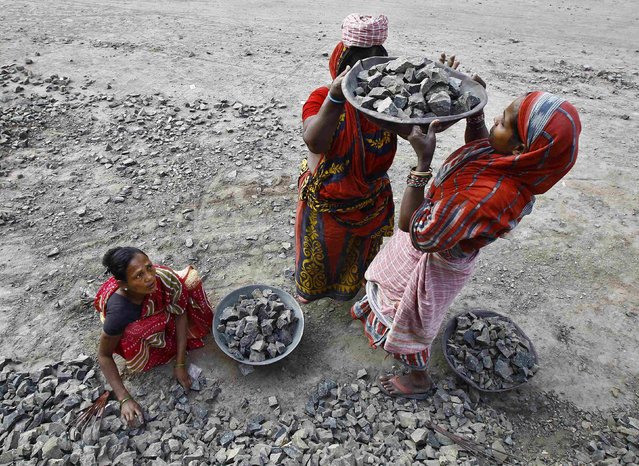
Women labourers work at the construction site of a road in Kolkata January 8, 2015. Across towns and cities in India, it is not uncommon to see women cleaning building sites, carrying bricks and or shoveling gravel - helping construct the infrastructure necessary for the country's economic and social development. (Photo by Rupak De Chowdhuri/Reuters)

Women labourers work at the construction site of a road in Kolkata January 8, 2015. Across towns and cities in India, it is not uncommon to see women cleaning building sites, carrying bricks and or shoveling gravel – helping construct the infrastructure necessary for the country's economic and social development. They help build roads, railway tracks, airports, and offices. They lay pipes for clean water supplies, cables for telecommunications, and dig the drains for sewage systems. But although women make up at least 20 percent of India's 40 million construction workers, they are less recognized than male workers with lower pay and often prone to safety hazards and sexual harassment. They are often unaware of their rights or scared to complain, say activists now trying to campaign for better treatment of women in the construction industry. (Photo by Rupak De Chowdhuri/Reuters)
Details
15 Jan 2015 13:47:00