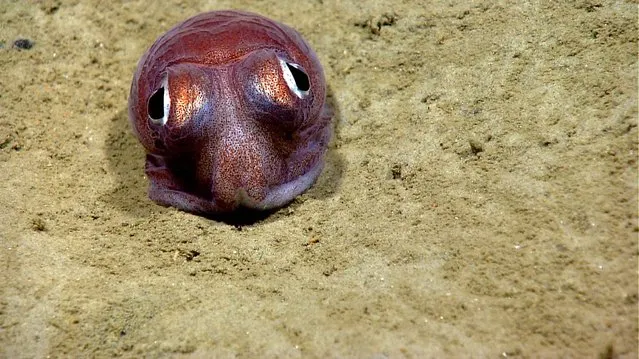
An octopus is filmed by the National Oceanic and Atmospheric Administration ship Okeanos Explorer and its robotic sub. (Photo by National Oceanic and Atmospheric Administration)
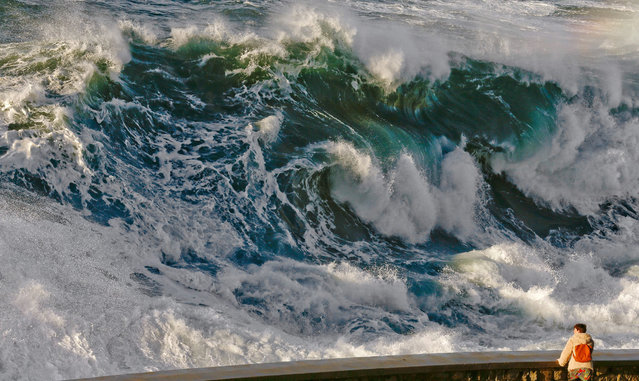
A man watches the huge waves which brakes at the Paseo Nuevo's promenade in San Sebastian, Basque Country, Spain on 11 January 2016 where the wind has reached to 90 km/h and have been registred waves of eight kilometres due to the bad weather. (Photo by Juan Herrero/EPA/EFE)
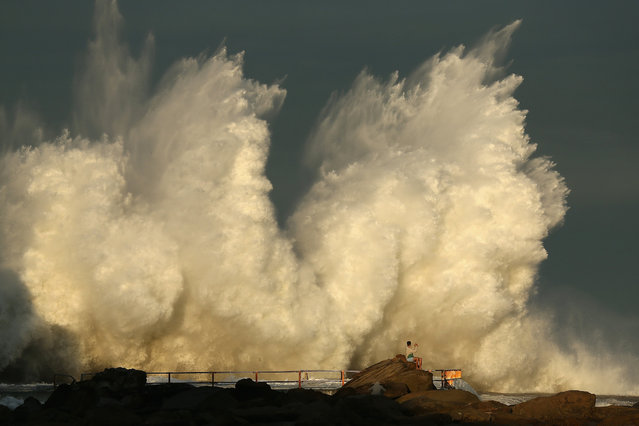
A man watches a wave hit a rock pool at Curl Curl beach as large swell hits the East Coast of Australia on June 6, 2016 in Sydney, Australia. Torrential rain over the weekend saw streets and homes flooded while wind gusts up to 120km per hour brought down trees and powerlines. A king tide has also seen beachside homes evacuated on Sydney's northern beaches as large waves erode the coast. (Photo by Cameron Spencer/Getty Images)
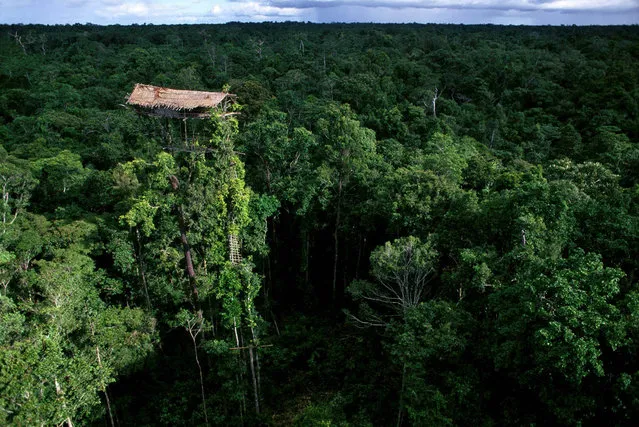
The Korowai, also called the Kolufo, are a people of southeastern Papua (i.e., the southeastern part of the western part of New Guinea). They number about 3,000. Until 1970, they were unaware of the existence of any people besides themselves.
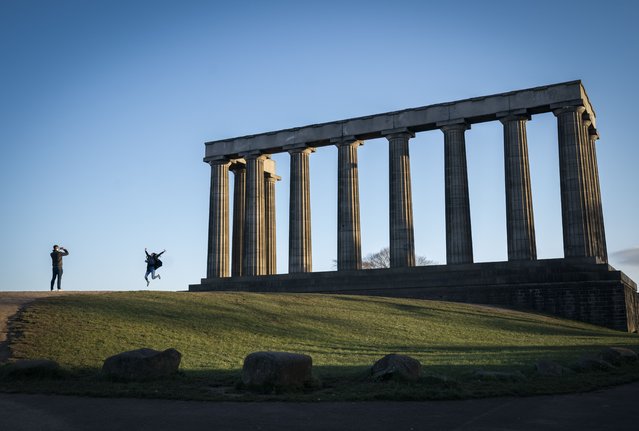
A couple take photographs alongside the National Monument on Calton Hill, Edinburgh on Wednesday January 5, 2022, ahead of First Minister Nicola Sturgeon's update to the Scottish Parliament on the Covid-19 situation as the Omicron variant sweeps across the country. (Photo by Jane Barlow/PA Images via Getty Images)
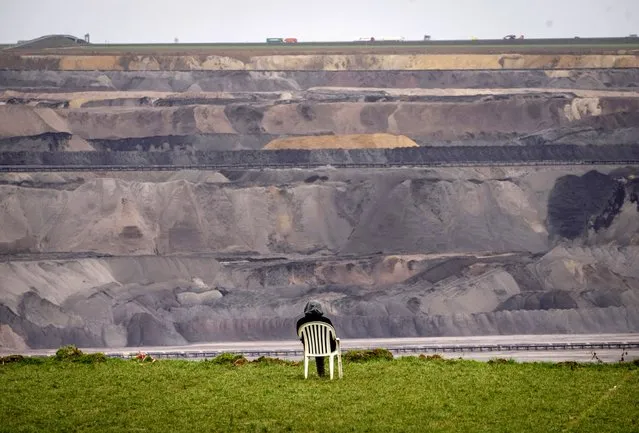
A person sits in a chair next to the Garzweiler lignite opencast mine at the Luetzerath village near Erkelenz, Germany, Tuesday, January 10, 2023. Environmental activists were locked in a standoff with police this week around the hamlet of Luetzerath that's due to be bulldozed for the expansion of a nearby lignite mine. (Photo by Michael Probst/AP Photo)